24 Hours Hotline: +8613735411378
Email:[email protected]
24 Hours Hotline: +8613735411378
Email:[email protected]
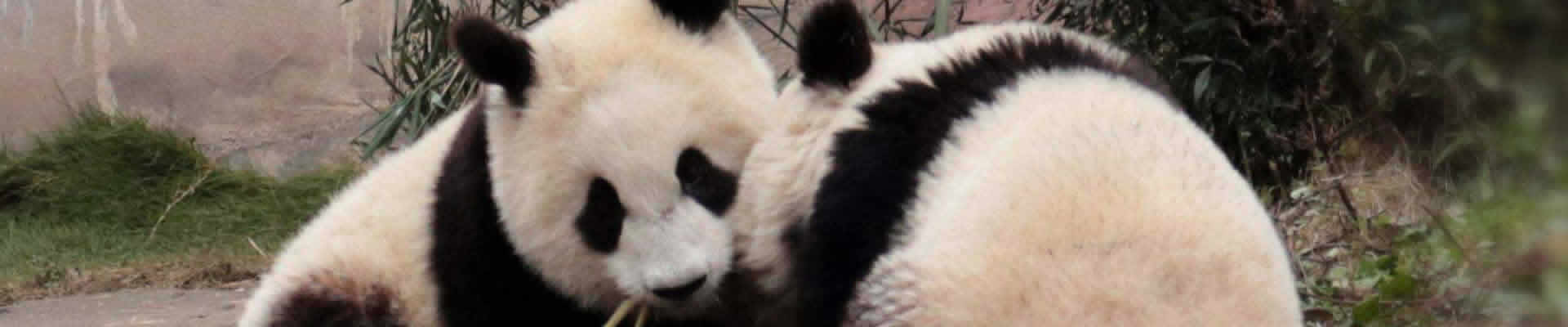
Guilin, as the pinnacle of Chinese landscape photography, boasts unparalleled natural scenery. Each scenic spot carrying a national painting filter, compelling every photographer to press the shutter and capture this dreamlike and enchanting landscape.
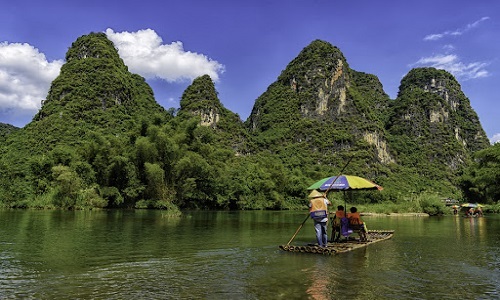 Guilin Luxury Tour: 4 Days of Majestic Landscapes, 5-Star Cruises, Hot Air Balloon Rides, and Cliffside Dining
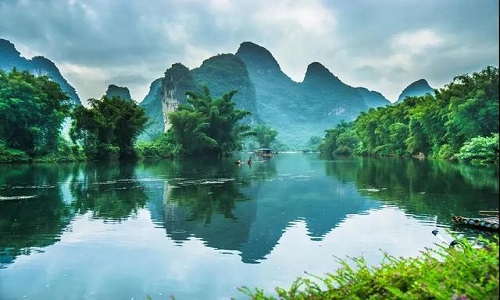 In-Depth Li River Tour Guilin: Hike Scenic Trails and Uncover Stunning Views
About This Blog
What This Guide Will Help You Solve:
· Not sure where to take photos?
· Don't know the exact time to shoot?
· Not sure which position is the best?
· Don't know how to choose the weather / season?
· Don't know how to plan your photography route?
Suitable for:
· Nature Photographers / Travel Photography Enthusiasts
· Mobile Photography Users
· High-end Private Tours
· Self-media Creators, Bloggers, Short-video Makers
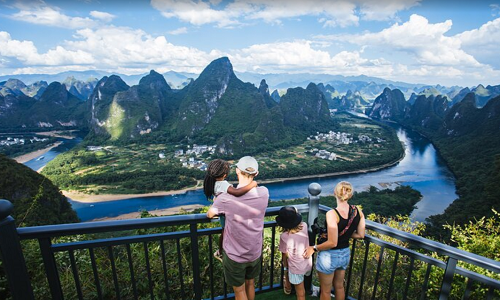
Overview of Photography in Guilin
· Watercolor Landscape Category: Li River, Yulong River
· Terraced Fields and Sea of Clouds Category: Longji Terraced Fields
· Peak Forest and Rural Area Category: Yangshuo Ten-Lane Gallery, Xingping Ancient Town, Yulong River
· Cave Wonder Category: Silver Cave, Ludi Cave
· Urban Night View Category: Two Rivers and Four Lakes, Elephant Trunk Hill, Sun and Moon Twin Towers, Dongxi Lane
· Cultural and Folk Custom Category: Minority villages, ancient towns, fishermen and their fires
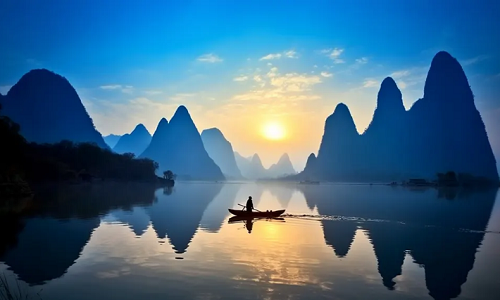
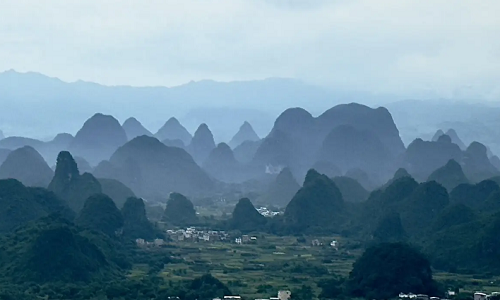
Photography of Li River Scenery
The landscape and scenery of Li River are renowned for their magnificent karst landforms and serene water surfaces. It is a dream shooting location for countless photography enthusiasts. The natural scenery here is ever-changing, and the light, weather and water reflection at every moment can present different beauties.
1. Fixed Camera Position
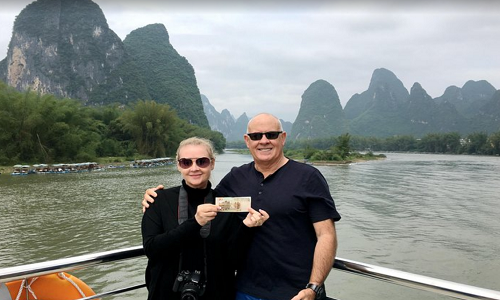
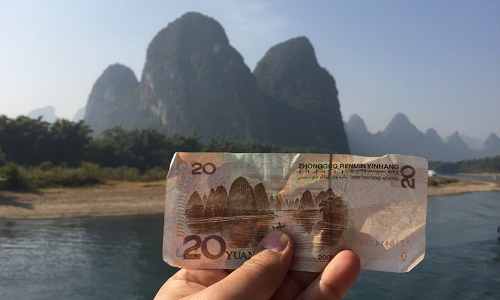
20-yuan RMB Background Observation Platform (Xingping)
As the most iconic shooting spot along the Li River, the 20-yuan RMB background is one of the must-visit positions. The reflection of the mountains and water here is similar to the pattern on the back of the 20-yuan RMB, making it the best location to capture the classic beauty of the Li River. The perfect combination of morning sunlight and reflections can produce stunning works.
· Best Shooting Time: Early morning, when the water is like a mirror and the light is soft, it is ideal for photography.
The Reflection of the Yellow Cloth
The reflection of the yellow cloth is one of the most iconic landscapes of the Li River. The reflection of the mountains and the water surface forms a perfect symmetry, and it is especially charming in the early morning. This scenic spot is highly favored by photographers, especially when capturing the reflection of the water surface, which can present a beautiful scene like an ink painting.
· Best Shooting Time: Morning. The light in the early morning is the softest and the reflections are the clearest.
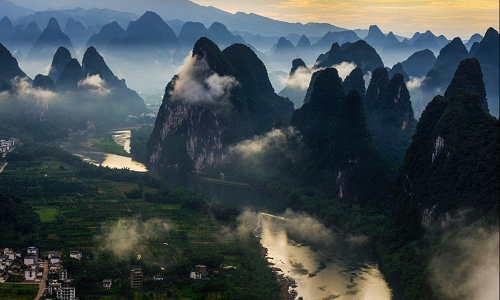
Sunset at Xingping Old Village Mountain
On the old street of Xingping Ancient Town, beside the Li River's Fung Tai Forest, there is the Fung Tai Park. The mountains and waters here are closely connected, with lush bamboo and trees, and winding paths leading to secluded places. Inside the park, there is a mountain called Old Village Mountain, with an altitude of over 300 meters. There is a stone path winding up to the top of the mountain. From the top of Old Village Mountain, looking far away, the mountains surround and the water flows around, with houses of various heights. The "Xingping Beauty" can be fully seen in front of your eyes.
· Best Shooting Time: Around sunset, especially in summer when the colors of the sunset are more vibrant.
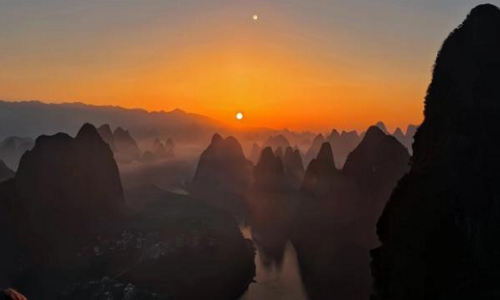
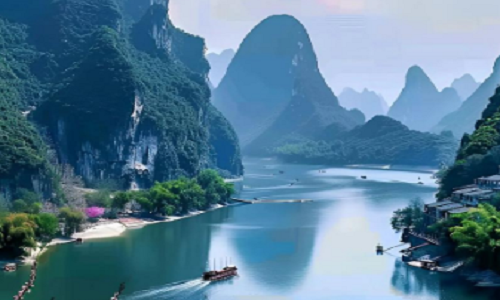
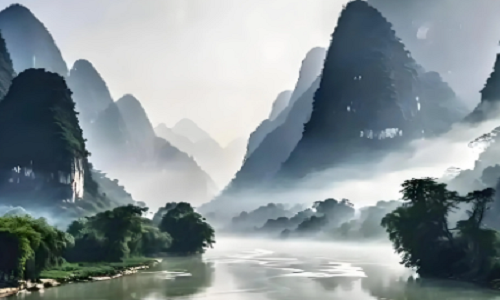
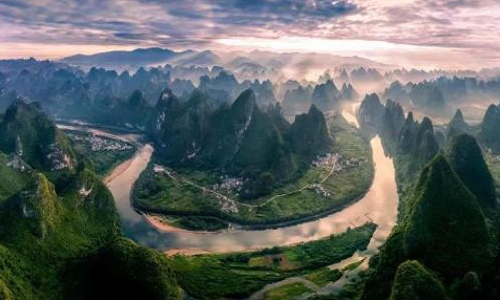
Morning Mist of Li River Bay
The morning mist of Li River Bay is one of the wonders of Guilin's landscape. It is particularly charming in the autumn and winter seasons (from September to March of the following year). At this time, the misty Li River River and karst peak forests are faintly visible in the mist, resembling an ink painting. The best viewing spots include Yangshuo, Yangdi, Xingping and other areas. It is recommended to go early to capture the scene or take a bamboo raft to experience this fairyland on earth.
· Best Shooting Time: 5:30 to 7:30 in the morning. The fog and the soft light create ideal conditions for photography.
2. Photography Themes
Panoramic Scenery of Mountains and Water
The landscape of Lijiang River is the most representative subject for photography. Shooting the mountains and rivers from a wide-angle perspective can present the magnificent natural scenery of Lijiang. Using a wide-angle lens can capture the entire view of Lijiang.
· Shooting Suggestions: Select an open shooting location and utilize the morning light to showcase the vastness and depth of the landscape.
Canoe Rafting
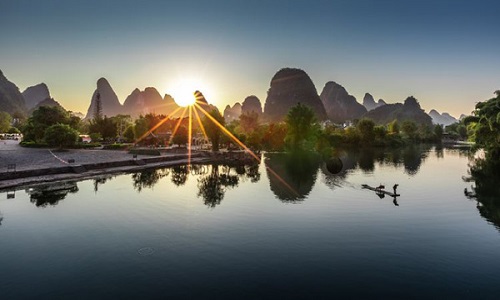
Canoe rafting is a major feature of the Li River. Tourists ride on the canoes and have the opportunity to closely observe the water surface of the Li River and the surrounding landscape. This theme is highly suitable for capturing scenes that combine human elements with nature.
· Shooting Suggestions: Use a telephoto lens or a wide-angle lens to capture the drifting tourists and the surrounding natural scenery, highlighting the harmonious coexistence of humans and nature.
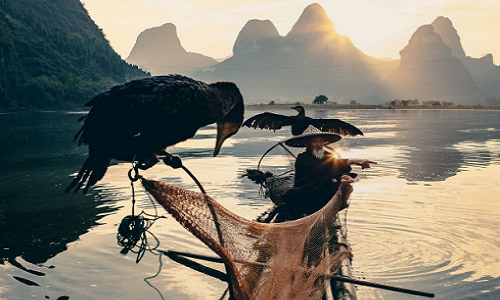
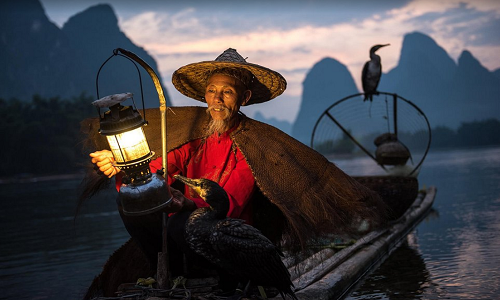
The Fisherman's Net Casting
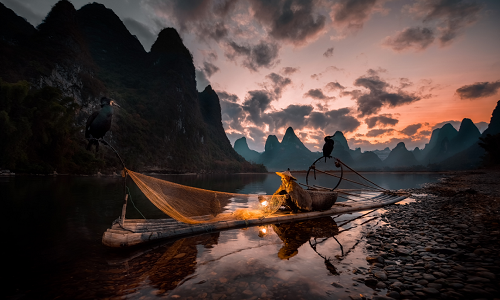
The scene of a fisherman casting a net is one of the classic subjects for photography on the Li River. Especially in the late afternoon, when fishermen stand on the water surface and cast their nets, the scene is both dynamic and filled with the traditional atmosphere of a fishing village.
· Shooting Suggestions: At this moment, a telephoto lens is the most suitable choice to capture the moment when the fisherman is casting his net. It can produce a dynamic yet atmospheric image.
3. Equipment Recommendations
Wide-angle Lens (16-35mm)
The wide-angle lens is highly suitable for capturing the panoramic view of the landscape of Lijiang. It can capture more scenery, especially for shooting large scenes, and can better showcase the vastness and beauty of Li River.
Tripod (Long Exposure / Slow Shutter)
When shooting the Li River, long exposure is often used to capture the changes in light and shadow. Especially when shooting morning fog, sunset or water surface reflections, a tripod is a necessary tool as it can ensure the stability of the shot and prevent blurring.
ND Filter (Water Surface Fogginess)
The neutral density filter (ND filter) can assist you in achieving long exposure in strong light conditions, especially when shooting water surfaces during the day. It can create a dreamy water surface fog effect, making the water surface smoother and enhancing the artistic quality of the picture.
4. Transportation Guide
Self-driving and Bus Travel
From the urban area of Guilin to Lijiang and Xingping, you can choose either self-driving or taking a bus. Self-driving is the most flexible option, especially as you can leave at any time after the shooting and explore more attractions. If you choose the bus, it is recommended to check the routes and departure times in advance to avoid any delays in your journey.
Bamboo Rafting Route
If you want to capture the unique scenery of the Li River, you can choose to take a bamboo rafting trip. The rafting route usually starts from Mopan Mountain and ends in Yangshuo, passing through several scenic spots along the essence of the Li River, such as the Nine-Horse-Painting Mountain and the Yellow Cloth Reflection.
Walking Routes at Viewing Platforms
There are walking routes at many viewing platforms along the Li River and in Xingping. You can reach the best shooting spots by walking. There are several scenic spots suitable for shooting here, such as the Elephant Trunk Hill and the Yellow Cloth Reflection. Walking allows you to find those more secluded and magnificent shooting positions.
Photography of Yangshuo Scenery
The landscape here combines the grandeur of nature with the leisure of human life, perfectly capturing the essence of Guilin's scenery. Whether it's the perilous peak forests, the peaceful rural landscapes, or the rich cultural atmosphere of the ancient town of Xixiang Street, Yangshuo can provide photographers with abundant creative materials.
1. Main Shooting Locations
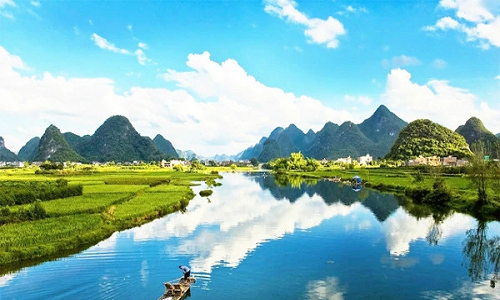
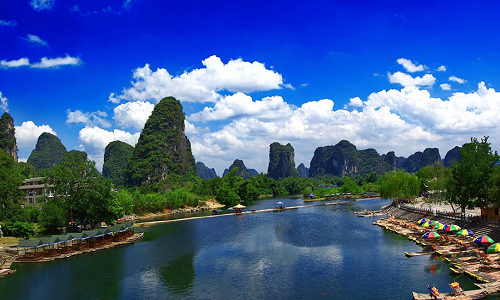
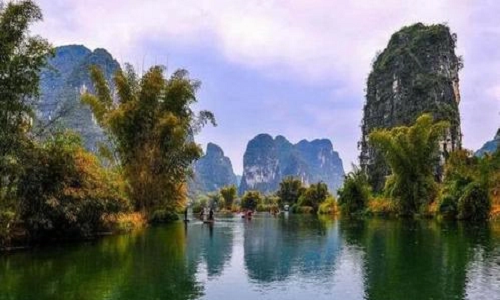
Yuling River Trail (Canoeing, Reflections, Bridges)
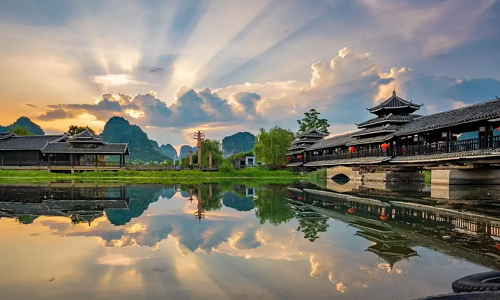
Yuling River is renowned for its calm water and the reflections of the surrounding mountains. It is one of the most representative shooting locations in Yangshuo. The natural elements such as canoeing, reflections, and bridges here provide photographers with abundant shooting materials. In the early morning, the water is like a mirror, and the reflections of the mountains and water are the clearest, making it the best time to capture the serene scenery.
· Shooting Suggestions: Use a wide-angle lens to capture the bamboo raft and its reflection on the water surface. Choose a low angle to photograph the mountains in the water and the distant small bridge, which can showcase the poetic charm of the countryside.
The Ten-Lane Gallery Cycling Scenery
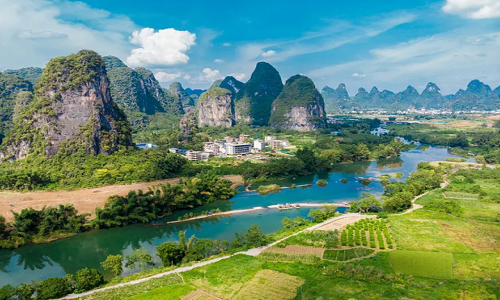
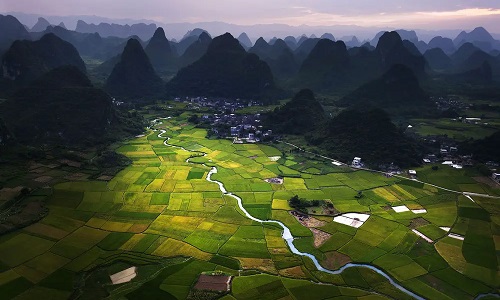
The Ten-Lane Gallery is hailed as the most beautiful cycling route in Yangshuo. The scenic landscapes along the way are like a series of captivating paintings. When shooting, you can combine cycling with the natural scenery to present a beautiful scene of harmony between humans and nature. The rural scenery here interweaves with the karst mountains, making it an ideal place for shooting landscapes and portraits.
· Shooting Suggestions: Use a telephoto lens to capture the distant view, including the panoramic shots of the mountains and the fields; you can also use a wide-angle lens to shoot the cyclists integrated with the beautiful background, presenting a dynamic scene.
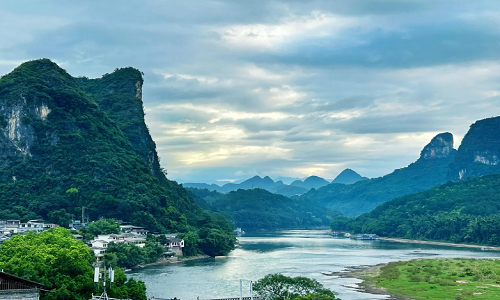
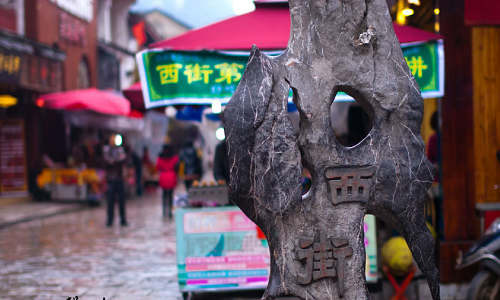
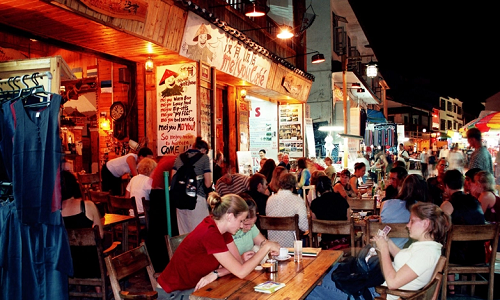
Yangshuo West Street
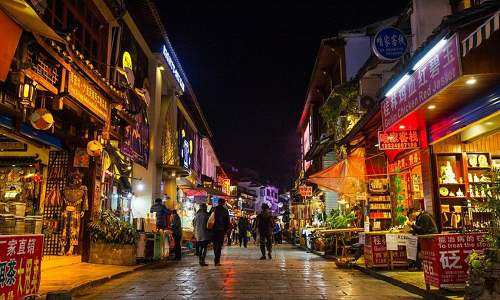
As the cultural center of Yangshuo, Xishan Street retains a strong traditional atmosphere. The street is filled with ancient houses, handicraft stores and food stalls. Here, one can capture both the rich historical feel and the warmth of daily life. Especially in the evenings and at night, the lights and people on Xishan Street make the place full of vitality and a sense of story.
· Shooting Suggestions: Adopt a humanistic documentary style to capture the daily lives of local residents and the small shops on the street. At night, use low-light photography to shoot the bars on West Street and the street scenes, which can capture the unique atmosphere of Yangshuo's nightlife.
2. Peak Period
Morning: No Reflections on the Yulong River
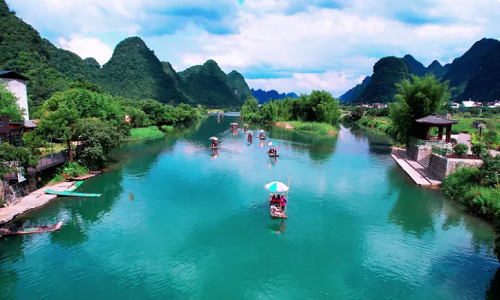
The morning is the best time to capture the scenery of Yangshuo, especially the Yulong River. The water surface is like a mirror, and the reflections of the mountains and water are clearly visible. The light is gentle at this time, the air is fresh, and there are usually fewer tourists, making it an excellent moment to capture the serene and dreamy landscape.
· Shooting Suggestions: It is recommended to use a wide-angle lens to capture the reflection on the water surface, as well as the harmonious scenery of the bamboo raft and the distant mountains.
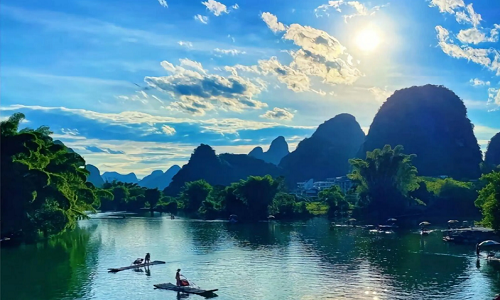
Evening: Cliff Landscapes in Backlit Shadows
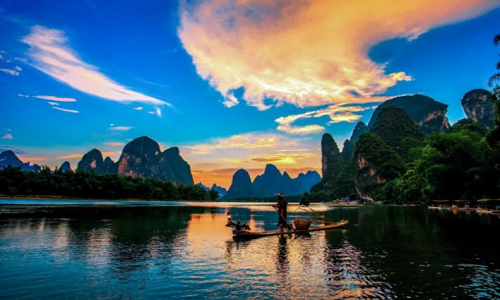
In the evening, the sunlight shines from behind the mountains, creating a beautiful backlight effect. Especially along the cycling route of the Ten Miles Gallery, the outlines of the cliff landscapes are clearly visible. The light is warm at this time, making it suitable for capturing silhouettes, showcasing the natural grandeur of Yangshuo.
· Shooting Suggestion: Use backlighting to capture the silhouettes of the mountain peaks and the cyclists, creating a cinematic and dramatic image.
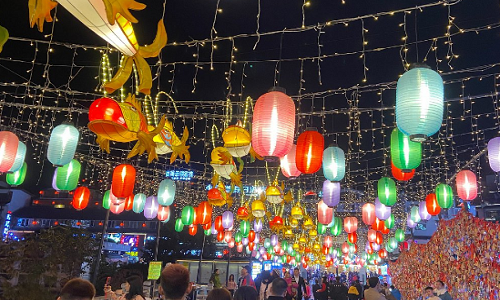
Night: The Cultural and Bar Street of West Street
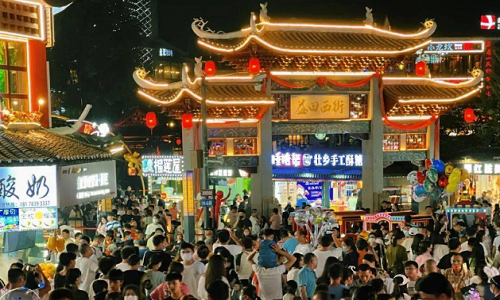
The night of Yangshuo's West Street is another captivating shooting opportunity. The lights of West Street, the neon signs of the bars, and the street vendors create a unique night scene atmosphere. This is an excellent time to capture the nightlife and cultural activities of Yangshuo.
· Shooting Suggestion: Use long exposure to capture the West Street at night, capturing the movement of lights and people, creating a dynamic and story-driven image.
3. Style Direction
Fresh and Healing
The natural scenery of Yangshuo, especially the Yulong River and the Ten-Lane Gallery, gives a refreshing and healing feeling. Through soft lighting and natural composition, you can capture the dreamlike landscape scenes, providing viewers with a peaceful visual experience.
· Shooting Suggestions: The gentle morning light, the reflection of mountains and water, and the rural scenery are the best materials for conveying a sense of healing. Use natural tones and soft lighting to present them.
Film-like Quality
The landscapes and cultural attractions in Yangshuo are extremely suitable for capturing scenes with a cinematic feel. Especially during the moments of shooting against the light, the interplay of mountains, people and light often creates magnificent scenes that resemble those in a movie camera lens.
· Shooting Suggestions: Make use of backlighting and low-light conditions to capture dynamic elements, combine the landscape with the figures, and create a visually impactful effect with depth and drama.
Humanistic Documentary
The streets of Yangshuo, the local folk activities, and the daily lives of the people all exude a strong humanistic flavor. When shooting these subjects, one can focus on capturing people's expressions, movements, and life details to showcase the unique cultural atmosphere of Yangshuo.
· Shooting Suggestions: Shoot in a documentary style, focusing on local fishermen casting nets, the local village scenes, and the daily life in Xizhai, to present the true landscape of Yangshuo.
Travel Portrait Photography
The natural scenery and ancient town atmosphere of Yangshuo are extremely suitable for travel photography. Whether you ride along the Ten-Lane Gallery or stand on the streets of the ancient town, you can take portrait photos that are full of romantic and story-like charm.
· Shooting Suggestions: Choose an open natural background in the gentle morning or evening sunlight to capture travel-themed portraits with emotions and stories.
.jpg "Yulong-River-3 (2)")
4. Transportation Guide
Self-driving and Chartered Vehicles
For tourists who wish to visit less popular tourist spots, hiring a car is a very convenient option. Especially when going to remote locations, such as some secluded mountains or fields, renting a car can save you time and ensure a precise arrival.
Electric Vehicle Riding
The cycling routes in Yangshuo are clearly marked. Especially on the rural paths of the Ten-Lane Gallery and the Yulong River, electric bikes can help you easily reach multiple photography spots, allowing you to take pictures without any time restrictions.
Photography of Longji Rice Terraces
Longji Terraces are one of the most spectacular terraces in China. With their unique geographical landscape and rich ethnic culture, they have attracted countless photography enthusiasts to come and capture this beautiful rural scenery. Every season brings its own distinctive beauty to the terraces, making them suitable for various types of natural and cultural photography. Whether it's the sunrise, the sea of clouds, or the folk customs of the Yao and Zhuang ethnic groups, Longji Terraces can provide photographers with abundant creative materials. Here is a comprehensive guide to photography in Longjie Terraces, helping you capture the most beautiful moments in this top-notch scenery.
1. Must-shoot Scenes
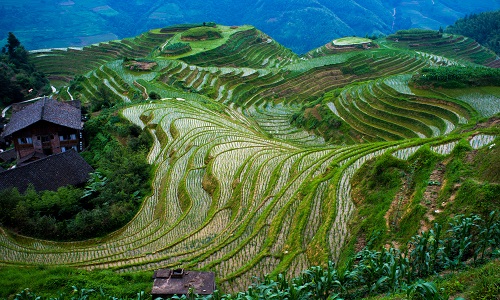
Panoramic View of Jinkeng Dazhai Terraced Fields
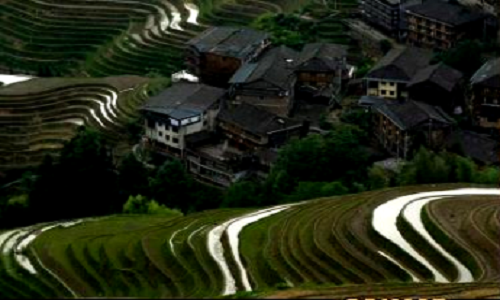
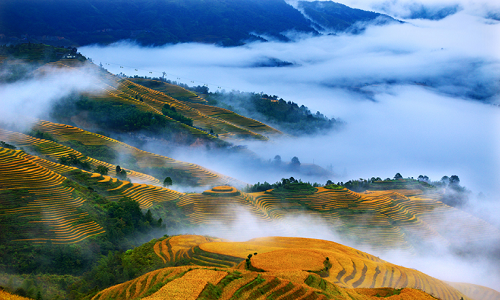
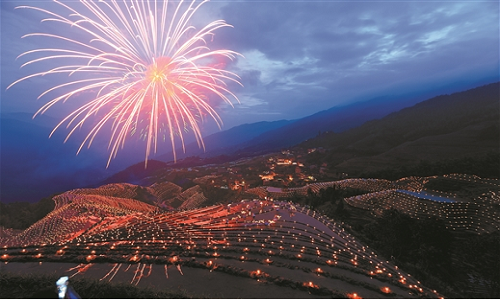
Jinkeng Dazhai Terraces are one of the core scenic areas of Longji Rice Terraces, and their cascading terraces are hailed as a "world wonder of terraced fields." From a high vantage point, you can capture the perfect blend of terraces and distant mountains, especially at dawn and dusk when golden light illuminates the terraces, creating a truly spectacular view.
· Shooting Suggestions: Select an appropriate shooting position. When shooting the panoramic view of Dazhai, try to use a wide-angle lens, which will help better showcase the vastness and depth of the terraces.
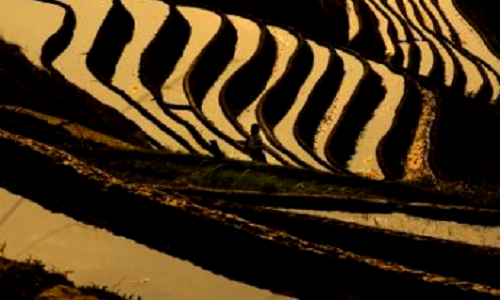
Terraced Fields at Sunrise, Sea of Clouds, Mirror-like Water Fields
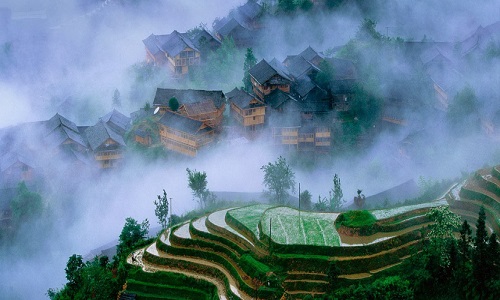
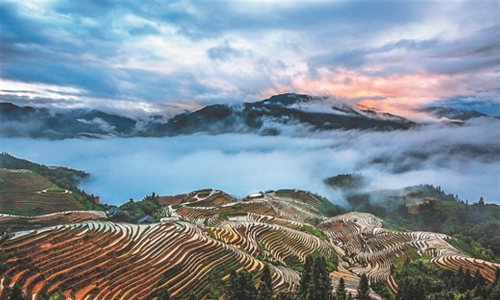
The sunrise and sea of clouds at Longji Rice Terraces are the scenes that photographers dream of. Especially in winter or spring, the mirror-like reflections formed after the water fields are irrigated, combined with the morning mist and the soft light of the sunrise, create a dreamlike and enchanting beauty. The combination of the sea of clouds and the sunrise can make your works full of poetry and depth.
· Shooting Suggestions: At sunrise, choose a high-altitude viewing platform for shooting. Make use of the reflection effect of the paddy fields to enhance the depth and beauty of the scene.
Yao and Zhuang Ethnic Group Clothing Culture
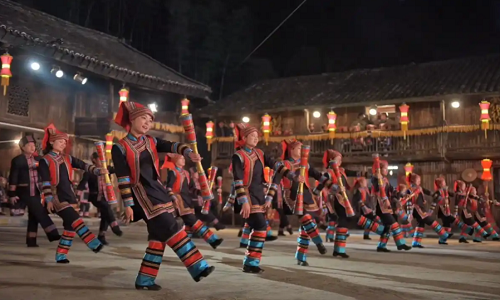
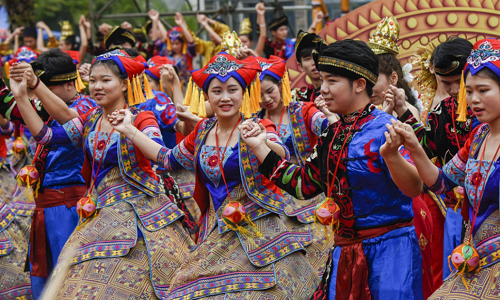
Longji Rice Terraces is not only a paradise for natural landscapes, but also a treasure land for humanistic photography. The Yao and Zhuang villages here preserve rich ethnic cultures. The costumes of the Yao ethnic group are exquisite and diverse, featuring embroidery and silver ornaments, with red, blue and black as the main colors, reflecting migration and totem worship. The costumes of the Zhuang ethnic group are simple and elegant, mainly in blue, black and green, emphasizing practical structure, and featuring batik and embroidery, embodying the harmony between humans and nature. Both of them reflect the rich local customs and ethnic identity. Villagers wearing traditional costumes working in the terraces are typical subjects for folk photography.
· Shooting Suggestions: When shooting, pay attention to capturing the harmonious combination of the villagers and the natural landscape. Shoot scenes of them working in the fields. You can use a telephoto lens to capture details and highlight the ethnic costumes and cultural characteristics.
2. The Best Season
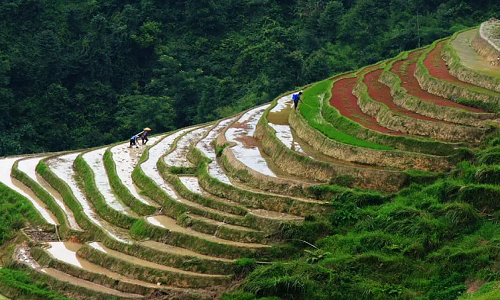
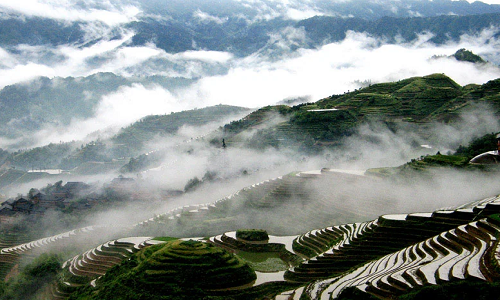
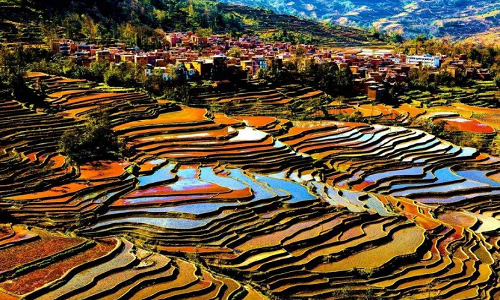
April - May: Irrigation Period (Mirror-like Reflection, Best Shots)
Every spring, especially from April to May, is the irrigation period for Dragon Backbone Rice Terraces. At this time, the paddy fields are filled with water, creating a mirror-like reflection. The shooting effect is at its best. This period is the favorite season for photography enthusiasts because the reflection of mountains and clouds on the water surface resembles an ink painting.
· Shooting Suggestions: Utilize the soft light in the early morning or evening to capture the reflection of the rice fields. Especially when the water surface is calm, the reflection will be the clearest.
June - August: Green Terraces
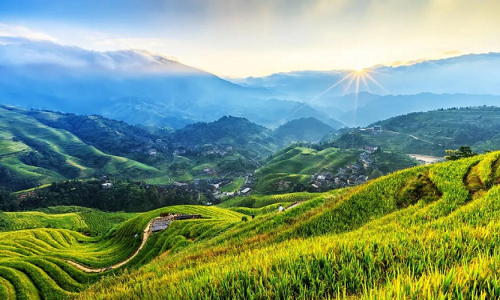
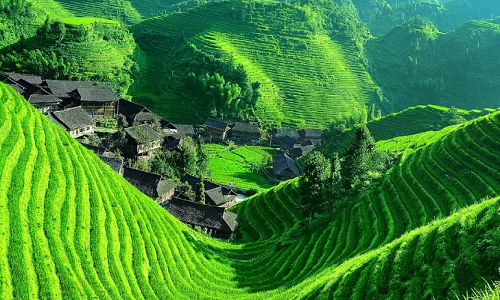
During the summer, the rice in the terraces begins to grow, and the fields take on a lush green hue. This period features a striking contrast between the greenery of the fields and the surrounding mountains, creating a unique beauty that is particularly suitable for capturing the vibrant rural scenery.
· Shooting Suggestions: Suitable for shooting large scenes. Use a wide-angle lens to showcase the vastness and layers of the terraced fields.
September - October: Golden Harvest
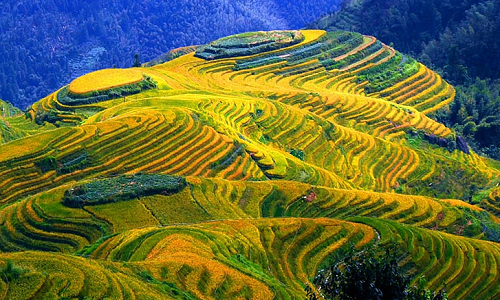
From September to October, it is the harvest season. The rice fields are golden, and farmers are harvesting the rice. At this time, the terraced fields have rich colors, transitioning from green to golden, presenting a scene of agricultural harvest, which is particularly suitable for capturing the autumnal rural scenery.
· Shooting Suggestions: During the shooting, use a low angle and the light of the setting sun to showcase the golden terraced fields and the busy rural life.
December - February: Snow Scenery / Mist
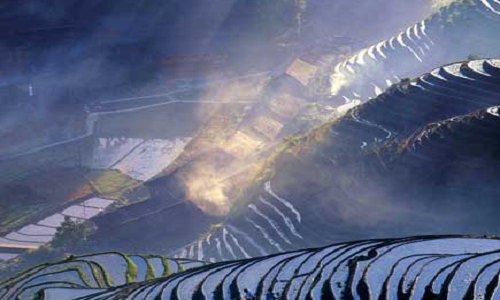
When the Long Ridge Terraces are covered with snow, they present a breathtakingly beautiful scene of pure white. Mist shrouds the terraces and the mountains, creating a mysterious picture. This season's photography is extremely challenging, but it is also the most poetic.
· Shooting Suggestions: When shooting snow scenes, use a low ISO to avoid overexposure caused by the strong reflection of light from the snow. Capturing the morning fog and light after the snowfall can create a charming atmosphere.
3. Seat Recommendations
Viewing Platform No. 1 (Xishan Shaoyue)
This is one of the most popular viewing platforms in Dragon Backbone Rice Terraces. It is located at Xishan Shaoyue and offers a panoramic view of the terraces in Jinping Dazhai. The view here is expansive and is perfect for capturing the entire panorama of the terraces as well as magnificent scenes such as sunrise and sea of clouds.
· Shooting Suggestions: Use a wide-angle lens. Try to position yourself ahead of time at sunrise to capture the reflection of the terraced fields in the morning light.
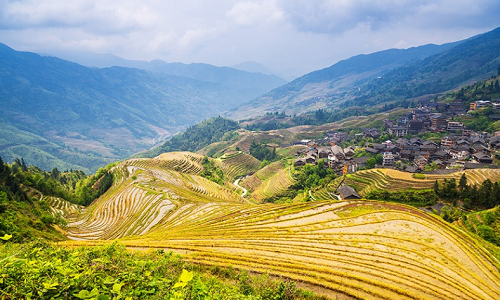
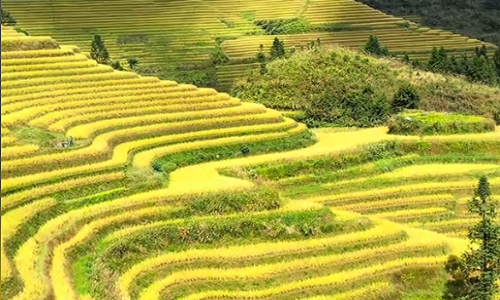
Viewing Platform No. 2 (Thousand-step Staircase)
The platform No.2 offers a unique perspective of Dragon Backbone Rice Terraces, especially when shooting the thousand-step terraces, it can showcase the distinct beauty of the terraces' layers.
· Shooting Suggestions: This area is particularly suitable for capturing panoramic views of large-scale terraced fields. Especially when the sunlight shines on the terraces, it can showcase the depth and texture.
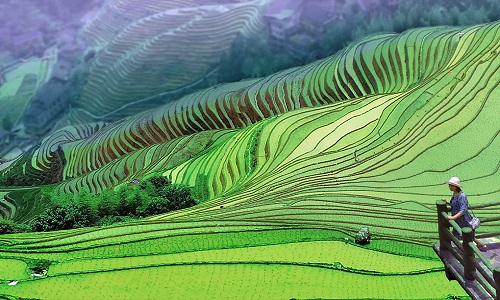
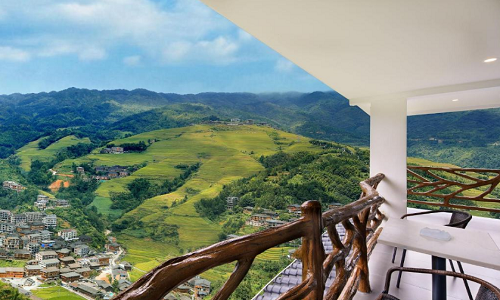
No. 3 Golden Buddha Peak (From Cable Car Perspective)
No. 3 Golden Buddha Peak is located at a high point on the Dragon Ridge. From the cable car, one can enjoy a panoramic view of the magnificent scenery of the terraced fields. This viewpoint not only allows for capturing the vast landscape of the terraced fields but also enables the observation of the interaction between the mountains and the terraced fields.
· Shooting Suggestions: Use a telephoto lens to capture the scene where the distant mountains and terraced fields interweave, creating a sense of depth.
4. Transportation Guide
Tourist Bus
The Dragon Backbone Rice Terraces Area is a large scenic area with multiple viewing platforms. The scenic area offers bus services, which can transport tourists from the entrance to all the viewing platforms. Buses are the most convenient mode of transportation, especially suitable for tourists with limited time.
Cable car and Hiking up
Some of the viewing platforms on Longjie can be reached by cable car, which is particularly convenient for tourists who wish to easily reach higher altitudes. At the same time, there are many hiking routes within the Longjie scenic area. Walking on the trails between the terraces, you can better integrate with nature and appreciate the grandeur of the terraces.
Walking Routes at Viewing Platforms
There are walking routes at many viewing platforms along the Li River and in Xingping. You can reach the best shooting spots by walking. There are several scenic spots suitable for shooting here, such as the Elephant Trunk Hill and the Yellow Cloth Reflection. Walking allows you to find those more secluded and magnificent shooting positions.
Photography of Caves
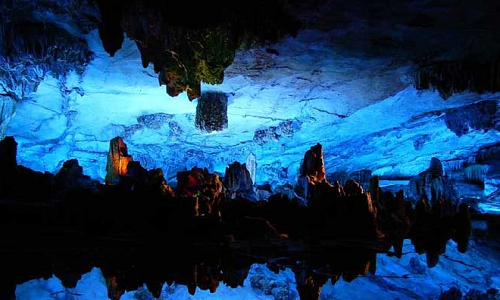
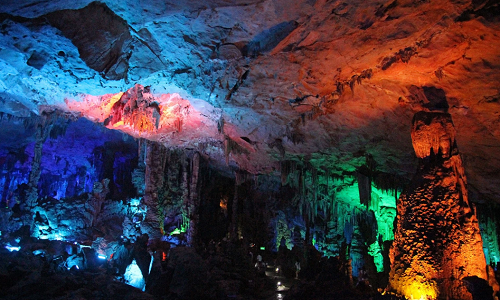
Silver Cave: A Dreamlike Underground Palace
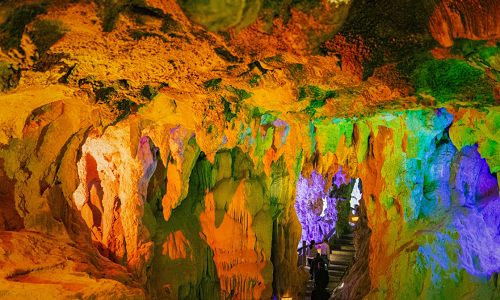
· Cave Features: Silver Cave is known as the "Underground Palace" and is renowned for its unique stalactite and stalagmite landscapes. The cave walls are covered with various shapes of stalactites, and under the light, they shine with a silver-like luster, creating a mysterious and fantastical atmosphere. The scenes inside the cave are rich in variety, ranging from huge stone pillars to delicate stalagmites, and each piece of rock exudes a natural artistic charm.
· Shooting Techniques:
Controlling the light source: The charm of Silver Mountain lies in the coordination of the lighting. By varying the angle and color of the light, different layers and colors of the rocks can be displayed. When shooting, pay attention to controlling the camera exposure to avoid overexposure and loss of details.
Utilizing the light and shadow effect: The lights inside the cave can create a very rich range of light and shadow effects. By making use of these natural light sources, one can capture the sculptural stone stalactites and stalagmites, enhancing the dramatic quality of the photos.
Select the appropriate focus: By using a medium telephoto lens or a long telephoto lens, you can focus on specific stalactites or stalagmites, capturing exquisite details while blurring the background and highlighting the beauty of the subject.
Lu Di Cave: An Underground Wonderland Interwoven with Colorful Lights
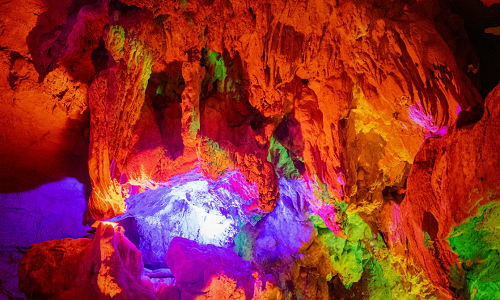
· Cave Features: Lu Di Cave is located in the urban area of Guilin. It is a cave with abundant geological relics. The natural formations of peculiar rock structures such as stalactites, stalagmites, and stone pillars inside the cave are like entering a fantastical world. Especially under the illumination of lights, the contours and shapes of the rocks present charming colors and textures, as if entering a dreamlike underground kingdom.
· Shooting Techniques:
Exposure control: Due to the dim lighting inside the cave, using a long exposure is the best option for capturing the interior of the cave. Adjusting the camera's exposure time can make the details clearer, especially for the shots of stalactites, which can reveal their texture and shape.
Using a wide-angle lens: A wide-angle lens is helpful for capturing the overall view of the cave, especially when photographing stalactite clusters and stone pillars. It can better showcase the spatial sense and layering of the cave.
Lighting coordination: The lighting inside the cave is crucial for the shoot. It can highlight the color and texture of the rocks. Try adjusting the camera position from different angles and make use of the changing light within the cave to capture rich color gradations.
Photography in Guilin City Area
Guilin is not only famous for its charming natural scenery, but also boasts a number of landmark buildings and cultural attractions within the city, providing photographers with highly creative shooting materials. Whether it's the grandeur of Xiangbin Mountain or the night lights of the Two Rivers and Four Lakes, every landmark in the city of Guilin can present a different beauty. Through ingenious shooting techniques and creative composition, you can capture the urban charm and unique style of Guilin.
1. Must-see Landmarks Photos
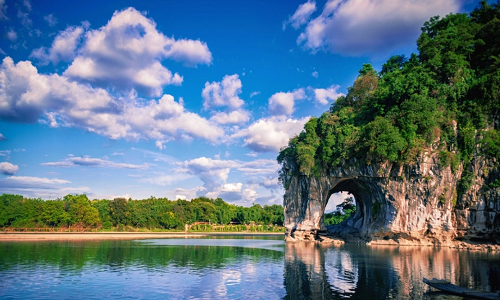
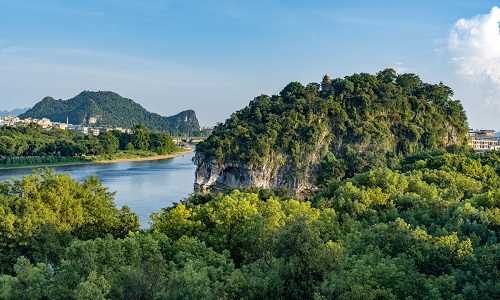
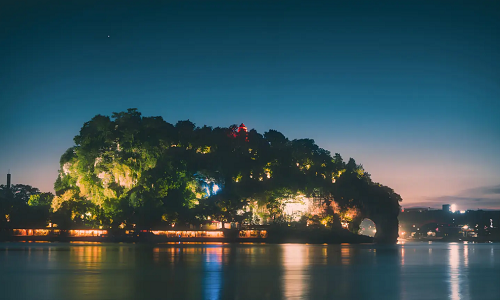
Elephant Trunk Hill
· Scenic Spot Features: As the most symbolic attraction in Guilin, the Elephant Trunk Hill is one of the representatives of Guilin's landscape. Its shape resembles a huge elephant trunk that extends into the Li River. It is a classic subject for capturing Guilin's scenery. Whether under the sunlight during the day or illuminated by lights at night, the beauty of the Elephant Trunk Hill is not to be missed.
· Shooting Suggestions:
During the day: Make use of the sunlight to highlight the outline of the mountain. Use a telephoto lens to capture the details and distant views of the Elephant Trunk Hill.
Night scene: During the night, you can use long exposure to capture the shape of the elephant head mountain and the surrounding lights, capturing its beautiful reflection under the light.
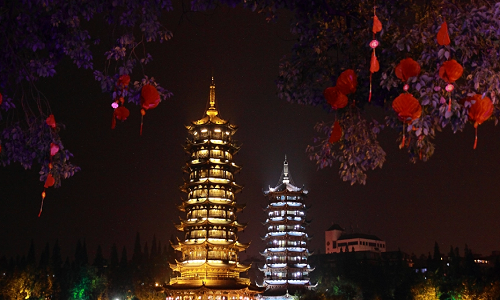
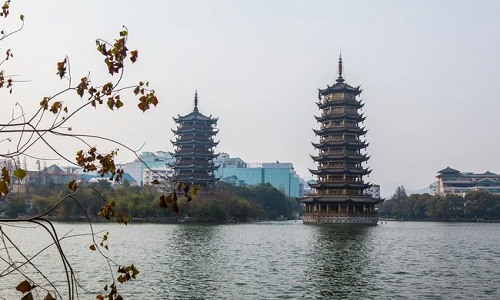
Sun and Moon Twin Towers
· Scenic Spot Features: The Day and Moon Twin Towers in Guilin are another iconic building in the city. Their scenes during the day and at night are distinct. Especially at night, the lights of the twin towers and their reflections on the lake create a visually stunning scene, making it a classic subject for capturing the night views of Guilin.
· Shooting Suggestions: Use long exposure at night to capture the lights and reflections of the Sun and Moon Towers, enhancing the layering and lighting effects of the scene. You can choose a lower angle to capture the interesting interplay between the towers and their reflections.
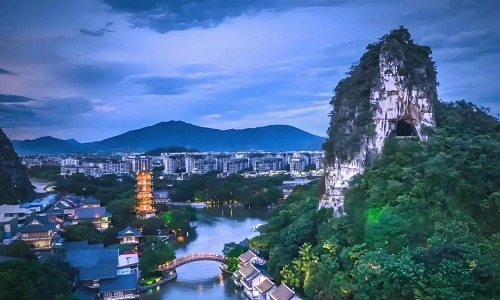
Two Rivers and Four Lakes
· Scenic Spot Features: The Two Rivers and Four Lakes are one of the lighting water systems in the urban area of Guilin. Its beautiful night view has attracted countless tourists and photography enthusiasts. The scenery during the day and at night is different, especially at night, where the lights and the reflections on the water complement each other, presenting a picturesque and beautiful scene.
· Shooting Suggestions: When shooting at night, choose a low angle for the shot. Make use of the contrast between reflections and lights to create a dreamy scene. Use long exposure technique to capture the flowing nature of the water surface and lights.
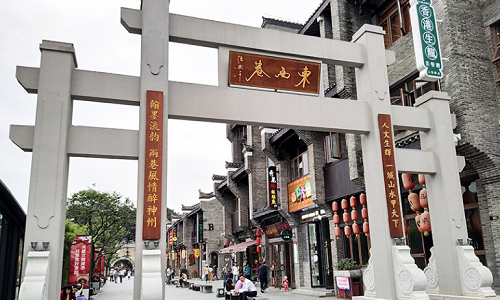
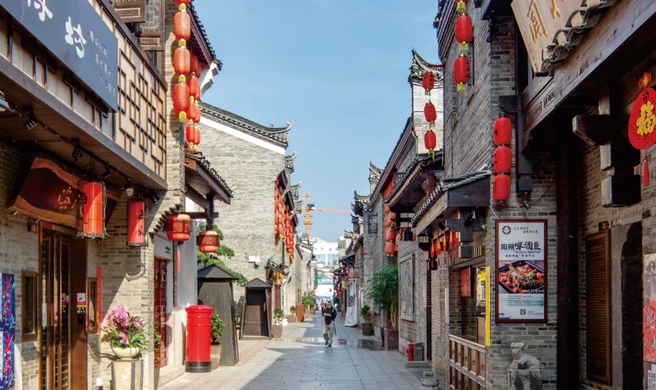
Dongxi Lane
· Scenic Spot Features: Dongxiang Street is a historical district in the urban area of Guilin, preserving a wealth of cultural heritage and local customs. The ancient buildings, stone-paved roads, handicraft shops and street food here exude a strong traditional atmosphere, making it an ideal place for capturing the local cultural and humanistic scenes of Guilin.
· Shooting Suggestions: When shooting during the day and in the evening, capture the scenes of pedestrians, shops and alleys on the street. It is recommended to adopt a documentary-style of photography, capturing the details and atmosphere of street life.
2. Shooting Method
Blue Hour Night Scene (20 minutes before and after sunset)
Blue Hour refers to the period about 20 minutes after sunset, when the sky turns deep blue and the lights contrast beautifully with the environment. The light during this time is soft, making it the perfect time for capturing city night scenes, especially the landmark buildings in Guilin, such as the Twin Towers of Day and Night and the Elephant Trunk Hill.
Long-exposure Flowing Water
The river systems in the urban area of Guilin provide ideal conditions for long-exposure photography. Especially along the Li River and the two rivers and four lakes, the dynamic movement of the water contrasts with the serene urban landscape. Long exposure can turn the water flow into a smooth, silk-like effect, adding a touch of softness to the picture.
Architectural Symmetrical Composition
The architectural layout in the urban area of Guilin is well-organized. Especially in the areas of the Twin Pagodas and the Two Rivers and Four Lakes, using symmetrical composition can enhance the balance and beauty of the scene. By incorporating symmetrical elements, it can highlight the elegance and grandeur of the buildings, and demonstrate the modernity and historical sense of the city.
 2 Days in Longsheng & Yangshuo : A Guided Tour from Guilin through China’s Hidden Gems
 4-Star Guilin Boat Tour: Li River Cruise & Yangshuo West Street Adventure
Quick Selection by Time Period & Weather
1. Time Period
· Morning (05:30 – 08:00)
Li River misty scenery, sunrise over Longji Rice terraces, reflection of Yulong River
· Morning (08:00 – 11:00)
Side-lighting photography, portrait travel photography
· Afternoon (15:00 – 17:00)
Side-lighted Peak Forest
· Sunset (17:00 – 19:00)
The Elephant Trunk Hill, Laozhai Mountain, and the Yulong River at sunset
· Evening (19:00 – 22:00)
City night view, Yangshuo West Street, fishing fires shooting
2. Weather
· Sunny day: Sharp scenery, reflections
· Cloudy day / Misty weather: Impressionistic Chinese painting style
· Rainy day: Misty Guilin, the most poetic atmosphere
· Foggy day: Large scenes will definitely be presented in Longzhiguo and Lijiang
Notes for Attention
To ensure a smooth and enjoyable photography trip for you, here are some practical tips and precautions that can help you plan your shooting journey better.
1. Choose Shooting Positions in Advance during Peak Seasons
The tourist peak seasons in Guilin and Yangshuo usually occur in spring and autumn, especially during holidays and golden weeks. The scenic spots and popular shooting locations are often overcrowded. If you plan to shoot during these periods, it is recommended to arrive at least 30 to 60 minutes in advance to secure the best shooting positions.
2. Respecting Local Farmland and Ecological Environment
Many shooting scenes, especially those involving terraced fields and rural landscapes, are closely related to the local farmland. During the shooting process, it is necessary to avoid trampling on the farmland, especially during the irrigation period and farming season. This not only affects the growth of crops but also causes inconvenience to the local farmers.
3. Protecting the Natural Environment
Keep the environment clean and avoid discarding garbage or items generated during the shooting in the natural scenic area. Respect the local natural environment and residents, and jointly maintain this beautiful land.
4. Respecting Local Residents and Culture
When shooting the cultural and humanistic scenes of ethnic minorities such as the Yao and Zhuang, always maintain respect. Avoid disturbing the daily lives of the local people, especially when they are engaged in traditional activities or labor.
5. Photography Ethics
Try to avoid capturing others' private lives, especially with unauthorized close-up shots. Respect others' privacy and prefer to shoot public scenes or events. When necessary, seek permission from the people involved.
6. Does the Fisherman Need to Pay for Casting the Net?
Generally, there is no extra charge for shooting a fisherman casting his net, especially in public areas. However, if you want to take close-up shots or capture more distinctive scenes, certain specific areas or private places may charge a fee. You can make an appointment for shooting through travel agencies, local guides, or in some bamboo raft rafting operations run by fishermen. These tour groups usually provide you with a professional shooting environment and ensure that you capture the ideal scenes.
7. Is There Any Limitation to Aerial Photography?
Yes, considering the protection of the natural environment and the safety of tourists, many places have strict flight regulations. Especially for the Li River and Longzhi Terraces, some areas have been designated as no-fly zones. Therefore, if you plan to conduct aerial photography in these areas, be sure to check and follow the local regulations in advance to ensure that you do not violate the flight ban.
8. Pay Attention to Safety (especially near slippery rocks and water surfaces)
When shooting the Li River, the bamboo raft ride in Yangshuo or the water surface of the Yuelong River, the water edges are often very slippery. Many times, photographers need to get close to the water to take pictures, so be especially careful to avoid falling. It's best to wear shoes with good traction, especially those with soft soles or waterproof properties, to maintain stability.
9. Sun Protection Measures
The sunlight in Guilin and Yangshuo is very intense, especially during summer. Spending a long time in the sun while taking photos can easily lead to sunburn, so sun protection is essential.
10. Mosquito Prevention Measures
In the areas along the Li River and some rural regions, there are many mosquitoes, especially during the early morning and dusk hours. Carrying mosquito repellent or wearing mosquito-proof clothing can prevent mosquito bites, which will not affect the shooting and experience.
11. Rain Protection Equipment
The weather in Guilin is highly unpredictable, and there are often sudden downpours. Rain protection equipment such as umbrellas, raincoats, and waterproof bags are extremely important for photographers.
12. Avoid Purchasing Expensive Photography Spots
In some popular tourist attractions or shooting locations, there may be merchants promoting "photography spots" or "special positions". These spots often come with high prices, and the shooting quality may not be better either.
13. Properly Plan Your Itinerary and Photography
Plan your shooting route and schedule in advance. Choose different angles and camera positions for creative shooting, and avoid just sticking to those "paid" shooting spots. Many beautiful scenes in Guilin can be captured from multiple perspectives, and many free attractions also have excellent viewpoints.
 A Full-Day Yangshuo Tour with Rafting, Biking, and Impression Liu Sanjie
 Top Yangshuo Multi-Day Tours: 3 Days of Cycling, River Rafting & Mountain Views
Guilin isn’t just a travel destination — it’s a feeling. The peaceful mountains, clear rivers, and slow countryside life create memories that last a lifetime. Guilin is a must-visit scenic spot for photography lovers. With the right camera position, timing and lighting, anyone can capture stunning pictures that resemble traditional Chinese paintings.
Prev: Dragon Backbone Rice Terraces: Everything You Need to Know Before Visiting
Next: Guilin Weather
Wechat: YourWayHolidayAsia
24 Hours Hotline:
+8613735411378
Certificate of Excellence
2012~2026

Your Way Holiday
1 to 1 tailor-made service from our professional travel advisors for the most sophisticated
Constantly excellent reviews for attraction, hotel and service Competitive price
Local experts provide quality tours Best selected knowledgeable local guides Authentic local restaurants
7*24 hours available to create you a worry-free tour. No Hidden Fees and absolutely no pressure to buy. Secured