24 Hours Hotline: +8613735411378
Email:[email protected]
24 Hours Hotline: +8613735411378
Email:[email protected]
Tour Style:
This six-day trip leaves Chengdu for Lhasa and pairs the city sights with time in the Tibetan countryside, so you see more than palaces and monasteries alone. In and around Lhasa you visit the Potala Palace, Jokhang Temple and the Barkhor circuit, and the great Gelug monasteries at Drepung, Sera, and Ganden, where the monks debate in the courtyard each afternoon. Then you go further out, trekking around Trubshi Village and staying the night with a farming community to see how country life runs day to day. You are collected from your hotel in downtown Chengdu for the flight to Lhasa, and the trip ends with a transfer to Lhasa Train Station or the airport.
Duration: 6 Days 5 Nights
Attractions(Cities):
Potala Palace, Jokhang Temple, Barkor Street, Drepung Monastery, Sera Monastery, Ganden monastery, Trubshi Village
Pick-up point:
Your hotel in Chengdu downtown
Finishing point:
Lhasa Airport, Train Station
Tour Customizable:
Absolutely! (Tell us your specific requirements in the inquiry)
Payment Types:
Cash, Wire, Paypal, WesternUnion, Alipay, Wechat, Bank transfer
Available: Daily
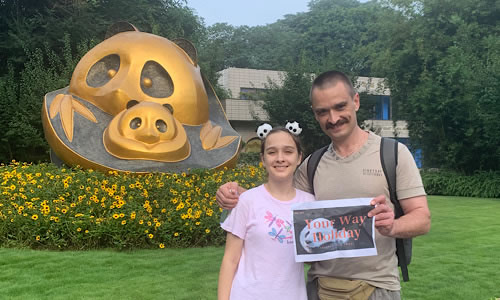
The morning is your own in Chengdu until your guide and driver come round to take you to Shuangliu International Airport for the flight to Lhasa, about two hours in the air. When you land, your Lhasa guide and driver meet you at the exit with a welcome sign reading Your Way Holiday, help with your bags, and drive you to your hotel in the city. On the way they talk you through Lhasa and what the days ahead hold. Once you are checked in, the rest of the day is left free on purpose, so you can take it easy and let your body settle at the height before any sightseeing.

Your guide meets you in the hotel lobby in the morning, and the day starts at the Potala Palace, the landmark that defines Lhasa and the highest palace of its kind in the world. It is a UNESCO World Cultural Heritage site and the single most visited place in Tibet. Climbing through the halls, you pass the jeweled and golden burial chortens, the stupa tombs of earlier Dalai Lamas, and rooms filled with Buddhist frescoes, painted thangkas, and mandalas. From the upper terraces the whole of Lhasa opens out below, and your guide explains what each part of the palace was built for.


After a lunch of Tibetan dishes at a local restaurant you go on to Jokhang Temple, the holiest site in Tibet. It was first built in 647 AD during the reign of King Songtsen Gampo and is tied to Princess Wencheng of the Tang court, and it is still the spiritual centre of the city. At the gate, pilgrims press their prostrations to the stone, a plain and forceful sight. Inside, among halls that mix Tibetan and Chinese workmanship, the temple keeps its greatest treasure, a revered statue of the Buddha, and your guide explains the rituals moving around you.

Encircling Jokhang is Barkhor Street, where pilgrims and locals walk the kora, the clockwise circuit, all day. You are welcome to join the current and, as you go, the old market lanes off the circuit sell hand-made handicrafts, prayer flags, and religious objects. In the trading corner, Tibetans from different regions lay out turquoise, coral, and silver and barter over them. Faith and everyday commerce run side by side here, which makes it the best place in the city to watch Lhasa as it really is.


To round off the day you sit down in a traditional Tibetan teahouse with the people around you and drink po cha, the salted butter tea that warms the plateau through the day. It is a slow, sociable stop. After it, a welcome dinner of classic Tibetan dishes is set for you, a first proper look at the local table and an easy way to finish the first full day in Lhasa.


Your guide and driver take you back to your hotel in a private car. On the short ride you can ask about what you saw or about the countryside days still to come, and your guide is glad to talk it over. Once you are checked back in, they make sure you have what you need before leaving you to rest, and at this height an early night is the right call.
Today is set aside for the two great Gelugpa monasteries near Lhasa, and it opens at Drepung. The scholar Jamyang Choeje founded Drepung in 1416 at the foot of Gambo Utse Mountain, and it grew into the largest monastery in Tibet, at one point housing more than ten thousand monks. You walk the terraced complex and come to the enormous monastery kitchen, the largest of its kind, where food for thousands was once cooked every day. Just outside, carved Buddhist panels show the same patience as the buildings, fine detail worked deep into stone.


After lunch you continue to Sera Monastery, founded in 1419 by Jamchen Choeje, a disciple of the scholar Tsongkhapa. Sera is best known for its monk debates, held in the courtyard each afternoon, where pairs of monks work through a point of Buddhist philosophy, one pressing with questions and the other answering, hands cutting the air to mark each step. Between the debates your guide takes you to the rock paintings of the Buddha on the hillside, the three sand mandalas laid out in fine detail, and the Tibetan scripture printing house, where old texts are still reproduced block by block by hand.


As the day winds down you sit to a dinner of local Tibetan dishes, a relaxed end to a full day of monasteries. After the meal your guide and driver bring you back to your hotel in a private car, and the short ride is a good moment to ask about the sights or about the countryside still ahead. Then you are settled in for the night in Lhasa.
The morning starts with a drive of roughly 40 kilometres northeast of Lhasa to Ganden Monastery, which with Sera and Drepung makes up the great three Gelug university monasteries of the region. Je Tsongkhapa Lozang-dragpa, founder of the Gelug order, established Ganden in 1409, and it long remained a centre of Tibetan Buddhist study. Much of the original complex was damaged after 1959 and has since been partly rebuilt, so what you see now mixes restored halls with the quiet of the hillside. Your guide walks you through the surviving structures and the story of how the monastery was put back together.


From Ganden you continue to Trubshi Village, set at nearly 3,400 metres, to see how a Tibetan farming community lives day to day. The point of the stop is the people: you spend time with local families, watch the ordinary routines and customs behind them, and are welcomed in. In the evening a traditional dinner is prepared and shared with the villagers, and you sleep in the village that night, so you get the early and the late hours there rather than only a passing visit.


After breakfast your guide takes you out on foot through Trubshi Village, one of the prettiest Tibetan villages to walk. It is the traditional starting point for the old trek from Ganden to Samye Monastery, and even a short part of that route gives you the same ground the pilgrims use: village lanes, open hillside, and farmland. Along the way you pass traditional stone houses and see the daily work that has carried on here for generations. If the weather and the animals allow, you can ask about adding a horse or yak for part of the walk; riding is not included in the price and is arranged and paid for directly with the local families.


In the afternoon you drive back to Lhasa and settle in for the night. With the rest of the day free, you can wander the streets on your own, look in the shops, or take another slow walk around the Barkhor if you liked it. It is unhurried time, meant for resting after the trek and for following up on whatever you still want to see in the city.
Your last morning in Lhasa is free at your own pace until your guide and driver arrive to take you to Lhasa Train Station or the airport, whichever matches your onward travel. Over six days you have moved from the flight in from Chengdu to the Potala Palace, the pilgrim circuit at Jokhang and Barkhor, the debates in the courtyard at Sera, and an overnight among farming families in Trubshi Village. Your guide helps you check in and sees you off, whether you are flying home or continuing on by train.
A trip into Tibet needs additional entry paperwork besides a Chinese visa. Rules shift with nationality and season, so ask us what applies to your passport when you plan, and allow enough time for it to be arranged.
Lhasa sits on a high plateau, and the schedule is built to help you adjust. The first day is kept quiet, the city sights come next, and the harder walking in the village only happens after you have settled. Drink plenty of water and tell your guide how you are feeling.
By air. The first day you fly from Chengdu to Lhasa, about two hours in the air. Your Lhasa guide meets you at the airport and drives you to your hotel for the night.
You should be happy walking on uneven ground for a few hours. If you would rather not walk the whole way, you can arrange a horse or yak directly with the villagers, which is not part of the tour price.
It runs privately, with your own guide and car throughout in both Chengdu and Lhasa. The pace and the order of the sights can be set around your group.
On the last morning your guide and driver bring you to Lhasa Train Station or Lhasa airport, whichever fits your onward ticket, and see you off from there.
Price Per Person in US Dollars
Personalized Travel Consultant
Experience the best of China with our expert travel consultants by your side. With years of local tourism experience, they are not only professional and knowledgeable but also deeply committed to making your trip unforgettable. Your dedicated consultant will craft a bespoke tour plan tailored to your unique interests, schedule, and budget, offering you the utmost flexibility. From the moment you start planning until the end of your journey, they will be in touch, ensuring every detail is perfect and that your trip runs smoothly.


Exceptional Local Guides
Discover it through the eyes of our exceptional local guides. All certified and experienced, they are passionate about sharing their deep knowledge of attractions, history, and culture. Whether you're interested in hidden gems or popular sites, they know the best places to visit. They can recommend top local restaurants, unique shopping spots, and must-see shows. Beyond just guiding, they provide enriching insights into the history, customs, and authentic daily life, making your experience truly immersive.


Premium Private Transportation
Travel in comfort and style with our premium private transportation. We offer a fleet of air-conditioned, non-smoking, clean, and meticulously maintained vehicles, all less than four years old. Our professional drivers, all locals with over a decade of driving experience, are friendly, courteous, and dedicated to your safety and comfort. Depending on your group's size, we provide a range of vehicles, including sedans, SUVs, business vans (MPVs), and spacious buses, all with ample luggage space.


Authentic Dining Experiences
We prioritize genuine local culinary experiences over pre-arranged tourist restaurants. Our local guides will recommend the best local restaurants where you can savor authentic flavors. This approach ensures you enjoy the freshest, most authentic meals, tailored to your preferences, and experience the true essence of the local cuisine. Whether your dietary needs are vegetarian, Muslim, Chinese, Western, Jewish, or Indian, we have excellent options to make every meal a delightful part of your journey.


Duration:6-8 Hours
Attractions(Cities): Chengdu Panda Research Base, People's Park, Jinli Ancient Street, Kuanzhai Alley
Tour Style:One day, one private car, and an English-speaking local guide who has already booked every ticket on the list. Mornings start early at the Chengdu Research Base of Giant Panda Breeding so you catch the pandas while they are still active; after that, the pace slows to a hillside teahouse in Renmin Park, gaiwan jasmine tea in hand. Between the two you walk Jinli's lantern-lit lane and finish in Kuanzhai Alley, where restored Qing courtyards now sit alongside small shops and tea rooms. Pick-up and drop-off match your schedule — a Chengdu hotel, a train station, or the airport.
Duration:8 Hours
Attractions(Cities):Chengdu Giant Panda Research Base, Leshan Giant Buddha
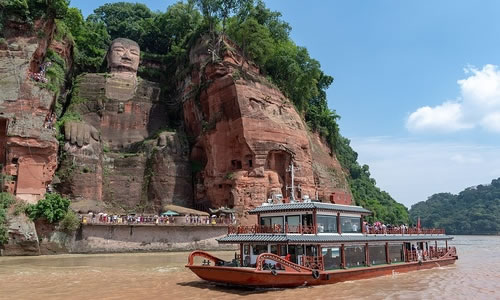
Tour Style:Two UNESCO-listed sights on one private day out of Chengdu. The morning starts at the Chengdu Research Base of Giant Panda Breeding while the animals are still active in the cool hours, then the driver takes you south along the expressway to Leshan, where a 71-metre stone Buddha carved between 713 and 803 AD still stands at the junction of three rivers. Walk the Nine Bends Plank Road, take the river boat, or do both. English-speaking local guide, private air-conditioned car with an experienced driver, Panda Base and Leshan tickets included, hotel, train station, or airport pick-up.
Duration:2 Days, 1 Night
Attractions(Cities):Chengdu Panda Base, Renmin Park, Wuhou Temple, Jinli Street, Wenshu Monastery, Chengdu Museum, Tianfu Square
Tour Style:This two-day private tour moves between the old and new faces of Chengdu at your own pace. Day 1 starts at the Chengdu Research Base of Giant Panda Breeding in the morning, when the pandas are feeding, then takes in the teahouse scene at Renmin Park, the Three Kingdoms shrines of Wuhou Temple, and the snack stalls and craft shops of Jinli Ancient Street. Day 2 covers the Buddhist halls of Wenshu Monastery, the collections of the Chengdu Museum, and the modern plaza at Tianfu Square. A private car and an English-speaking guide carry you between all of them, with pickup from your hotel, train station, or the airport, and the daily order flexes if you want longer at the panda base or a slower teahouse stop. Lunch is left open so your guide can point you to local kitchens rather than tourist menus.
Duration:8-9 Hours
Attractions(Cities):Dujiangyan, Qingcheng Mountain
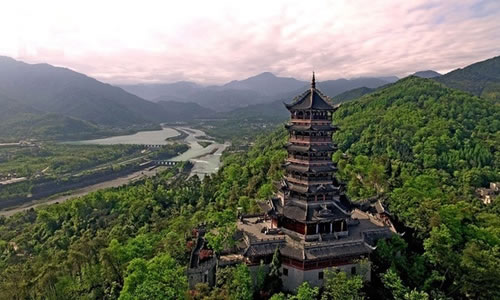
Tour Style:This day trip pairs two UNESCO-listed sights west of Chengdu: the Dujiangyan Irrigation System and Qingcheng Mountain. A private car and driver collect you from your hotel, train station, or the airport and stop first at Dujiangyan, where an English-speaking guide walks you through the 256 BC waterworks that Li Bing and his son built without a dam, still carrying Min River water onto the Chengdu plain after more than 2,000 years. You see the Fish Mouth levee, Flying Sand Reef, and Bottle Neck channel up close. After lunch you drive to Qingcheng Mountain, a founding site of Taoism, and take the cable car and stone paths past the front-mountain temples. Lunch is left out on purpose so your guide can point you to a local Sichuan kitchen; pace, photo stops, and vegetarian or lighter requests are easy to adjust on a private tour.
Duration:3 Days 2 Nights
Attractions(Cities):Leshan Giant Buddha, Mount Emei, Chengdu Research Base of Giant Panda Breeding, Renmin Park, Jinli Ancient Street, Kuanzhai Alley
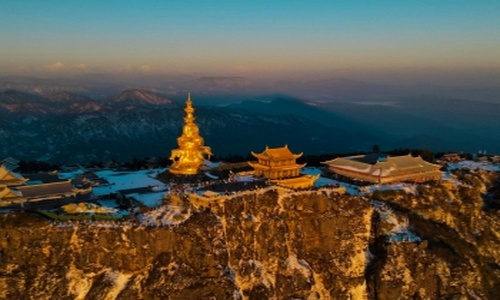
Tour Style:This three-day private tour pairs Chengdu with two mountain and heritage sights. Day one covers the Giant Panda Breeding Research Base in the morning, then Renmin Park teahouse, Jinli Ancient Street, and Kuanzhai Alley. Day two drives about two hours to the 71-metre Leshan Giant Buddha, seen from the cliff path or a Dadu River boat, then on to an overnight at the foot of Mount Emei. Day three rises by eco-bus and cable car to the Golden Summit at 3,077 metres and the old temples before the return to Chengdu. A private car, driver, and English-speaking guide handle tickets and transfers, and pick-up and drop-off run from your Chengdu hotel, station, or airport.
Wechat: YourWayHolidayAsia
24 Hours Hotline:
+8613735411378
(Your Privacy is Protected)
1 to 1 tailor-made service from our professional travel advisors for the most sophisticated
Constantly excellent reviews for attraction, hotel and service Competitive price
Local experts provide quality tours Best selected knowledgeable local guides Authentic local restaurants
7*24 hours available to create you a worry-free tour. No Hidden Fees and absolutely no pressure to buy. Secured