24 Hours Hotline: +8613735411378
Email:[email protected]
24 Hours Hotline: +8613735411378
Email:[email protected]

Overview
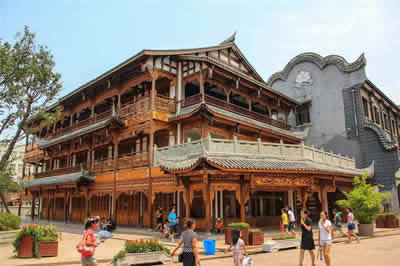
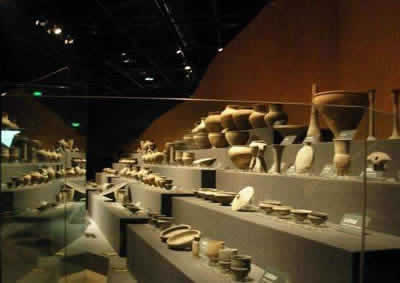
Jianchuan Museum is located in the ancient town of Anren, Dayi County, Sichuan Province, created by private entrepreneur Fan Jianchuan. The museum covers an area of 500 mu and its building area reaches nearly 100,000 square meters. It owns a collection of more than 8 million items, among which 404 belong to top level national treasures. The museum honors "warfare collection for peace; lessons learned for the future; disasters collection for tranquility; folk custom collection for heritage" as the theme. More than 30 branches of it have been categorized into four series: anti-Japanese War, folk custom, the red era, and earthquake relief. They have been opened in 25 venues, making it so far the private museum with the largest investment of private capital, the largest scale of construction and exhibition area and also the most comprehensive collection.
The branches of gallery that have been currently opened include Mainstay Hall for war relics exhibition, Frontal Battlefield Hall, Flying Tigers Hall, Unyielding POW Hall, Sichuan Army Hall, Veteran Fingerprints Square and Chinese Anti-Japanese Heroes Group Statues Square; Red Era Series, Porcelain Hall, Living Goods Hall, Badge, Bell and Seal Hall, Mirror Hall, Educated Youth Hall, Memorial Hall of Deng Xiaoping; Folk Custom Series: Shoes for Bounded Feet Hall, Old-time Residence Furniture Hall, Traditional Chinese Medical Science hall; Earthquake Series: Hall for Earthquake Shock Diary 5.12-6.12, Hall for Fine Arts about Wenchuan Earthquake, 5.12 Earthquake Relief Memorial Hall and Defense Weapons Hall, the “Third Front” Movement Aviation Hall.
1. The Mainstay Hall
This hall has an exhibition area of 2435 square meters, which is the largest one. It is a orange and square hall, with the first stop for visitors located at the forefront of the main road. Its collections are arranged into historical photographs, documents, real objects, documents and the scene recovery or landscape display of Tunnel Warfare, Mine Warfare and Qingsha Zhang Warfare. Through three thematic units - "National Backbone", "Days behind Enemy Lines", and "Bases Building", it has been vividly demonstrated how the Communist Party of China and its army under the leadership of the people has fighted behind enemy lines during the Eight-year Anti-Japanese War. It also highlights that the Communist Party of China represents the will of all the Chinese People, in leading and promoting the Anti-Japanese War: a bloody battle in the forefront has been undertaken and a glorious history of how back then the Party has become the mainstay of national unity.
2.The Frontal Battle Field Hall
This hall is located next to the Communist Party Anti-Japanese Army Museum, indicating the KMT-CPC cooperation to fight against the Japanese enemy. Its construction area is 1299 square meters and it is a plain white square building. The hall then reproduces through artifacts, photographs and historical information the anti-Japanese battle field back then. The first unit, "the origin of the war", introduces briefly the historic period from 1931 to 1937, during which the KMT government turned from avoidance to confrontation of the war. It focuses on the regional rebellious action of some Kuomintang generals. The second unit "frontal battlefield" mainly demonstrates the twenty-two major battles fought by the Kuomintang Army during the Anti-Japanese War, to reproduce the true warfare scenes. The third unit "defense against the enemy in the air" shows the cruelty in the air war and the fearlessness of our Air Force, who had no dread in front of the strong enemy.
3. The Unyielding POW Hall
The hall has a display area of 717 square meters. Through a large number of highly precious historical photos and artifacts and the use of color and thick repressed material, it shows vividly the unyielding and heroic tragedy of the generals and soldiers, who suffered from exhaustion and were finally captured by the Japanese; It exposes the Japanese prisoner abuse crimes. These captured generals and soldiers have all fought against the enemy, but their historical role and contribution has not been paid enough attention, instead, it has long been buried in the dust of history. Their arduous fight, heroic sacrifice and suffering 60 years ago has been part of the heavy price, which has been paid by the Chinese nation in the hard victory of the Anti-Japanese War. It deserves our longest memory.
4. The Flying Tigers Hall
This hall has a display area of 1382 square meters and is divided into three parts. The first unit, "China Aid Overview", describes the general picture of the US military aid to China during the Anti-Japanese War. The second unit, "Flying Tiger Magic", displays the legend of General Chennault and his Flying Tigers. This is the focus of the hall and its content is divided into three small parts: Chennault's Flying Tigers and the profile of the General, the fighting of Flying Tigers and their lives. The third unit, "Friendship Forever", by showing events held by the Chinese and American peoples, especially World War II veterans, serves as a memento to the history of Sino-US friendship and a witness of it.
5. The Sichuan Army Hall
This hall has an exhibition area of 2087 square meters and is divided into two major parts: "three million Sichuan Army left hometown to fight the War" and "three million young soldiers went to the front". Relevant historic facts have been highlighted. The theme of the hall is that, even though Sichuan lies far behind the war, it still contributed such a huge human resources to the front line of the bloody battles, making its special devotion to the eight-year. The hall is not only significant in the architectural design of western Sichuan style, the display itself has also brought breakthrough to the traditional design of the museum. Through the use of recovery scenarios, sand table model, sculpture, paintings, reliefs, multimedia screenings and other artistic means, a strong visual impact has been realized and the patriotic spirit of enlightenment has therefore been wakened.
6. The Chinese Veterans Fingerprints Square
With a V-shape symbolizing victory, this square covers an area of 3000 square meters. Each handprint wall has a width of 1.2 meters and a height of about 2.6 meters, by etching veterans’ fingerprints into the glass. The Veterans Fingerprints Square marks the museum’s cooperation with the Veteran Bureau of Sichuan Province. In addition to that, collections have also been obtained from the Whampoa Alumni Association and some other admiring war veterans, making a total of 3810 war veterans hand models.
7. The Chinese Warrior Group Statues Plaza
With an area of about 10,000 square meters, Chinese Warrior (1931-1945) Group Sculptures Plaza lies within the museum. The statues stand in line with the museum as well as the War Museum Collection series, together to commemorate the Chinese People's Anti-Japanese War as their theme. More than 20 sculptors including Zhu Cheng, Tan Yun have molded more than 200 anti-Japanese heroes during the 1931-1945 War periods, representing the heroic image of the whole Chinese nation.
Information
Admission Fee: Listing price 100, the actual price is 80 CNY.
Opening Hours: 09:00-17:30
Duration:6-8 Hours
Attractions(Cities): Chengdu Panda Research Base, People's Park, Jinli Ancient Street, Kuanzhai Alley
Tour Style:One day, one private car, and an English-speaking local guide who has already booked every ticket on the list. Mornings start early at the Chengdu Research Base of Giant Panda Breeding so you catch the pandas while they are still active; after that, the pace slows to a hillside teahouse in Renmin Park, gaiwan jasmine tea in hand. Between the two you walk Jinli's lantern-lit lane and finish in Kuanzhai Alley, where restored Qing courtyards now sit alongside small shops and tea rooms. Pick-up and drop-off match your schedule — a Chengdu hotel, a train station, or the airport.
Duration:8 Hours
Attractions(Cities):Chengdu Giant Panda Research Base, Leshan Giant Buddha
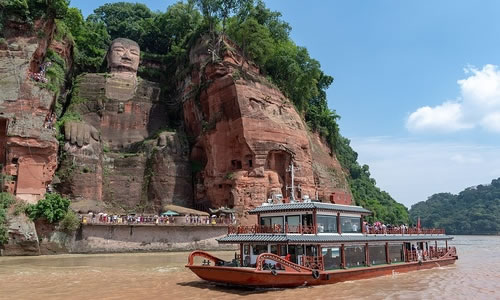
Tour Style:Two UNESCO-listed sights on one private day out of Chengdu. The morning starts at the Chengdu Research Base of Giant Panda Breeding while the animals are still active in the cool hours, then the driver takes you south along the expressway to Leshan, where a 71-metre stone Buddha carved between 713 and 803 AD still stands at the junction of three rivers. Walk the Nine Bends Plank Road, take the river boat, or do both. English-speaking local guide, private air-conditioned car with an experienced driver, Panda Base and Leshan tickets included, hotel, train station, or airport pick-up.
Duration:2 Days, 1 Night
Attractions(Cities):Chengdu Panda Base, Renmin Park, Wuhou Temple, Jinli Street, Wenshu Monastery, Chengdu Museum, Tianfu Square
Tour Style:This two-day private tour moves between the old and new faces of Chengdu at your own pace. Day 1 starts at the Chengdu Research Base of Giant Panda Breeding in the morning, when the pandas are feeding, then takes in the teahouse scene at Renmin Park, the Three Kingdoms shrines of Wuhou Temple, and the snack stalls and craft shops of Jinli Ancient Street. Day 2 covers the Buddhist halls of Wenshu Monastery, the collections of the Chengdu Museum, and the modern plaza at Tianfu Square. A private car and an English-speaking guide carry you between all of them, with pickup from your hotel, train station, or the airport, and the daily order flexes if you want longer at the panda base or a slower teahouse stop. Lunch is left open so your guide can point you to local kitchens rather than tourist menus.
Duration:8-9 Hours
Attractions(Cities):Dujiangyan, Qingcheng Mountain
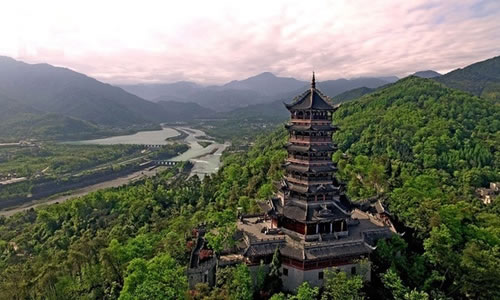
Tour Style:This day trip pairs two UNESCO-listed sights west of Chengdu: the Dujiangyan Irrigation System and Qingcheng Mountain. A private car and driver collect you from your hotel, train station, or the airport and stop first at Dujiangyan, where an English-speaking guide walks you through the 256 BC waterworks that Li Bing and his son built without a dam, still carrying Min River water onto the Chengdu plain after more than 2,000 years. You see the Fish Mouth levee, Flying Sand Reef, and Bottle Neck channel up close. After lunch you drive to Qingcheng Mountain, a founding site of Taoism, and take the cable car and stone paths past the front-mountain temples. Lunch is left out on purpose so your guide can point you to a local Sichuan kitchen; pace, photo stops, and vegetarian or lighter requests are easy to adjust on a private tour.
Duration:3 Days 2 Nights
Attractions(Cities):Leshan Giant Buddha, Mount Emei, Chengdu Research Base of Giant Panda Breeding, Renmin Park, Jinli Ancient Street, Kuanzhai Alley
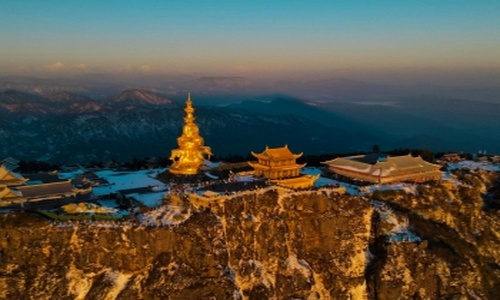
Tour Style:This three-day private tour pairs Chengdu with two mountain and heritage sights. Day one covers the Giant Panda Breeding Research Base in the morning, then Renmin Park teahouse, Jinli Ancient Street, and Kuanzhai Alley. Day two drives about two hours to the 71-metre Leshan Giant Buddha, seen from the cliff path or a Dadu River boat, then on to an overnight at the foot of Mount Emei. Day three rises by eco-bus and cable car to the Golden Summit at 3,077 metres and the old temples before the return to Chengdu. A private car, driver, and English-speaking guide handle tickets and transfers, and pick-up and drop-off run from your Chengdu hotel, station, or airport.
Wechat: YourWayHolidayAsia
24 Hours Hotline:
+8613735411378
Certificate of Excellence
2012~2026

Your Way Holiday
(Your Privacy is Protected)
1 to 1 tailor-made service from our professional travel advisors for the most sophisticated
Constantly excellent reviews for attraction, hotel and service Competitive price
Local experts provide quality tours Best selected knowledgeable local guides Authentic local restaurants
7*24 hours available to create you a worry-free tour. No Hidden Fees and absolutely no pressure to buy. Secured