24 Hours Hotline: +8613735411378
Email:[email protected]
24 Hours Hotline: +8613735411378
Email:[email protected]

Overview
Jokhang Monestery, also known as "zulakang" and "juekang" (Tibetan meaning Buddhist temple), is located in the center of Lhasa's old town. It is a Tibetan Buddhist temple built by the king of Tibetan Songzan Ganbu. Jokhang Monestery has a history of more than 1300 years, and has a supreme position in Tibetan Buddhism. Jokhang Monestery is the most splendid Tibetan Architecture in Tibet.
Jokhang Monestery is also the earliest civil structure building in Tibet, and has created the Tibetan Pingchuan style temple city planning. The reason why Lhasa has the reputation of "holy land" is related to the Buddha statue of "Reza", the God of Tibetan Buddhism. The temple was originally called "Reza". Later, it became the name of the city and evolved into the current "Lhasa". After the completion of the Jokhang Monestery, it was modified and expanded repeatedly in the yuan, Ming and Qing Dynasties.
Background
Jokhang Monestery was built in the heyday of the Tubo Dynasty in the seventh century. According to legend, it was built to worship a Buddha statue of Sakyamuni at the age of 8. The Buddha statue was brought from Kathmandu by the Nepalese Princess Chizun who was married by the Tubo king Songzan Gambo.
The Jokhang Monestery has been built for more than three years. In Tibetan, it is called "goat" as "Rao" and "Tu" as "Sa". In order to commemorate the achievements of white goat, the temple was originally named "resha", later renamed as "zulakang" (Sutra Hall), also known as "juekang" (Buddhist Hall). The full name of the temple is "re sa gaxi long Nang zulakang", which means that it was built by goats carrying soil.
Jokhang Monestery suffered two disasters in history. In the late 7th century, the first ban on Buddhism was initiated by noble ministers who believed in the primitive Bon religion, and the second movement was launched by randhama in the middle of the 9th century. As a result, the Jokhang Monestery was either reduced to a slaughterhouse or closed, while the statue of Sakyamuni was buried underground twice.
Religious status
The Tibetan people have a saying that "Jokhang Monestery first, then Lhasa City". Jokhang Monestery has a central position in Lhasa, not only in geographical location, but also in social life.
Jokhang Monestery is not only a temple for worshiping many Buddhist statues and sacred objects, but also a three-dimensional and true representation of Tantra, an ideal model of the universe in Buddhism, Mandala. In front of the entrance of the main gate of the Jokhang Monestery, there are three stone pillars. On a stone pillar, there is an alliance signed in 823 ad between Tang and Tibet. Most of the temples in Tibet belong to a certain Tibetan Buddhist sect, while Jokhang Monestery is a sacred temple respected by all sects.
Main Structure
The hall of dazhaosi is 4 stories high. The golden roof and Dougong of the whole building are typical of Han style. carving hall and roof beam are Tibetan style. There are 103 wooden ambush animals and human Sphinx arranged in rows under the eaves of the second and third floors of the main hall. There are Tibetan murals about 1000 meters long in the temple. The main buildings are: Maitreya Buddha Hall, Guanyin hall, Sanfawang hall, Tara hall, Tangfan alliance stone tablet, Pharmacist hall, Wuliangguang Buddha Hall, Jokhang Monestery Golden top.

Information
Opening Hours: 09:00-18:00
Admission Fee: CNY 85
visit time: 2 hours
Best time visit: Mar-Oct
Duration:6-8 Hours
Attractions(Cities): Chengdu Panda Research Base, People's Park, Jinli Ancient Street, Kuanzhai Alley
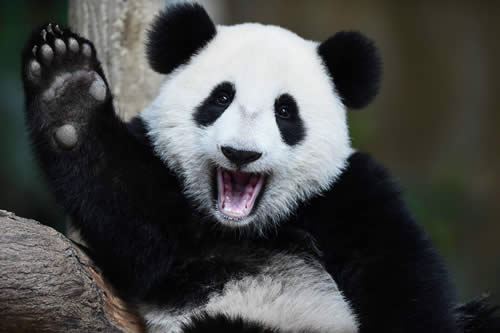
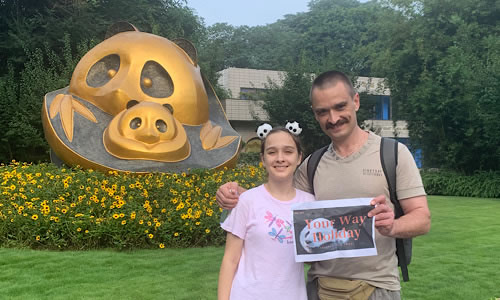
Tour Style:One day, one private car, and an English-speaking local guide who has already booked every ticket on the list. Mornings start early at the Chengdu Research Base of Giant Panda Breeding so you catch the pandas while they are still active; after that, the pace slows to a hillside teahouse in Renmin Park, gaiwan jasmine tea in hand. Between the two you walk Jinli's lantern-lit lane and finish in Kuanzhai Alley, where restored Qing courtyards now sit alongside small shops and tea rooms. Pick-up and drop-off match your schedule — a Chengdu hotel, a train station, or the airport.
Duration:8 Hours
Attractions(Cities):Chengdu Giant Panda Research Base, Leshan Giant Buddha
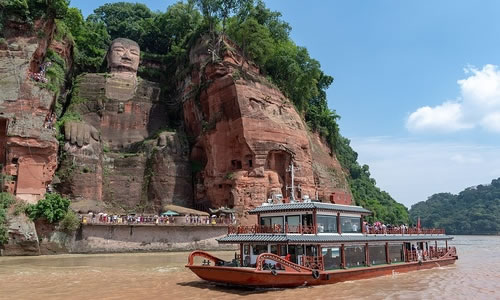
Tour Style:Two UNESCO-listed sights on one private day out of Chengdu. The morning starts at the Chengdu Research Base of Giant Panda Breeding while the animals are still active in the cool hours, then the driver takes you south along the expressway to Leshan, where a 71-metre stone Buddha carved between 713 and 803 AD still stands at the junction of three rivers. Walk the Nine Bends Plank Road, take the river boat, or do both. English-speaking local guide, private air-conditioned car with an experienced driver, Panda Base and Leshan tickets included, hotel, train station, or airport pick-up.
Duration:2 Days, 1 Night
Attractions(Cities):Chengdu Panda Base, Renmin Park, Wuhou Temple, Jinli Street, Wenshu Monastery, Chengdu Museum, Tianfu Square
Tour Style:This two-day private tour moves between the old and new faces of Chengdu at your own pace. Day 1 starts at the Chengdu Research Base of Giant Panda Breeding in the morning, when the pandas are feeding, then takes in the teahouse scene at Renmin Park, the Three Kingdoms shrines of Wuhou Temple, and the snack stalls and craft shops of Jinli Ancient Street. Day 2 covers the Buddhist halls of Wenshu Monastery, the collections of the Chengdu Museum, and the modern plaza at Tianfu Square. A private car and an English-speaking guide carry you between all of them, with pickup from your hotel, train station, or the airport, and the daily order flexes if you want longer at the panda base or a slower teahouse stop. Lunch is left open so your guide can point you to local kitchens rather than tourist menus.
Duration:8-9 Hours
Attractions(Cities):Dujiangyan, Qingcheng Mountain
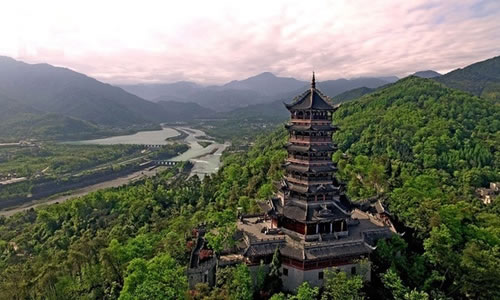
Tour Style:This day trip pairs two UNESCO-listed sights west of Chengdu: the Dujiangyan Irrigation System and Qingcheng Mountain. A private car and driver collect you from your hotel, train station, or the airport and stop first at Dujiangyan, where an English-speaking guide walks you through the 256 BC waterworks that Li Bing and his son built without a dam, still carrying Min River water onto the Chengdu plain after more than 2,000 years. You see the Fish Mouth levee, Flying Sand Reef, and Bottle Neck channel up close. After lunch you drive to Qingcheng Mountain, a founding site of Taoism, and take the cable car and stone paths past the front-mountain temples. Lunch is left out on purpose so your guide can point you to a local Sichuan kitchen; pace, photo stops, and vegetarian or lighter requests are easy to adjust on a private tour.
Duration:3 Days 2 Nights
Attractions(Cities):Leshan Giant Buddha, Mount Emei, Chengdu Research Base of Giant Panda Breeding, Renmin Park, Jinli Ancient Street, Kuanzhai Alley
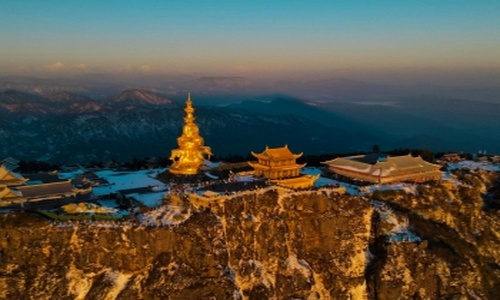
Tour Style:This three-day private tour pairs Chengdu with two mountain and heritage sights. Day one covers the Giant Panda Breeding Research Base in the morning, then Renmin Park teahouse, Jinli Ancient Street, and Kuanzhai Alley. Day two drives about two hours to the 71-metre Leshan Giant Buddha, seen from the cliff path or a Dadu River boat, then on to an overnight at the foot of Mount Emei. Day three rises by eco-bus and cable car to the Golden Summit at 3,077 metres and the old temples before the return to Chengdu. A private car, driver, and English-speaking guide handle tickets and transfers, and pick-up and drop-off run from your Chengdu hotel, station, or airport.
Wechat: YourWayHolidayAsia
24 Hours Hotline:
+8613735411378
Certificate of Excellence
2012~2026

Your Way Holiday
(Your Privacy is Protected)
1 to 1 tailor-made service from our professional travel advisors for the most sophisticated
Constantly excellent reviews for attraction, hotel and service Competitive price
Local experts provide quality tours Best selected knowledgeable local guides Authentic local restaurants
7*24 hours available to create you a worry-free tour. No Hidden Fees and absolutely no pressure to buy. Secured