24 Hours Hotline: +8613735411378
Email:[email protected]
24 Hours Hotline: +8613735411378
Email:[email protected]
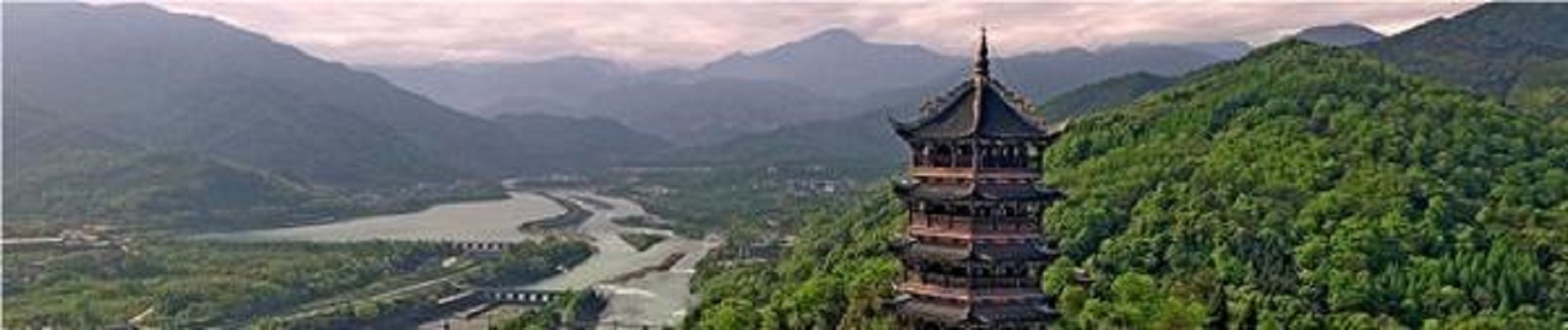
Mount Qingcheng (Qingchengshan), one of China’s most famous Taoist mountains, is renowned for its tranquil beauty, lush forests, and historical significance. As a UNESCO World Heritage Site, it attracts tourists seeking both natural splendor and spiritual solace. In this guide, we will explore the best things to do, how to get there, and important travel tips to make the most of your visit to this sacred mountain near Chengdu.
Discover Chengdu’s Urban Pulse: A Journey Through the City’s Highlights!
Feel the rhythm of Chengdu!
From the tranquil Zen of Wenshu Monastery to the lively markets of Kuanzhai Alley, Chengdu pulses with energy and history. Our tours take you through the city’s most iconic spots, offering insights into both the old and new sides of this dynamic metropolis. Whether you’re looking for cultural immersion or a vibrant street food experience, we’ll help you uncover the essence of Chengdu in a way that suits your style.
 Dujiangyan and Qingcheng Mountain Tour: Combining Culture and Scenery
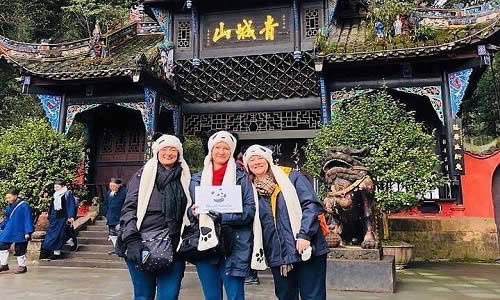 3 Days Mt.Qingchengshan and Mount Heming Daoist Culture Tour from Chengdu
Why Visit Mount Qingcheng?
Mount Qingcheng is considered one of China’s most famous Taoist mountains. It holds great cultural and historical significance, as it is recognized as the birthplace of Taoism and is home to numerous ancient temples and Taoist monuments. Apart from its spiritual appeal, the mountain offers breathtaking natural beauty, with thick forests, picturesque lakes, and serene waterfalls. Hiking along its trails provides a perfect balance of physical activity and tranquility, making it a must-visit destination for nature lovers and spiritual seekers alike.
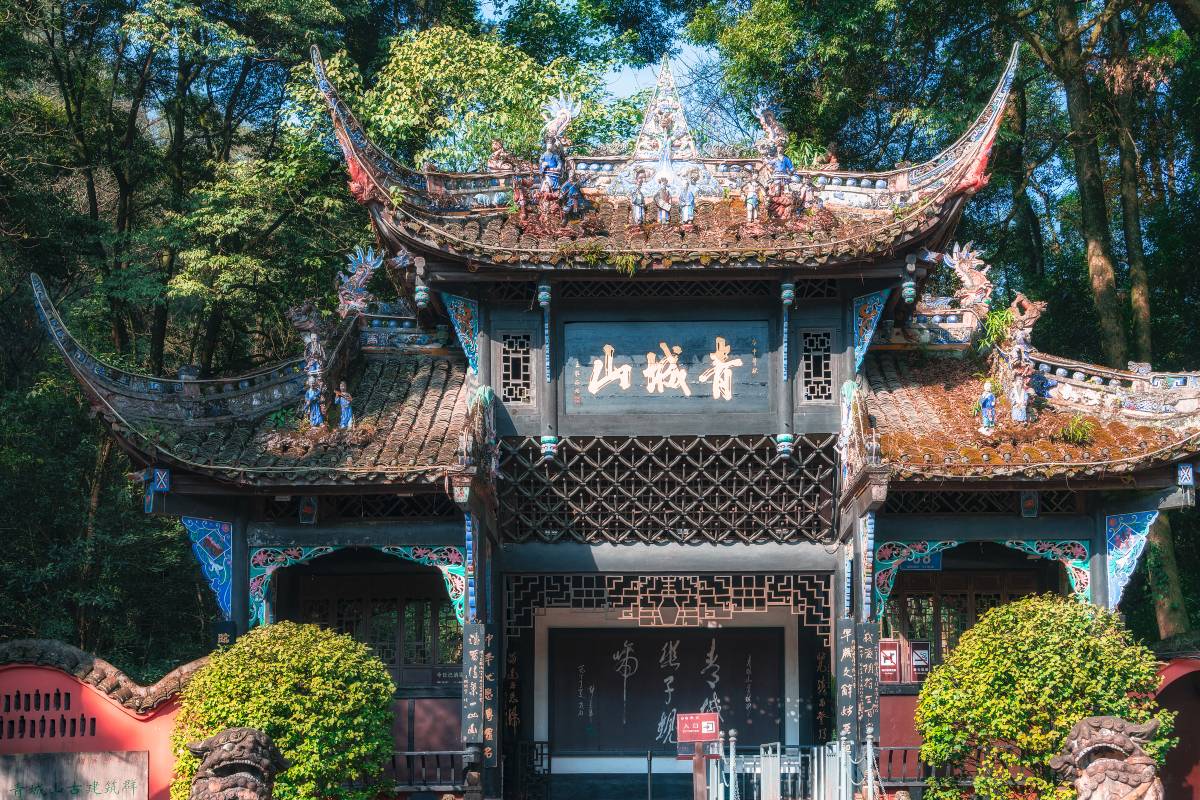
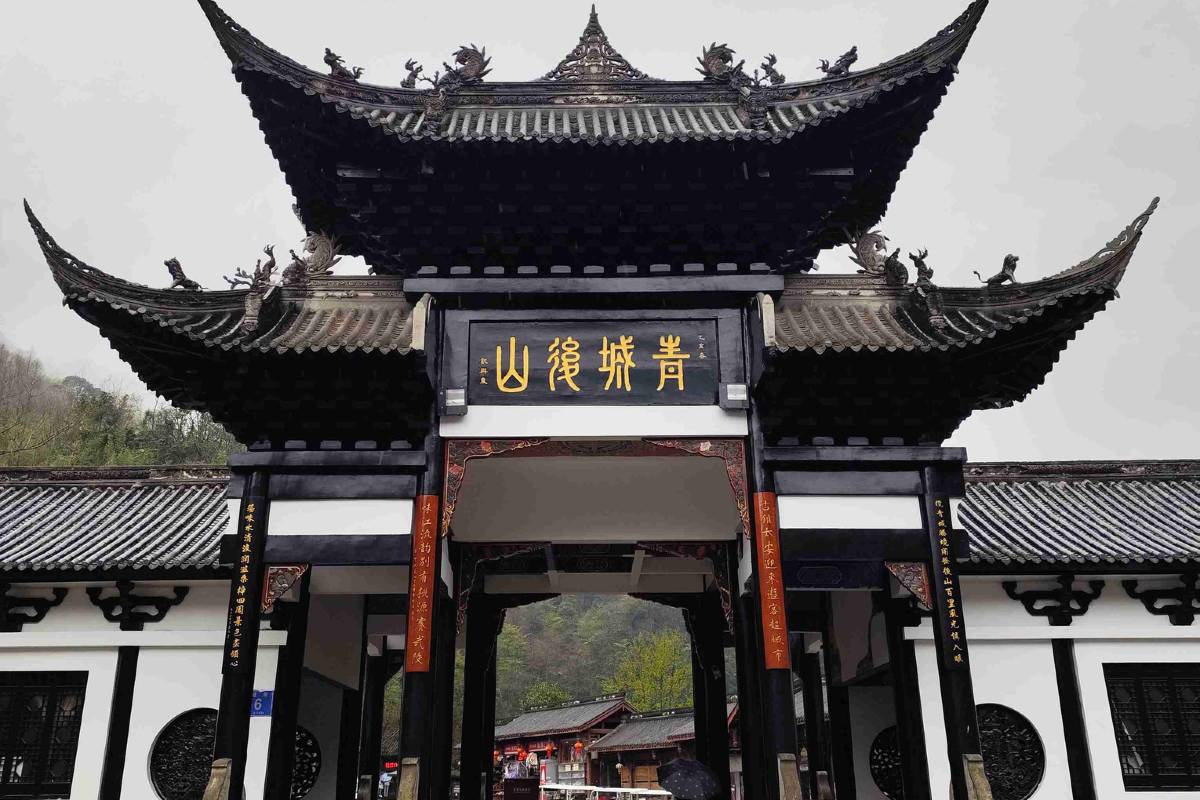
Taoist Culture
Zhang Daoling, who studied Laozi's ‘Tao Te Ching’ ‘Confucian Classics Astronomy’, learn Geography and other ancient Chinese literary works since childhood. Taoism was founded by him in Qingcheng Mountain. It is said that his heart of learning Taoism can be learned from heaven and earth, and the Laojun in heaven is also moved. The Laojun came to the human world, taught him various Taoist magic, and officially appointed him "the Heavenly Master". There is a cave in Qingcheng Mountain called Tianshi cave, where he practiced Taoism. Taoism later developed into a unique Chinese local religion, which was closely related and influenced by Chinese history and culture.
Historical and Cultural Significance
1. The Birthplace of Taoism
The Taoist history of Mount Qingcheng dates back to the reign of Emperor Shun of the Eastern Han Dynasty (126-144 AD), where Zhang Daoling, the founder of Taoism, "subdued demons and preached the Tao" here, founding the "Five Pecks of Rice Taoism" (later known as Taoism). Legend has it that he set up an altar to preach on Laoxiao Peak, the main peak of Mount Qingcheng, using talisman water to heal the sick and save people, attracting many disciples and gradually developing Taoism into a religion with far-reaching influence. A large number of Taoist buildings preserved in the mountain, such as the Sanqing Hall of Tianshi Cave and the Laojun Hall of Shangqing Palace, all adopt the construction concept of "adapting to local conditions and using local materials". The wooden structures are integrated with rocks and forests, reflecting the core Taoist thought of "Tao follows nature". In addition, Mount Qingcheng is also one of the birthplaces of Taoist music. Its ancient Taoist ritual music has been included in the national intangible cultural heritage list, and the melodious sound of flutes, bells and drums echoes in the valley, creating an ethereal and quiet spiritual atmosphere.
2. UNESCO World Heritage Status
Inscribed in 2000 as part of the "Mount Qingcheng and Dujiangyan Irrigation System," the mountain is celebrated for its intact ancient Taoist architecture complex and its profound impact on China's religious and philosophical history. The Taoist architectural complex here is not only a treasure of architectural art but also important material for studying the evolution of Taoist culture.
Discovering Mount Qingcheng: A Blend of Nature and Spirituality
A. Scenic Divisions: Front Mountain vs. Rear Mountain
1. Front Mountain (Qianshan)
The core area of Taoist culture with a mature tourist route, about 5-6 kilometers long. In addition to Jianfu Palace, Tianshi Cave, and Shangqing Palace, there are more than 20 Taoist temples such as Yuanming Palace and Yuqing Palace. Among them, Jianfu Palace was founded in the Tang Dynasty, and the existing buildings were reconstructed in the Qing Dynasty. The plaque "Qingcheng World You" hanging in the palace was inscribed by Xu Beihong, a master of modern traditional Chinese painting; Tianshi Cave is one of the oldest Taoist temples in Mount Qingcheng, with a statue of Zhang Tianshi inside the cave, and a thousand-year-old ginkgo tree outside the cave, with a circumference of 7.06 meters, which is said to be planted by Zhang Daoling himself.
2. Rear Mountain (Houshan)
Covering an area of about 100 square kilometers, with a forest coverage rate of more than 95%, it is famous for its original natural scenery. Adjacent to Wolong Nature Reserve, it is an important part of the Sichuan Giant Panda Habitat World Natural Heritage, known as "the tranquility of one mountain is equally divided". Tai'an Ancient Town is located at the entrance of the Rear Mountain, a thousand-year-old western Sichuan folk house ancient town. The bluestone slab road is lined with teahouses, inns and characteristic snack shops, where tourists can experience the folk customs of western Sichuan.
B. Introduction to Scenic Spots
a. Front Mountain Scenic Area
1. Laojun Pavilion
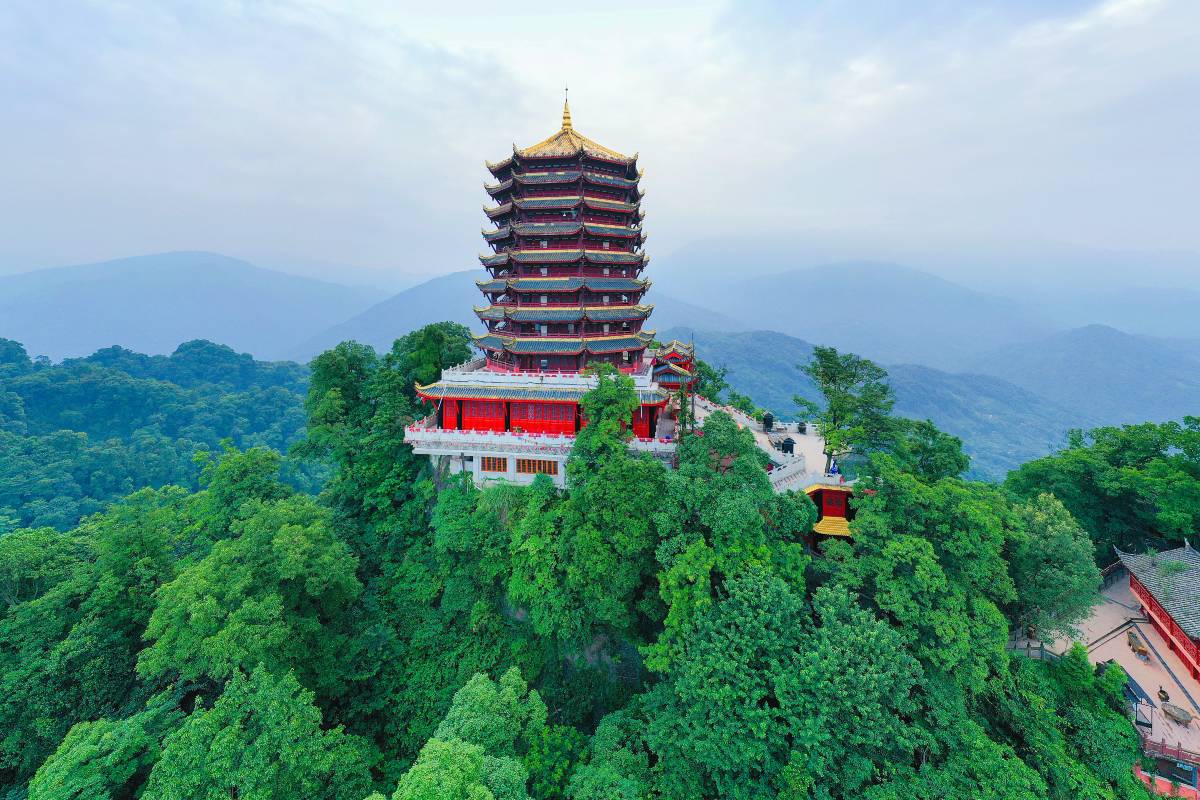
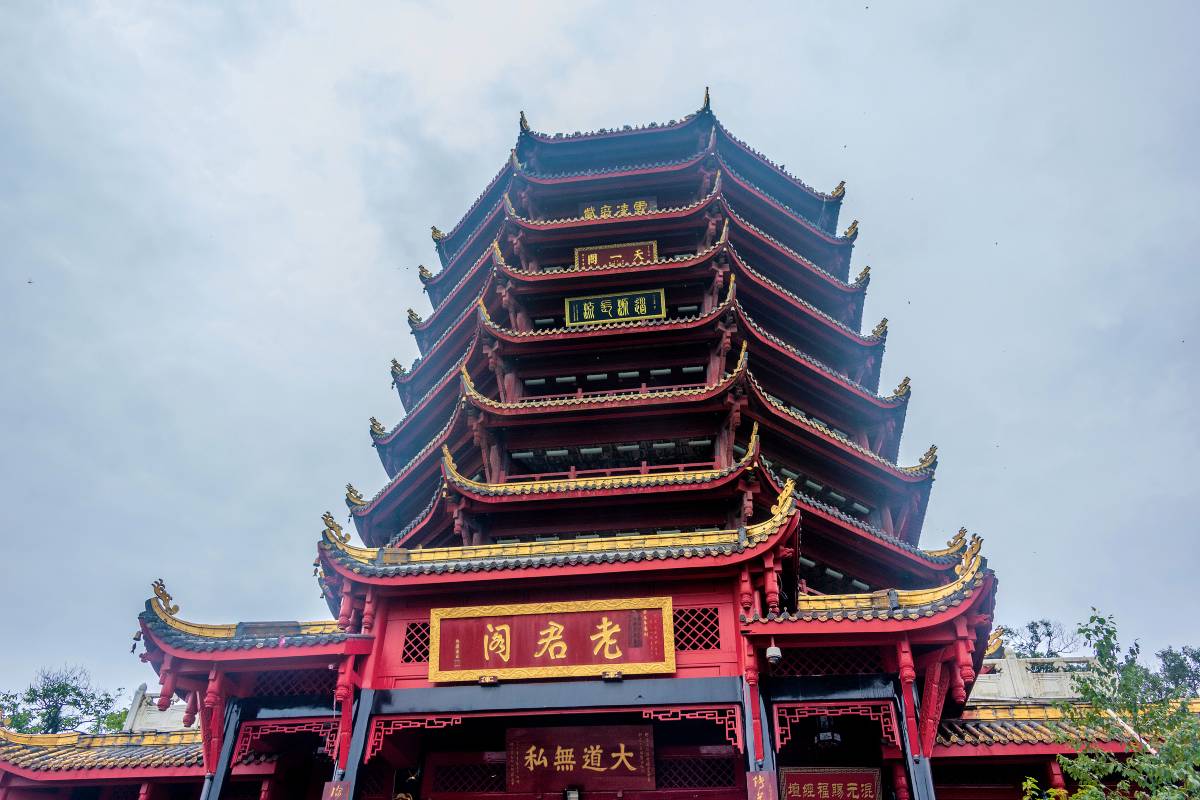
The Laohjun Pavilion is located at the summit of the first peak of Mount Qingcheng (also known as Pengzu Peak, Gaotai Mountain, or Laoxiaoding), at an elevation of 1,260 meters. Originally, there was a pavilion called "Huiying Pavilion" at the top, symbolizing the idea that “one call from the high peak echoes through all the mountains.” In the late 1980s, the pavilion was replaced with a tower. After being damaged in the 2008 Sichuan earthquake, the pavilion was rebuilt. The current pavilion stands 33 meters tall, with nine levels. The lower part is round, and each level is octagonal, symbolizing the concepts of heaven, earth, and the Taiji (Yin-Yang) and Eight Trigrams. The structure is tower-shaped, with a sharp spire and three concentric round treasures stacked on top, representing the three realms of Heaven, Earth, and Humanity. The interior is hollow, with a solemn and towering statue of Laozi sitting on a lotus, which is 7.3 meters tall and sits on a platform 10.37 meters high. The open-air platform at the base is built with white marble, following the natural contours of the land, and is enclosed with railings. A winding, spiraling path leads visitors up to the pavilion's summit. On clear days, visitors can enjoy sweeping views of the surrounding Min-Qiong-Qing mountains and the Tianfu Plain, extending for hundreds of miles. The view is truly magnificent, capturing the grandeur of the world.
2. Yuecheng Lake
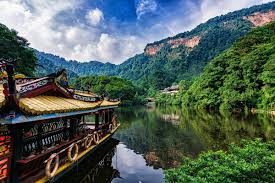
An artificial lake on the hillside of the Front Mountain, covering an area of about 30,000 square meters. Surrounded by green mountains and clear water, you can experience the scenery of "boats sailing on blue waves" by taking a cruise ship (one-way 5 yuan/person), and it is a must-pass to Laojun Pavilion.

3. Tianshi Cave
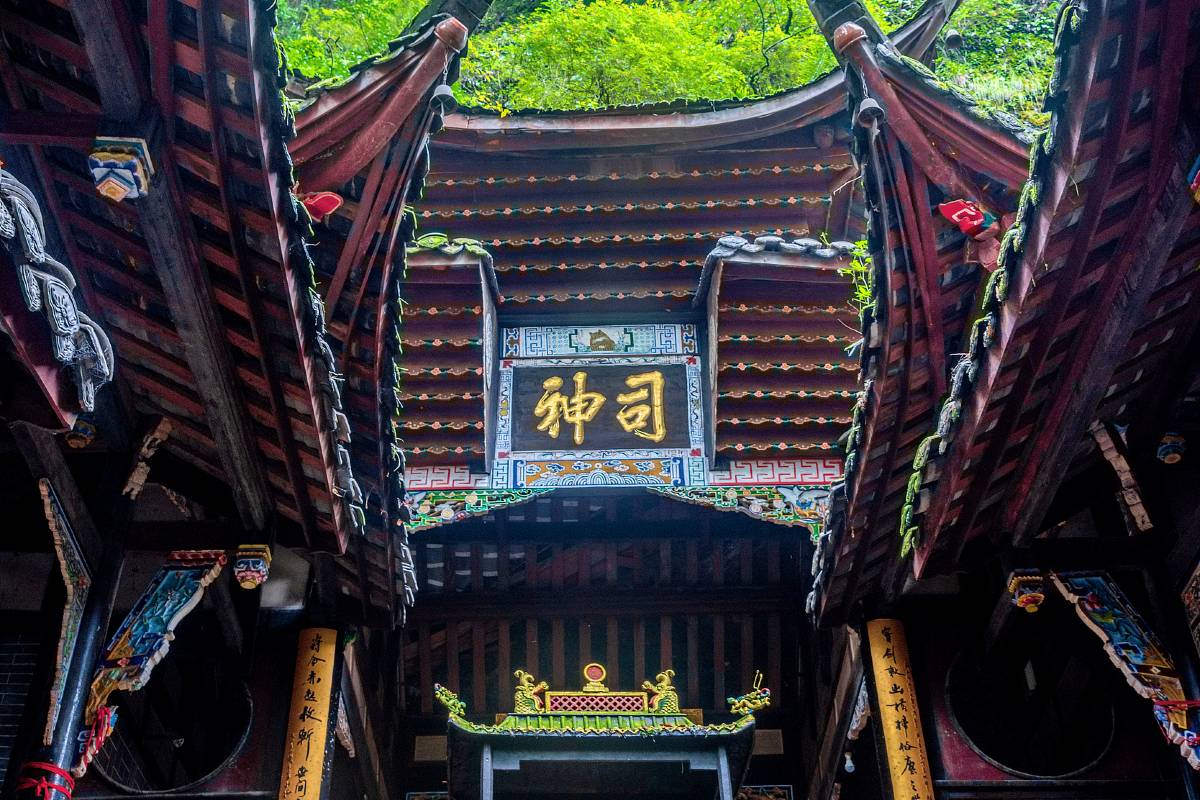
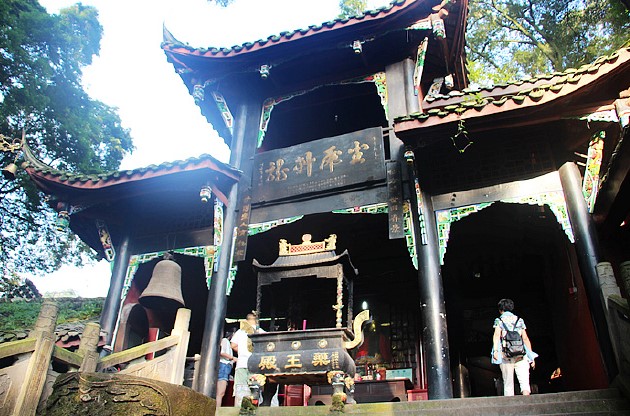
Tianshi Cave is also known as the Ancient Chang Dao Temple. It is the core scenic attraction of the Qingcheng Mountain area and has deep cultural and historical significance. The main gate of the Ancient Chang Dao Temple is a four-eave building structure, perched on a steep cliff with a long set of stone steps leading up to the multi-tiered, overlapping pavilions. On either side of the stone steps, tall willow pines stand. To the left of the entrance is the Qinglong Hall (Azure Dragon Hall), and to the right is the Baihu Hall (White Tiger Hall).
In addition to its religious significance, Tianshi Cave is famous for being the filming location of scenes from Journey to the West, specifically the part where the Monkey King steals the ginseng fruit from the Five Zhuang Temple. The cave's mystical atmosphere and stunning views have made it a popular destination for both tourists and devotees.
Tianshi Cave is home to the statues of Zhang Daoling, known as the "Tian Shi" (Celestial Master), and his 30th-generation descendant, Xu Jing Tian Shi. The cave, surrounded by lush forests and steep cliffs, adds to the sense of spiritual serenity and connection to Taoist practices that have been ongoing for centuries.
4. Shangqing Palace
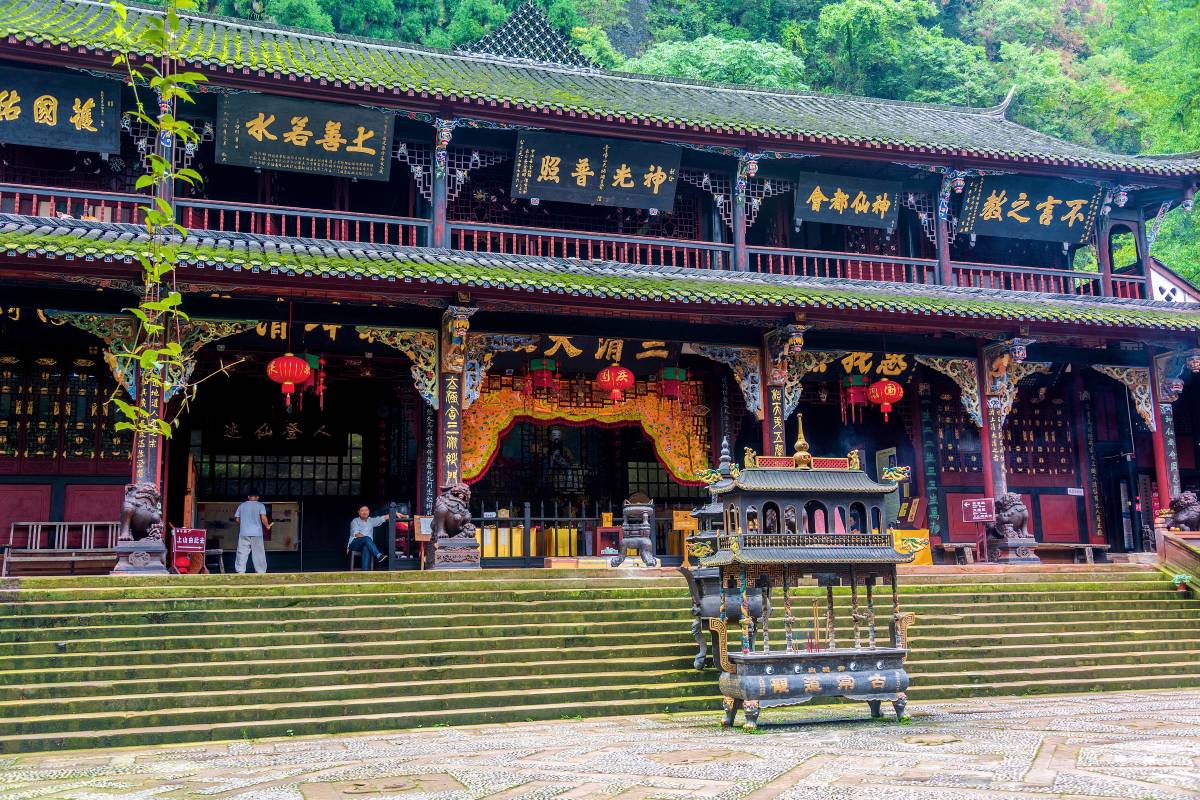
Shangqing Palace is located on the first peak of Mount Qingcheng, about 500 meters below the summit, on a hillside. The palace was originally built during the Jin Dynasty, and the current temple was constructed during the Tongzhi period of the Qing Dynasty. On the rocks around the palace, you can find inscriptions such as "Fifth Most Famous Mountain in the World" and "First Peak of Qingcheng," carved into the cliffs. The three characters "Shangqing Palace" at the gate of the palace were inscribed by Chiang Kai-shek. Inside the palace, the Taoist founder, Laozi, is enshrined with a statue of him and woodcarvings of the 5,000 words of the Tao Te Ching. Other legendary sites in the area include the Magu Pool and the Mandarin Duck Well. Behind Shangqing Palace is Laoxiaoding, where a pavilion called Huiying Pavilion is built. This location offers an excellent vantage point for watching the sunrise, the divine light, and the spectacular sea of clouds.
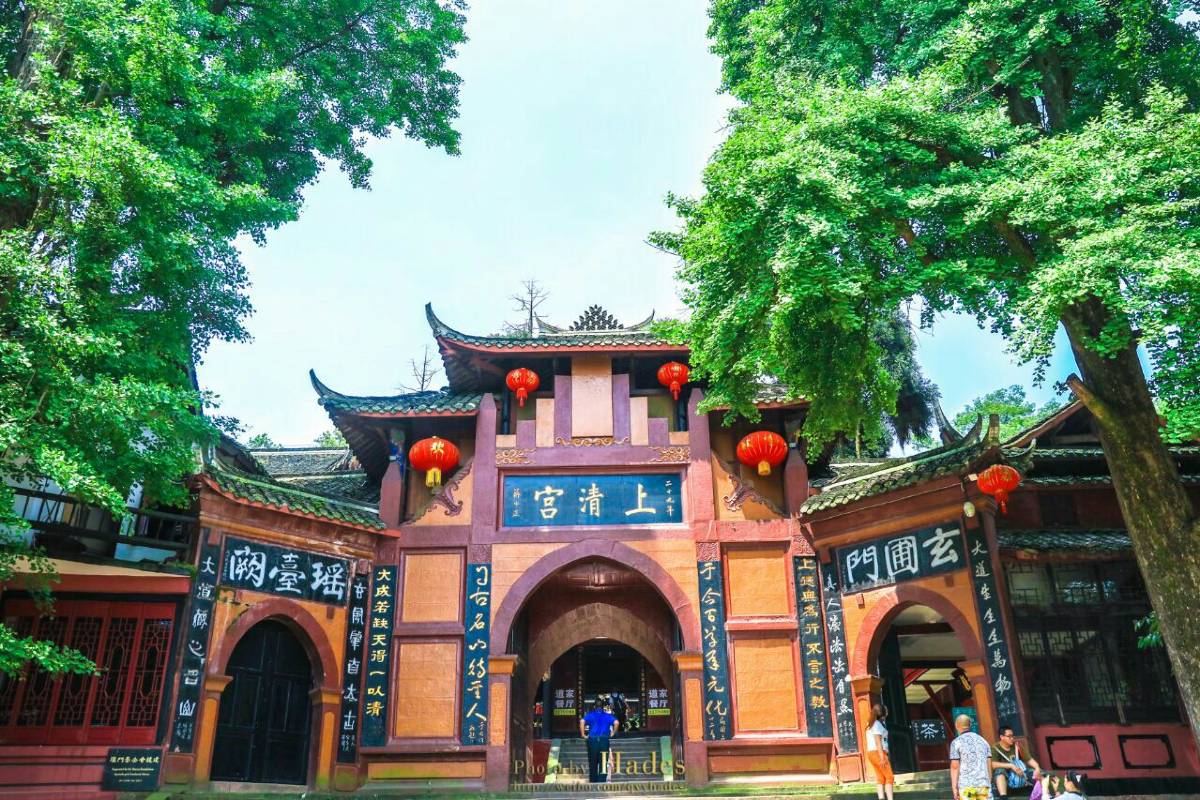
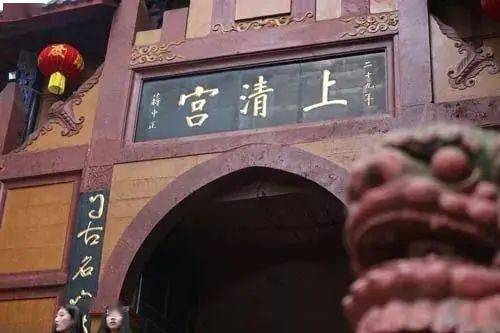
5. Wudongtian (Fifth Cave Heaven)
It is a must-pass on the way to climb Mount Qingcheng, located between Natural Picture and Tianshi Cave. Taoism regards Mount Qingcheng as the "Fifth Cave Heaven". This is a landmark scenic spot with the ancient and vigorous stone carving "Fifth Cave Heaven", reflecting its status as a Taoist sacred place. At the same time, it is also the filming location for the entrance of "Xieyue Samsung Cave", the cave residence of Patriarch Bodhi in Journey to the West, where Sun Wukong entered to meet the patriarch.
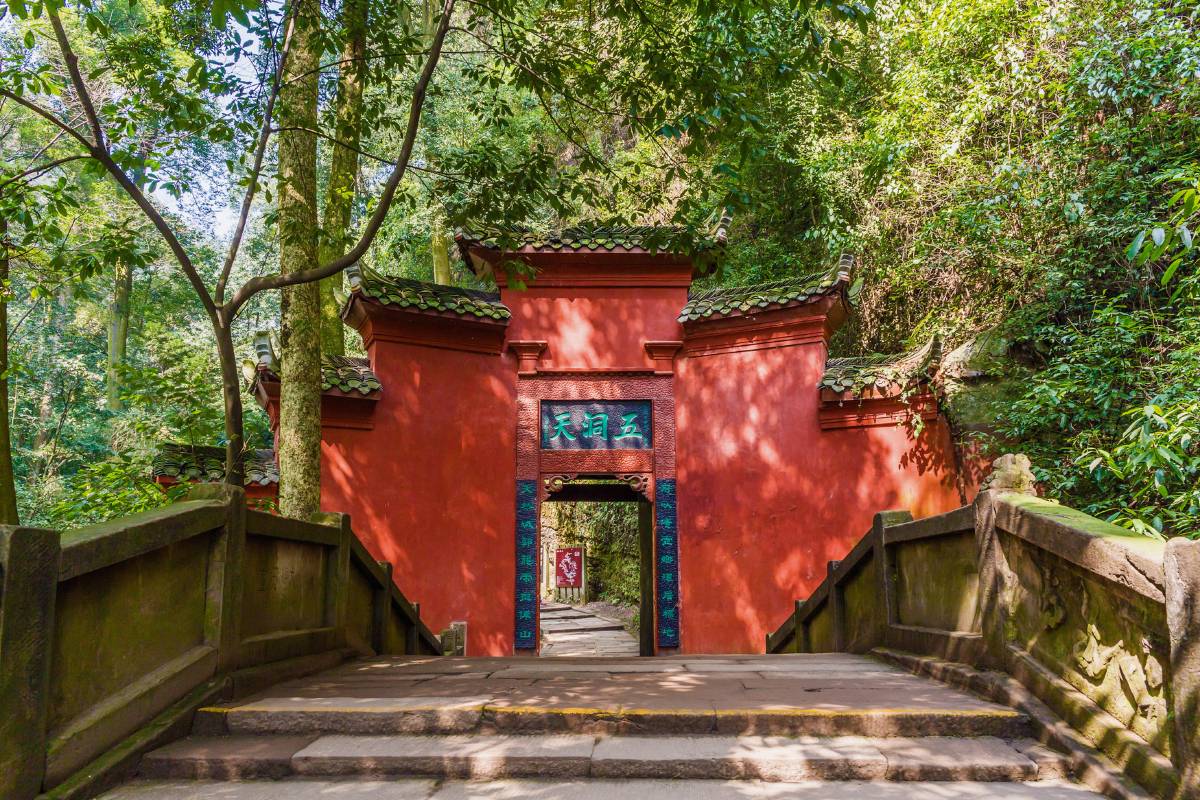
6. Natural Picture Pavilion
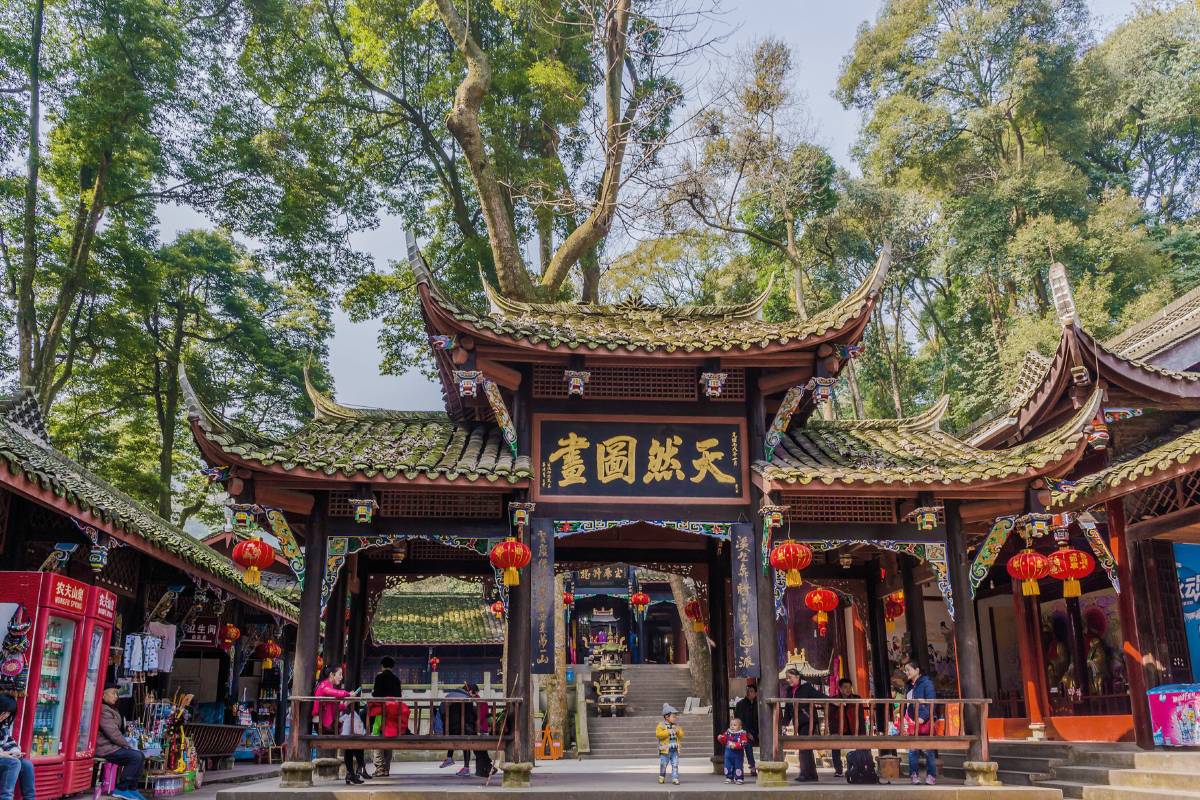
The Natural Picture Pavilion is located on the ridge of Longju Mountain’s Paifang Hill, at an altitude of 893 meters. This ten-cornered, multi-eaved pavilion was built during the reign of Emperor Guangxu in the Qing Dynasty (1875–1909). Known for its stunning beauty, the site is often described as a "natural painting," as visitors feel as though they are stepping into a picturesque scene when they arrive.
Situated between Fuguang Palace and Tian Shi Cave, the pavilion stands between two peaks, surrounded by steep cliffs and lush greenery, making it appear as if it were part of a traditional Chinese landscape painting. Behind the pavilion, there is a place called Crane Village, where flocks of red-crowned cranes are often seen soaring and calling out in the mountains. To the right, there is a stone bridge, known as the "Immortal Bridge," which rests across a cliff between two mountains. It is said to be a place where immortals once gathered for games and leisure.
7. Ancestor Hall (Zushi Dian)
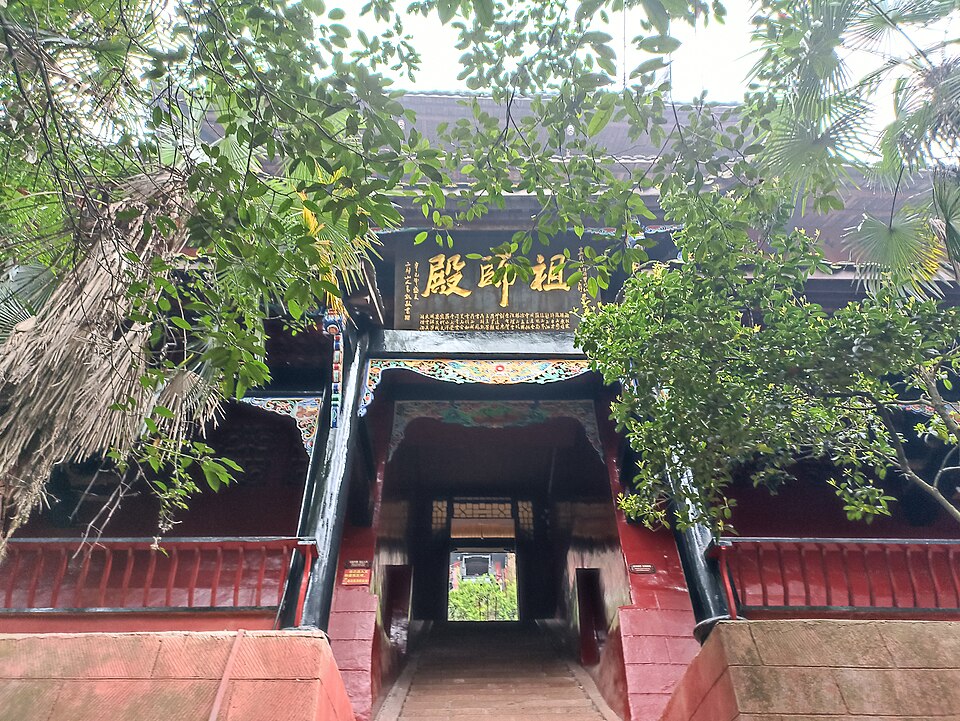
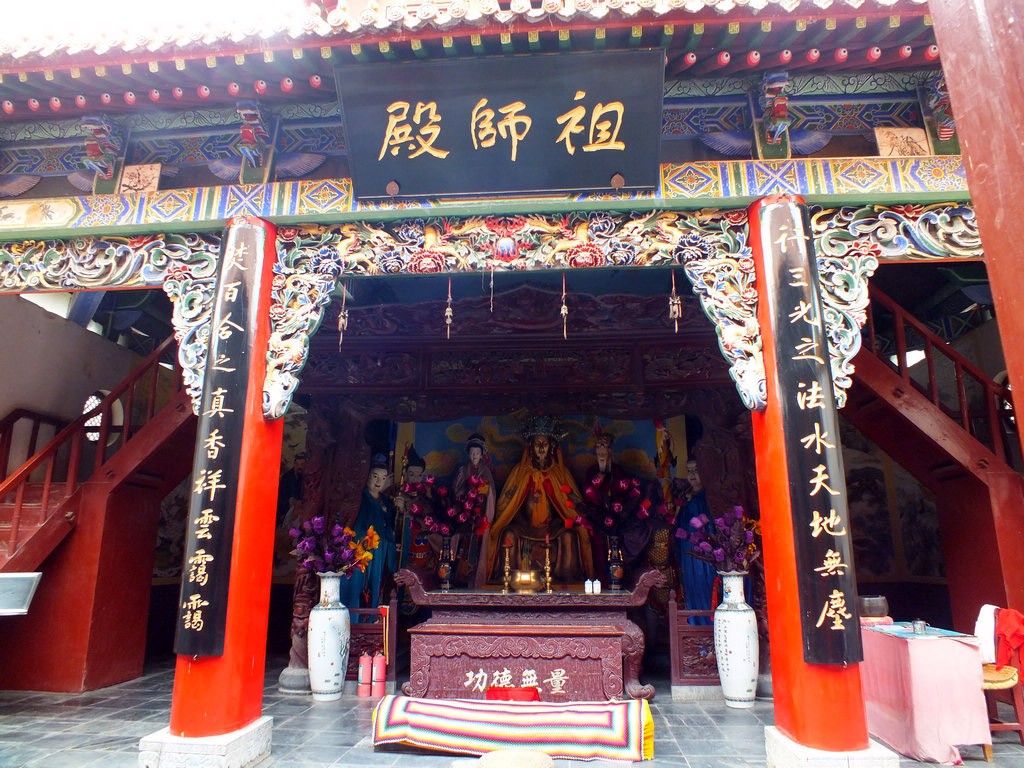
The Ancestor Hall (Zushi Dian) is located on the mountainside to the right and behind Tianshi Cave. It can be reached by crossing the Fangning Bridge after exiting the Tian Shi Cave. Also known as the Zhenwu Temple, the hall was established during the Tang Dynasty. The site has been a retreat for several historical figures, including the Tang Dynasty poets Du Guangting and Xue Chang, as well as the Song Dynasty scholar Zhang Yu. Princess Yuzhen, the daughter of Tang Emperor Ruizong, also practiced Taoism here in pursuit of immortality.
The temple is set in a peaceful and secluded environment. Inside, there are statues of revered Taoist immortals, including Zhenwu, Lü Dongbin, and Tie Guai Li, as well as murals depicting the Eight Immortals and engraved poems and inscriptions on stone. The serene atmosphere and rich history make it an important Taoist site, offering a glimpse into the spiritual practices of past generations.
8. Chaoyang Cave
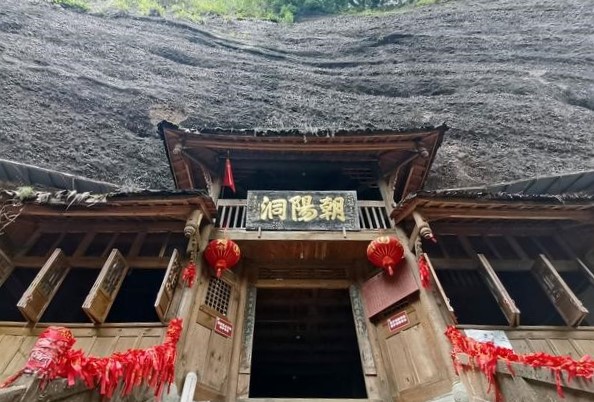
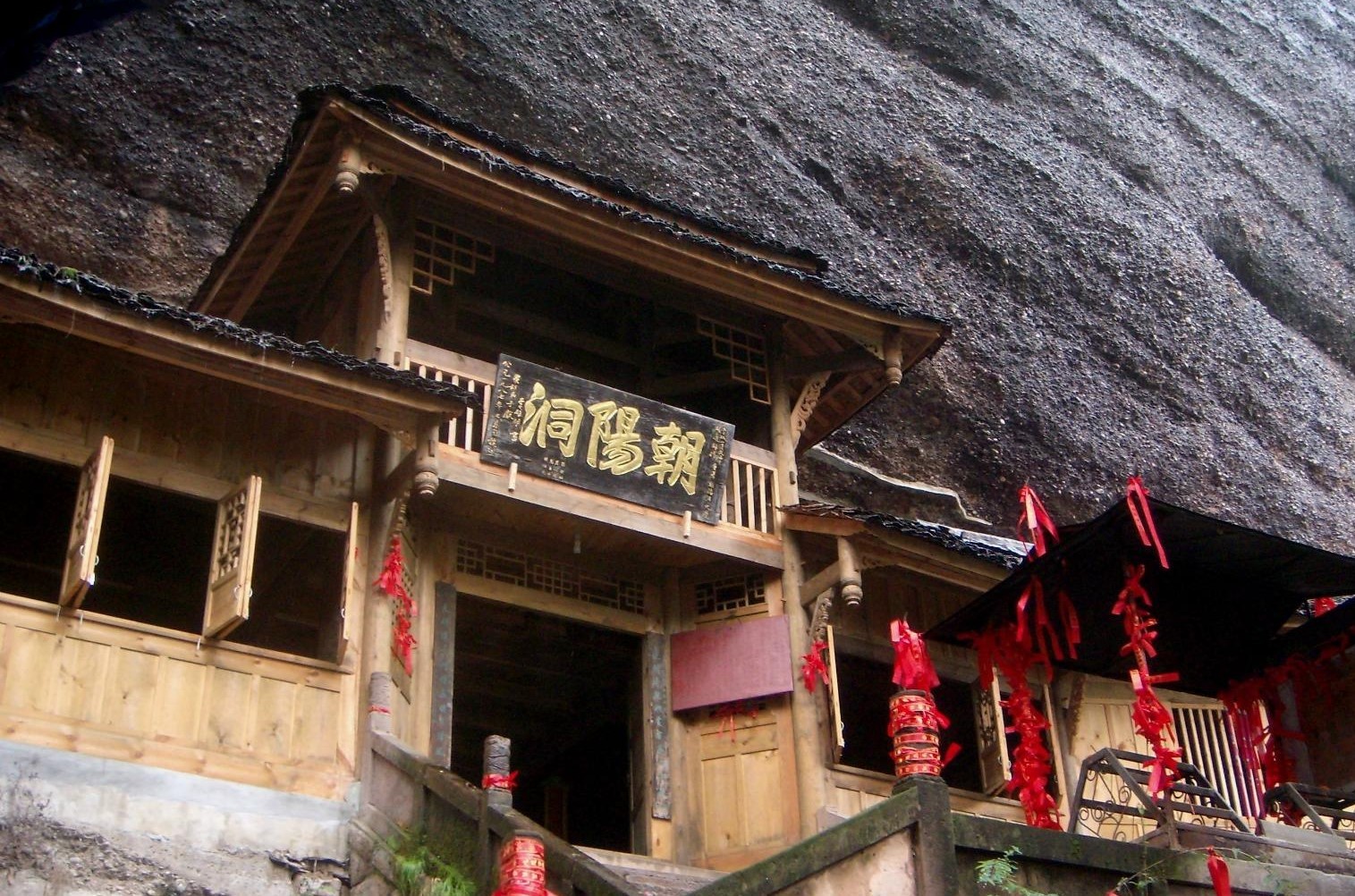
The Chaoyang Cave is located at the base of the main peak, Laoxiaoding, with its entrance facing east. The cave is several yards deep and wide, capable of holding a hundred people. It is traditionally believed to be the place where Ning Fengzhang, a Taoist sage, once resided. During the Qing Dynasty, the scholar Huang Yunge lived here in a humble thatched hut and composed a couplet that reads: "The heavens are distant, but the red sun is near; the earth is tired of the vastness of the palace."
In modern times, the famous painter Xu Beihong also stayed here and composed another couplet: "The empty cave welcomes the light that shines, and the towering cliffs are occasionally graced by the phoenix’s arrival." The cave’s serene and majestic surroundings have made it a place of inspiration for both spiritual and artistic contemplation.
9. Yuanming Palace
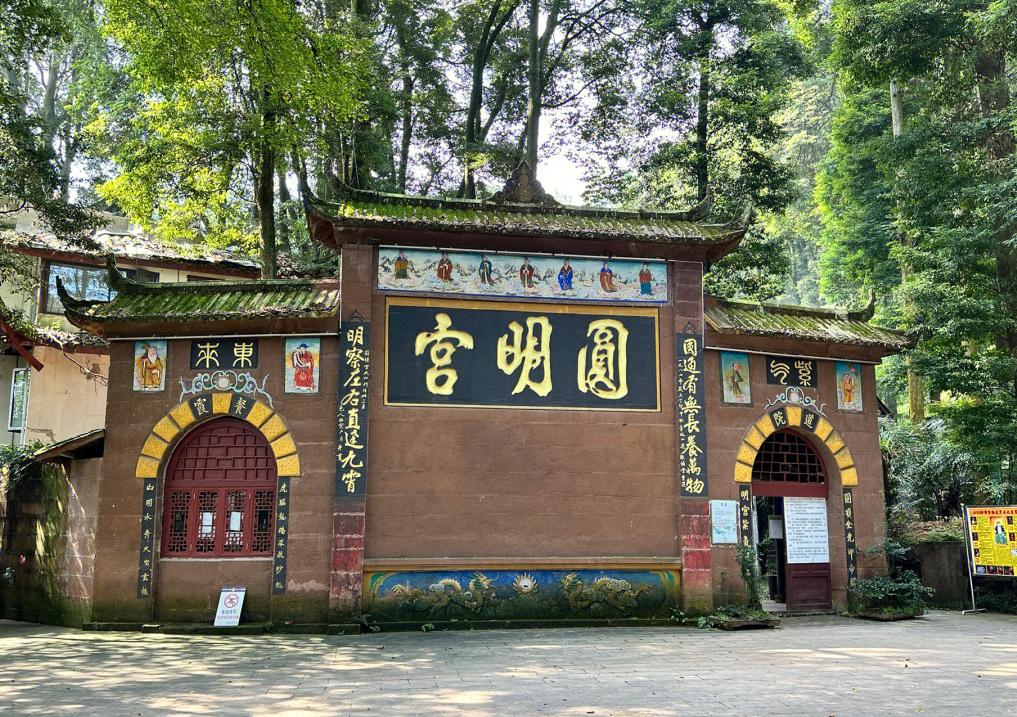
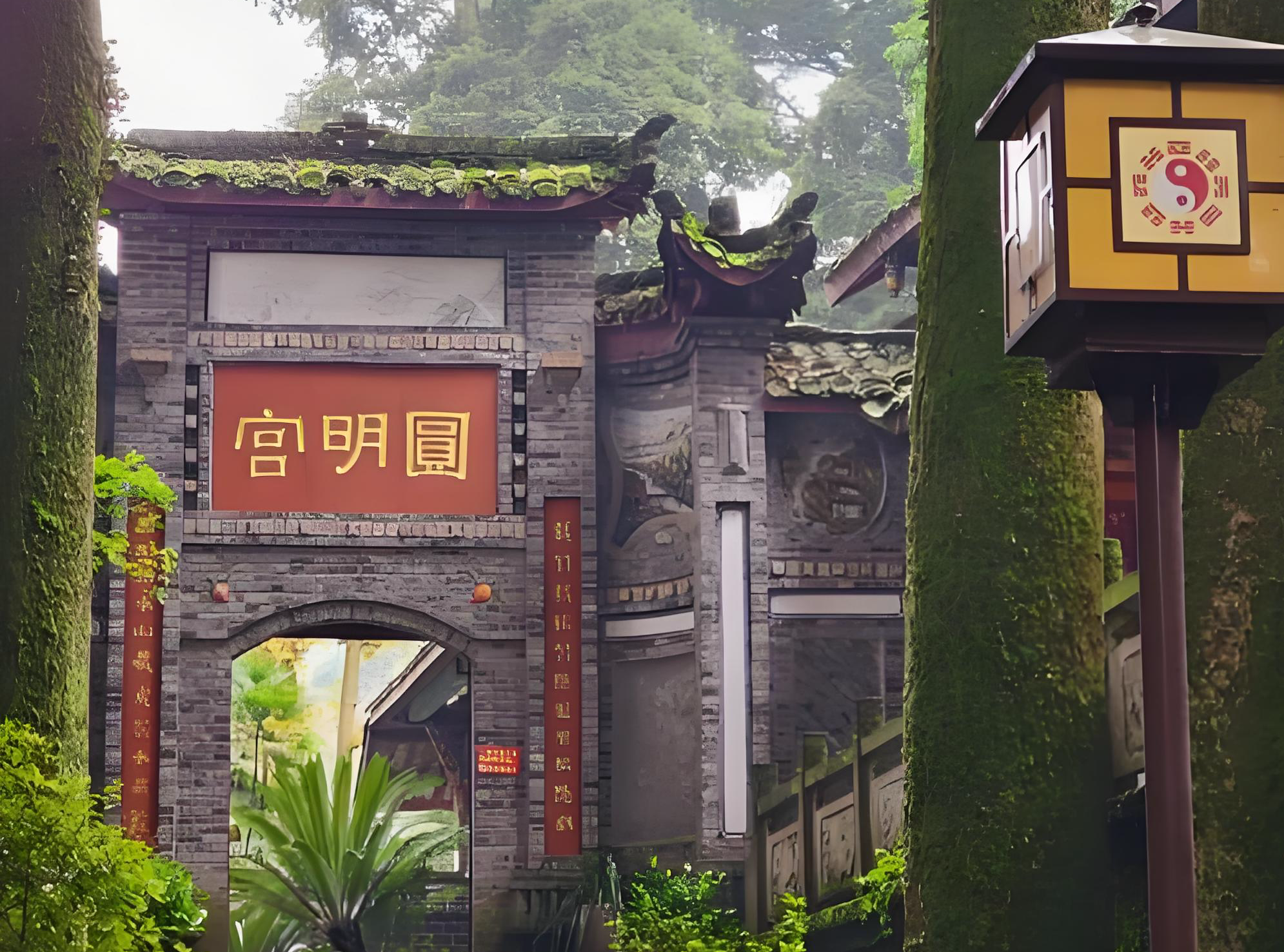
The Yuanming Palace is located in the gentle valley at the northern foot of Mount Zhangren, near the Mu Yu Mountain of Qingcheng. It was originally built during the Ming Dynasty, in the Wanli period, and is named after its dedication to the Yuanming Dao Mother, the Heavenly Sovereign.
The palace consists of four main halls:
· The Lingzu Hall at the front, which enshrines the statue of the Lingguan God.
· The Laojun Hall, dedicated to the Taoist deity Taishang Laojun (Laozi).
· The Doumu Hall, which honors Doumu, the Yuanming Dao Mother and the mother of the stars of the Big Dipper.
· The Sanguan Hall at the rear, which enshrines the Three Sovereigns of Heaven, Earth, and Water, along with the Taoist immortals Lü Zu, Qiu Zu, and the founder of the Quanzhen School, Chongyang Zushi.
Between the halls, there are courtyards with abundant flora, both inside and outside the palace. Rare herbs, exotic flowers, and towering camphor trees fill the landscape, while dense pine and bamboo forests add to the serene atmosphere. One of the couplets displayed here reads: "Plant bamboo and plant pine, bamboo hides the phoenix, pine hides the crane; cultivate the mountains and cultivate the water, the mountain conceals tigers and leopards, the water conceals dragons."
The peaceful and tranquil environment makes it a perfect place for spiritual practice and contemplation. Within the palace, there is also a Taoist Institute for fasting and health cultivation, where visitors can study Taoist practices related to nutrition, fasting, and wellness.
10. Jianfu Palace
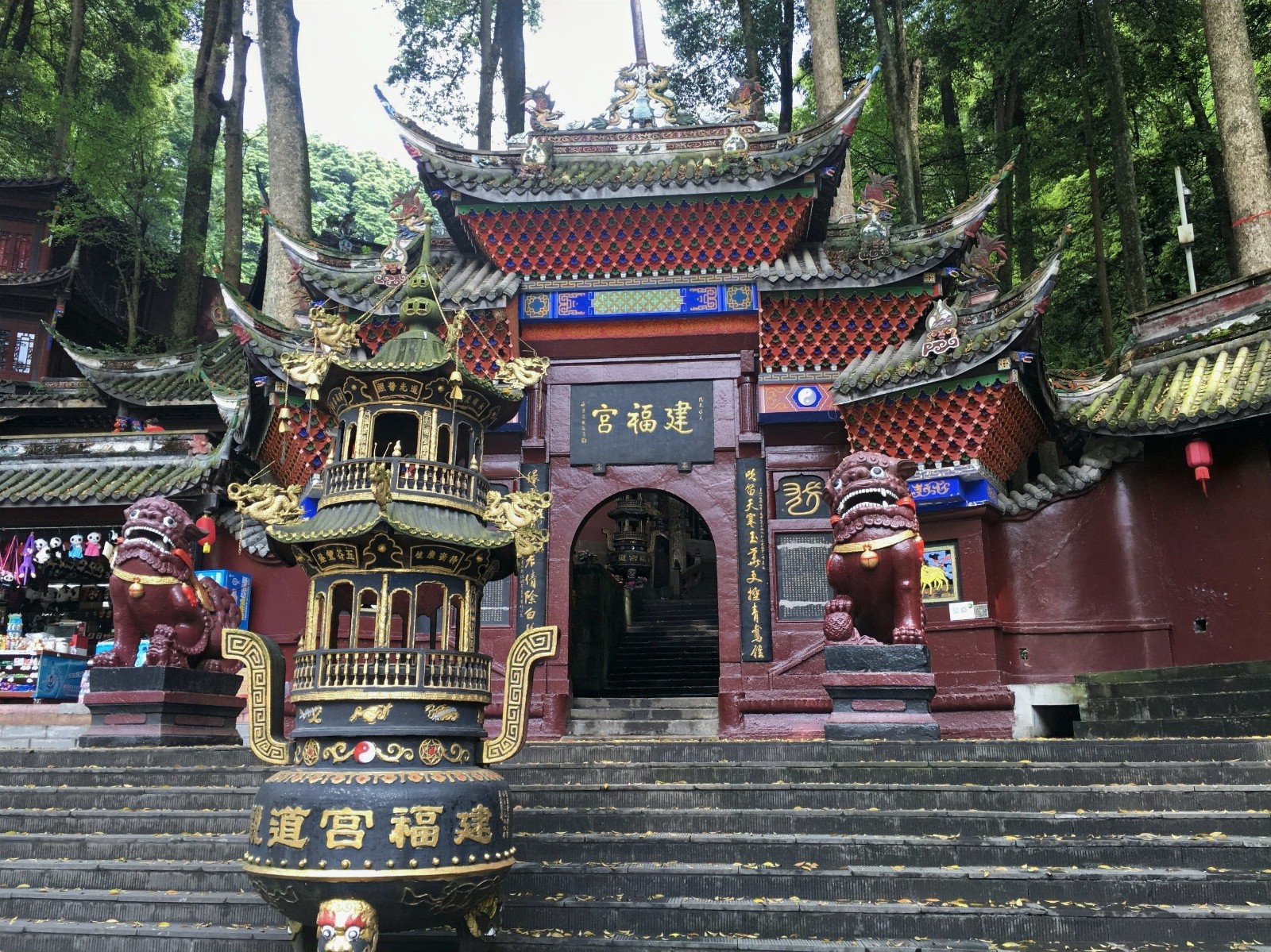
The Jianfu Palace is located at the base of Mount Zhangren. It was originally built in the 18th year of the Kaiyuan era of the Tang Dynasty (730 AD) and has undergone numerous renovations over the centuries. Today, only two halls and three courtyards remain, with the current structure rebuilt during the Guangxu period of the Qing Dynasty (1888).
The palace consists of three main halls, each dedicated to famous Taoist figures and various deities. The couplets inscribed on the columns inside the halls, containing 394 characters, are hailed as "one of the unique wonders of Qingcheng Mountain." Situated beneath a steep cliff, Jianfu Palace presents an awe-inspiring sight. To the left of the palace lies the ruins of the Princess of Mingqing's residence, and a thousand meters to the west is the "Natural Picture," a breathtaking view of towering rocks and swirling mist.
During the Song Dynasty, poet Fan Chengda prayed here for the emperor, and as a result, the emperor bestowed the name "Huiqing Jianfu Palace." The poet Lu You later described the palace in a poem, likening it to "golden inscriptions at the golden gate, with towering bamboo lining the road and clouds gathering in the sky. The rugged cliffs seemed to divide heaven and earth, with thousands of pillars standing tall along the boundaries."
Within the palace, visitors can find ancient trees, a rock garden, the remains of the Princess of Mingqing’s dressing table, as well as murals, couplets, and other cultural relics that add to the historical and spiritual significance of the site.
b. Rear Mountain Scenic Area
The rear mountain of Qingcheng is located 60 kilometers from Chengdu and about 20 kilometers from the city of Dujiangyan, covering an area of approximately 100 square kilometers. It is adjacent to the Wolong Nature Reserve and is an important part of the Sichuan Giant Panda Habitat, a UNESCO World Heritage site. It is often described by the saying, "One mountain divides the profound meaning equally," reflecting the deep cultural and natural significance of the area.
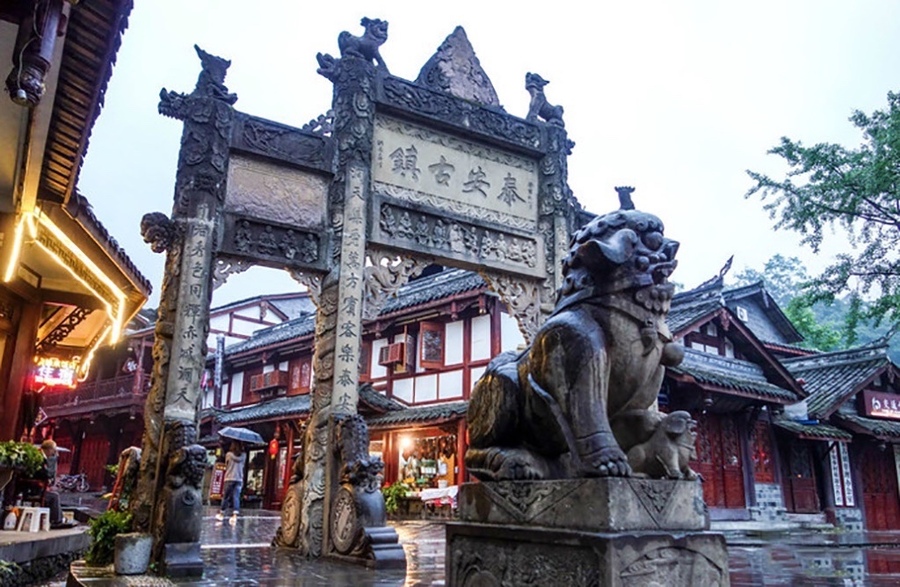
1. Tai'an Ancient Town
A thousand-year-old western Sichuan folk house ancient town at the entrance of the Rear Mountain. The bluestone slab road is lined with teahouses, inns and snack shops, allowing you to experience western Sichuan folk customs.

2. Crystal Cave
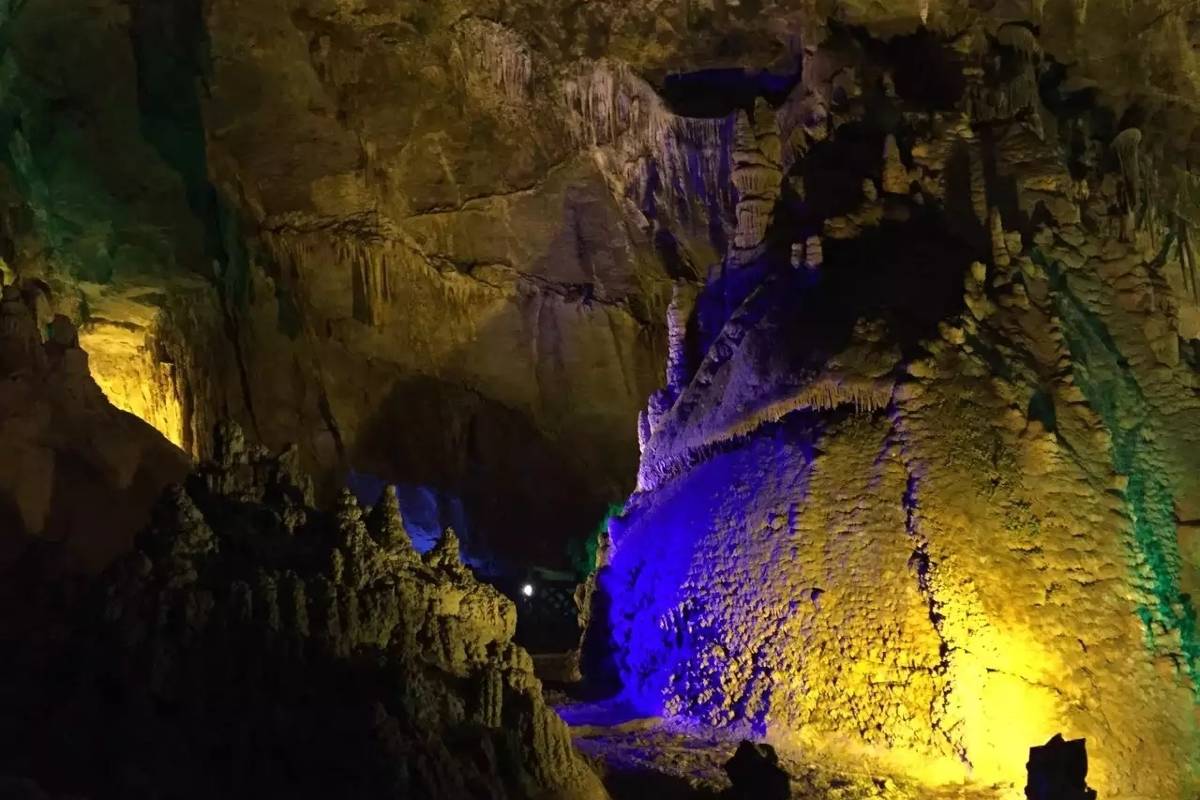
The stalactites inside are as crystal clear as crystals, with various shapes, and are fantasy and gorgeous under the light, a unique karst landscape in the Rear Mountain.

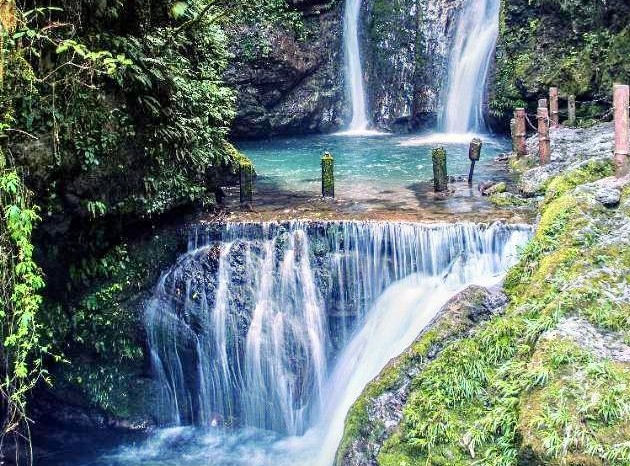
3. Santang Misty Spring (Jinwawa Tuo)
Three pools are connected, the spring water is clear and misty. It is named after the legend that golden dolls once played here, a good place for summer resort and water play.
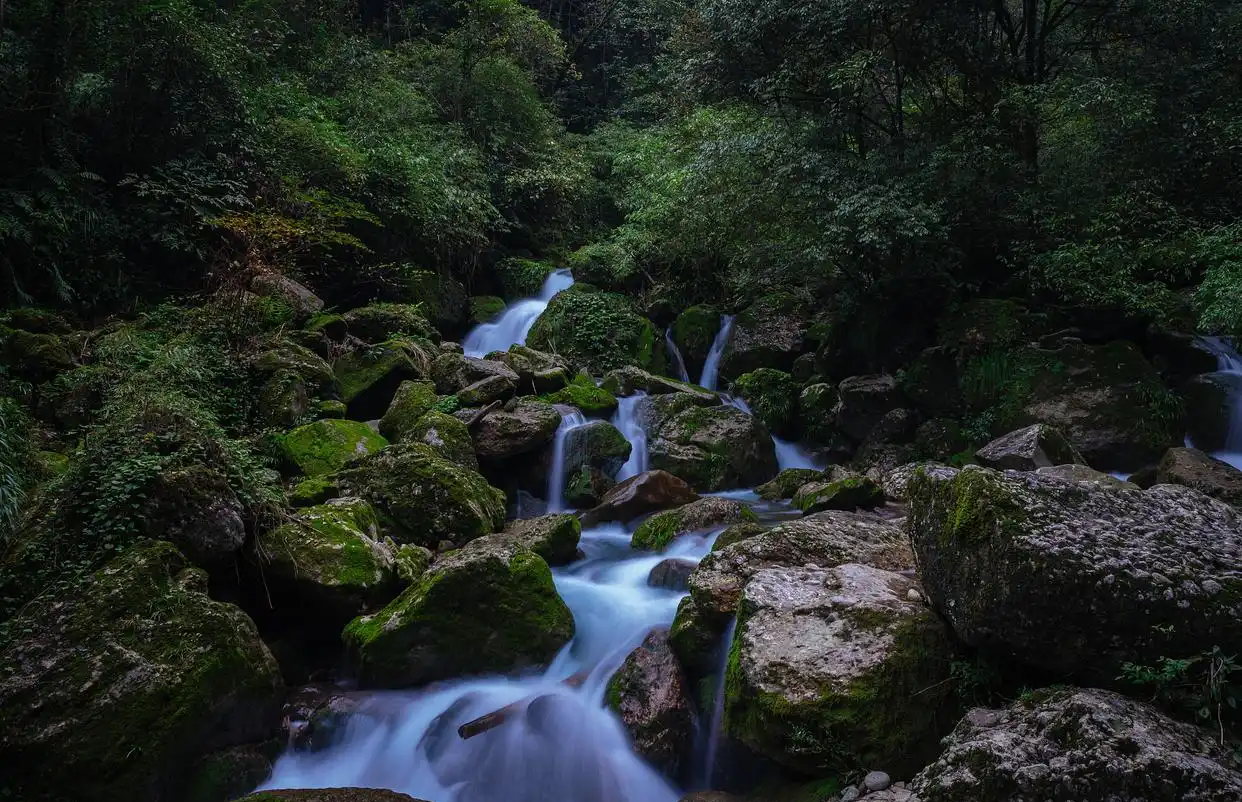
4. Longyin Gorge Plank Road
A plank road about 500 meters long built along the canyon cliff, thrilling and exciting. Walking on it, you can hear the gurgling streams and bird calls in the canyon.

Unlock the Charm of Chengdu: Handpicked Itineraries for the Adventurous Traveler!
Step off the beaten path and explore Chengdu like never before.
Our tours offer a fresh take on Chengdu, highlighting lesser-known spots and unique cultural experiences. Venture into scenic nature spots, enjoy Sichuan-style picnics, or visit art galleries showcasing local talent. Whether you prefer outdoor adventures or cultural escapades, our itineraries are designed to help you see Chengdu through a different lens.
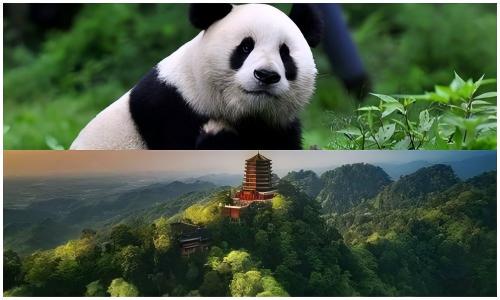 4 Days Chengdu & Dujiangyan Leisure Tour: Culture, Nature & Panda Experience
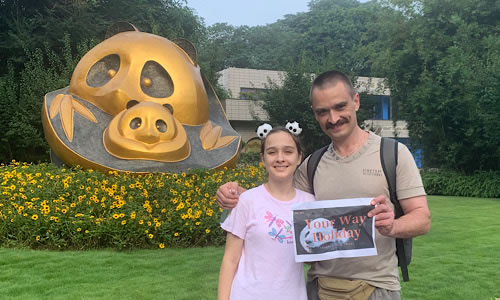 2 Days Chengdu Tour: Blending Modern & Ancient Heritage
Planning Your Journey: Routes and Itineraries
A. Best Time to Visit
1. Spring (March–May)
The temperature is between 10-20°C, and peach blossoms, apricot blossoms, and azaleas in the mountains bloom one after another, covering the mountains with brilliant colors. At this time, there is less rain and the air is fresh, making it an ideal season for hiking and flower viewing. It is recommended to bring a thin coat to prevent temperature differences between morning and evening.
2. Summer (June–August)
With cool temperatures (15–25°C), it is an excellent summer resort. However, there are many showers in the mountainous area, and the rainfall is concentrated in the afternoon, so you need to carry a light raincoat or umbrella with you. After the rain, the mountains are shrouded in clouds and mist, and the scenery is more hazy and beautiful, but some trails may be slippery, so you need to pay attention to safety.
3. Autumn (September–November)
The temperature is 12-22°C, the sky is high and the air is crisp. The leaves of maple trees, smoke trees and other trees in the mountains gradually turn red and yellow, and the forests are dyed in layers, forming a gorgeous autumn picture. The middle and late October is the best time to watch red leaves, attracting a large number of photographers.
4. Winter (December–February)
The temperature is low, usually between 0-10°C, and some peaks will have snowfall. After snow, Mount Qingcheng is covered in silver, and the Taoist temples and ancient trees are more quiet and simple against the white snow, which is a unique opportunity to experience "seeking Tao in the snow". Keep warm and wear non-slip shoes.
B. Travel Routes for Different Durations
1. One-Day Classic Tour
· Front Mountain Focus (takes about 6-7 hours): Start from the mountain gate, take a shuttle bus (one-way 20 yuan/person) to Jianfu Palace, and after visiting, hike along the trail for about 1.5 hours to Tianshi Cave, where you can watch Tang Dynasty stone carvings and Ming Dynasty murals; continue walking for 1 hour to Shangqing Palace to feel the cultural atmosphere of "Qingcheng First Sign"; then walk for 20 minutes to Yuecheng Lake, take a boat across and then take a cable car (one-way 35 yuan/person, round-trip 60 yuan/person) to Laojun Pavilion, climb to the top to overlook the panoramic view; for the return trip, you can choose cable car + boat + shuttle bus, or hike down the mountain (about 3 hours).
· Rear Mountain Adventure (takes about 7-8 hours): Start from Tai'an Ancient Town, hike along the stone road for about 1 hour to Longyin Gorge, and walk through the thrilling plank road (about 500 meters long) to cross the canyon; continue walking for 2 hours to Cuiying Lake, take a ferry (one-way 2 yuan/person) across the lake; hike for another 1.5 hours to Baiyun Temple to feel the tranquility of the ancient temple in the deep mountains; for the return trip, you can choose to walk (about 3 hours) back to Tai'an Ancient Town, or take the Rear Mountain cable car (one-way 45 yuan/person, round-trip 80 yuan/person) to the foot of the mountain and then transfer to the shuttle bus.
2. Two-Day Deep Dive
· Day 1: In-depth Cultural Tour of Front Mountain: Arrive at the Front Mountain gate before 9 am, visit according to the route "Jianfu Palace — Tianshi Cave — Shangqing Palace", and have Taoist vegetarian food in the Taoist temple canteen next to Shangqing Palace at noon (about 30 yuan per person, recommended dishes: stir-fried Qingcheng Mountain bamboo shoots, Taoist vegetarian meal); visit Yuecheng Lake and Laojun Pavilion in the afternoon, go to the mountain guesthouse (such as "Qingchengshan Daoyun Guesthouse", about 150-200 yuan/person/night) to check in in the evening, and you can participate in the Taoist health lecture or meditation experience activity organized by the guesthouse at night.
· Day 2: Rear Mountain Natural Ecology Tour: After having a authentic western Sichuan breakfast (soy milk, fried dough sticks, Qingchengshan old noodles) in the guesthouse in the early morning, go to Tai'an Ancient Town in the Rear Mountain, start the hiking route "Longyin Gorge — Cuiying Lake — Baiyun Temple", and have lunch in the farm restaurant on the way at noon (about 40 yuan per person, recommended ginkgo stewed chicken, wild vegetable fried meat); after going down the mountain in the afternoon, wander around the handicraft shops (such as bamboo weaving, wood carving) in Tai'an Ancient Town, buy characteristic souvenirs, and return to Chengdu in the evening.
Getting to Mount Qingcheng
1. From Chengdu
· High-speed rail: There are multiple trains daily from Chengdu Xipu Station to Qingchengshan Station (first train at 6:50, last train at 21:00), with a second-class seat fare of 10 yuan/person and a journey of about 30 minutes. After exiting the station, you can take the scenic area direct bus (10 yuan/person) or taxi (about 30 yuan/car) to the Front Mountain or Rear Mountain gate, with a drive of 15-20 minutes.
*Tip: Xipu Station implements seamless transfer between "high-speed rail + subway", and you can directly swipe Tianfu Tong Card or ID card to enter the station.
· Self-drive: Starting from downtown Chengdu, via Chengdu-Dujiangyan Expressway and Dujiangyan-Wenchuan Expressway (exit at Dujiangyan West), the whole journey is about 1.5 hours, and the expressway fee is about 25 yuan. The charging standard of the Front Mountain parking lot is: 5 yuan/hour for small cars, 10 yuan/hour for large cars; the parking fee of Tai'an Ancient Town in the Rear Mountain is: 10 yuan/day for small cars, 20 yuan/day for large cars.
*Note: Parking lots are easy to be full during peak seasons (holidays), so it is recommended to arrive early or choose public transportation.
2. Internal Transport
· Cable cars: The operating hours of the Buyunlang Cableway in the Front Mountain are 8:00-17:30 (peak season) and 8:30-17:00 (off-season). The lower station is located at Yuecheng Lake, and the upper station is at Shangqing Palace; the operating hours of the Baiyun Cableway in the Rear Mountain are the same as those in the Front Mountain, with the lower station near Tai'an Ancient Town and the upper station near Baiyun Temple.
*Fare: Front Mountain cable car one-way 35 yuan/person, round-trip 60 yuan/person; Rear Mountain cable car one-way 45 yuan/person, round-trip 80 yuan/person.
· Shuttle buses: The Front Mountain shuttle bus operates the route "Mountain Gate — Jianfu Palace — Tianshi Cave", with a one-way fare of 20 yuan/person and operating hours of 8:00-18:00; the Rear Mountain shuttle bus route is "Rear Mountain Gate ? Tai'an Ancient Town", with a one-way fare of 15 yuan/person and operating hours of 8:00-17:30.
*Tip: The last bus time of the shuttle bus is adjusted with the season, so it is recommended to consult the driver in advance.
Explore Chengdu’s Rich Culture: Tailored Tours to Suit Every Interest!
Chengdu is more than just pandas!
Whether you're wandering through ancient streets, discovering the city’s history in museums, or sampling Sichuan’s famous hotpot, Chengdu offers a rich tapestry of experiences. Our curated tours take you to the heart of the city, showcasing its cultural depth, culinary delights, and natural beauty. No matter your interests, we’ll make sure your Chengdu adventure is unforgettable.
 Private Day Tour to Dujiangyan Panda Base and Dujiangyan Irrigation System
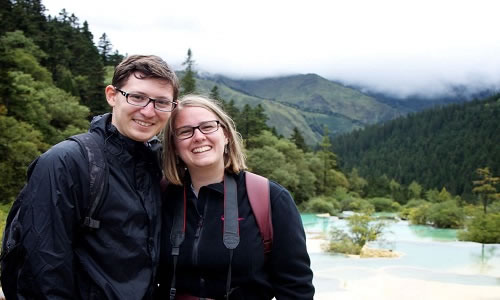 7-Day Sichuan Tours: Discover Chengdu, Jiuzhaigou, Leshan, and Emei
Nearby Accommodation & Restaurant Recommendations
A. Accommodation Recommendations
1. Six Senses Qing Cheng Mountain
The Six Senses Qing Cheng Mountain is an ideal spot for travelers wanting to discover the city. The Six Senses Qing Cheng Mountain is an ideal choice for travelers who want to take in the sights and sounds of Dujiangyan. The hotel is just 3km away from Qingchengshan Railway Station. With multiple attractions nearby including Yuzongdao Hot Spring Center, Xinyue Hot Spring and Qingcheng Mountain Xinshanmen, guests will find plenty to keep themselves occupied. When guests have some time on their hands they can make use of the onsite facilities. This Dujiangyan hotel offers parking on site.

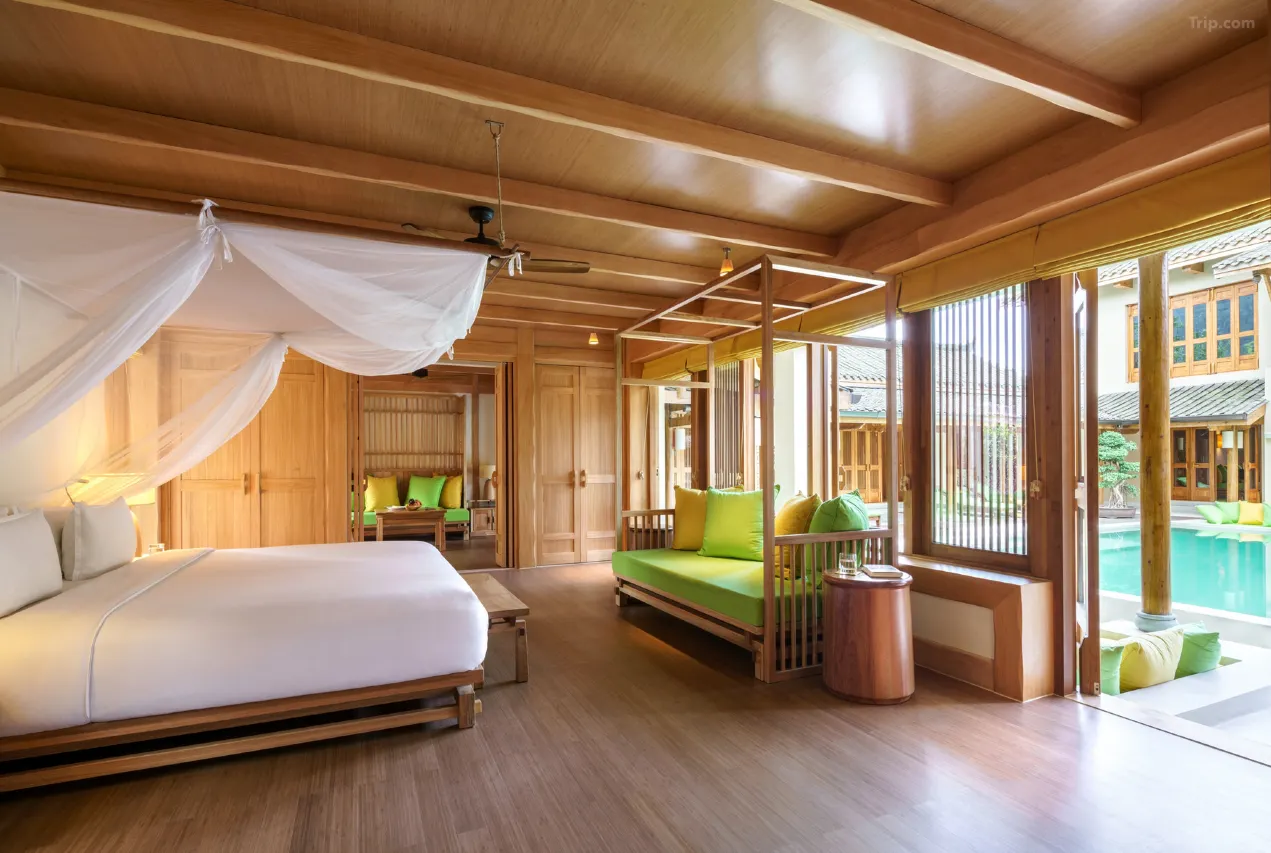
Address: No. 2 Dongruan Avenue, Dujiangyan, Sichuan, 611844, China
Phone: +86-28-87126666
2. Xinyue Hotel
The Xinyue Hotel is an ideal spot for travelers wanting to discover the city. The Xinyue Hotel is an ideal choice for travelers who want to take in the sights and sounds of Dujiangyan. Boasting a convenient location, the hotel is just 3km from Qingchengshan Railway Station and 67km from Chengdu Shuangliu International Airport. The nearby area boasts an abundance of attractions including Xinyue Hot Spring, Qingcheng Shan Zhan-Zhanqian Square and Qingcheng Mountain Xinshanmen.
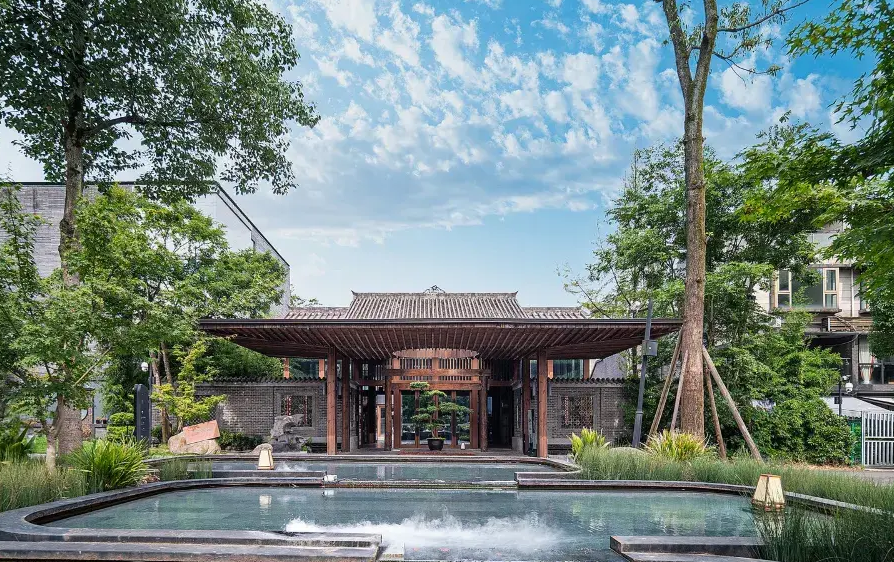
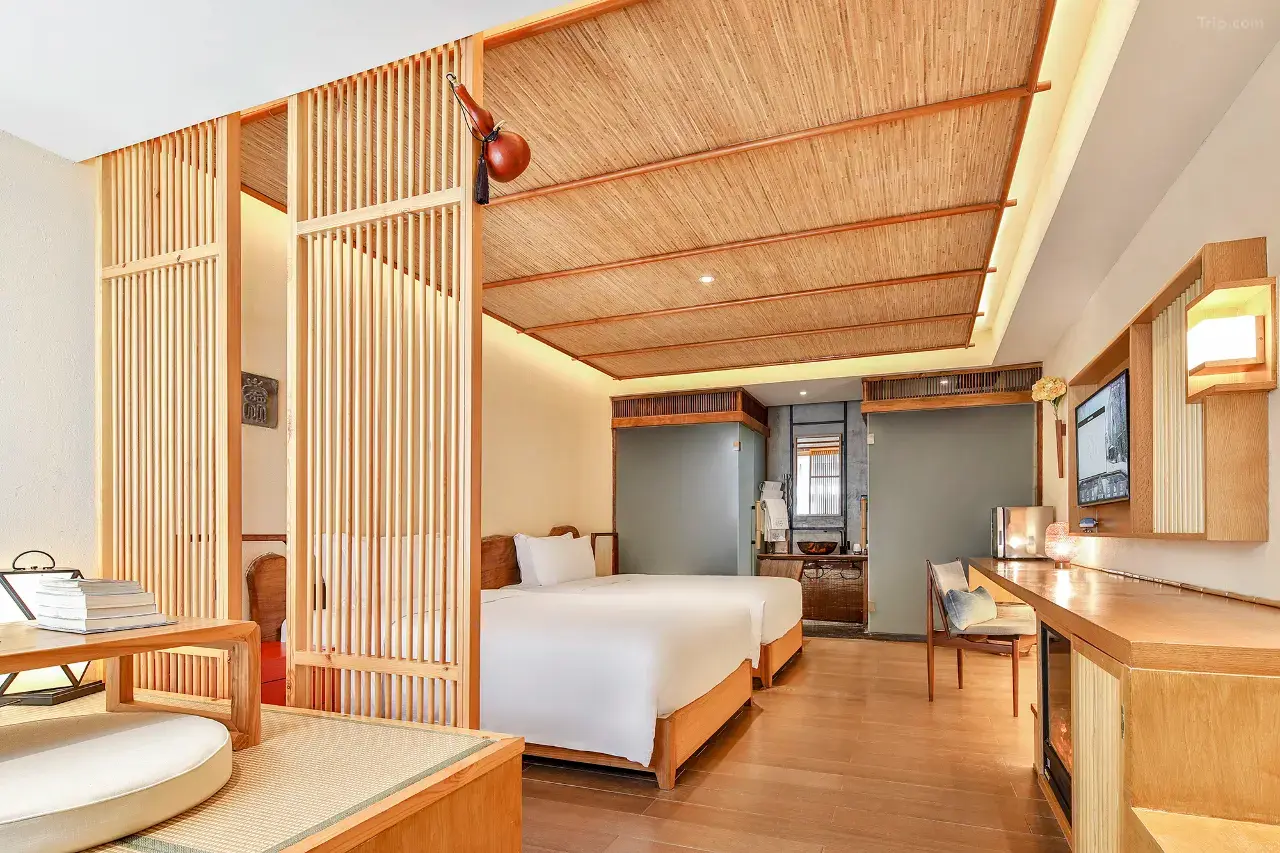
Address: No. 210 Dasan Road, Dujiangyan, Sichuan, China
Phone: +86-28-60837777
3. BLOSSOM HOUSE QINGCHENGSHAN CHENGDU
The BLOSSOM HOUSE QINGCHENGSHAN CHENGDU is one of the newest hotels in Dujiangyan, having opened in 2023. The hotel is conveniently located a short 2km drive from Qingchengshan Railway Station. The nearby area boasts an abundance of attractions including Qingcheng Front Mountain - Sightseeing Bus, Shangshan Hot Spring and Dujiangyan Qingcheng Tao Hot Spring.
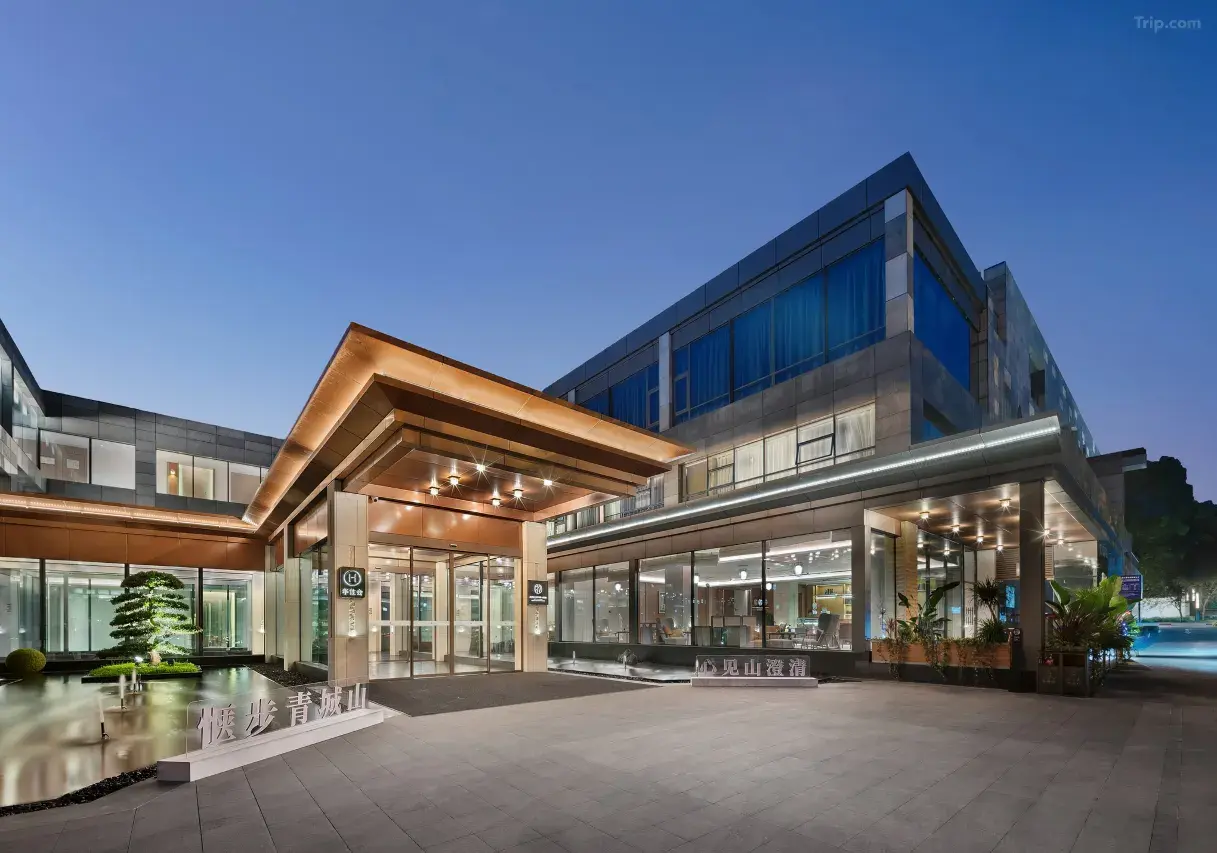
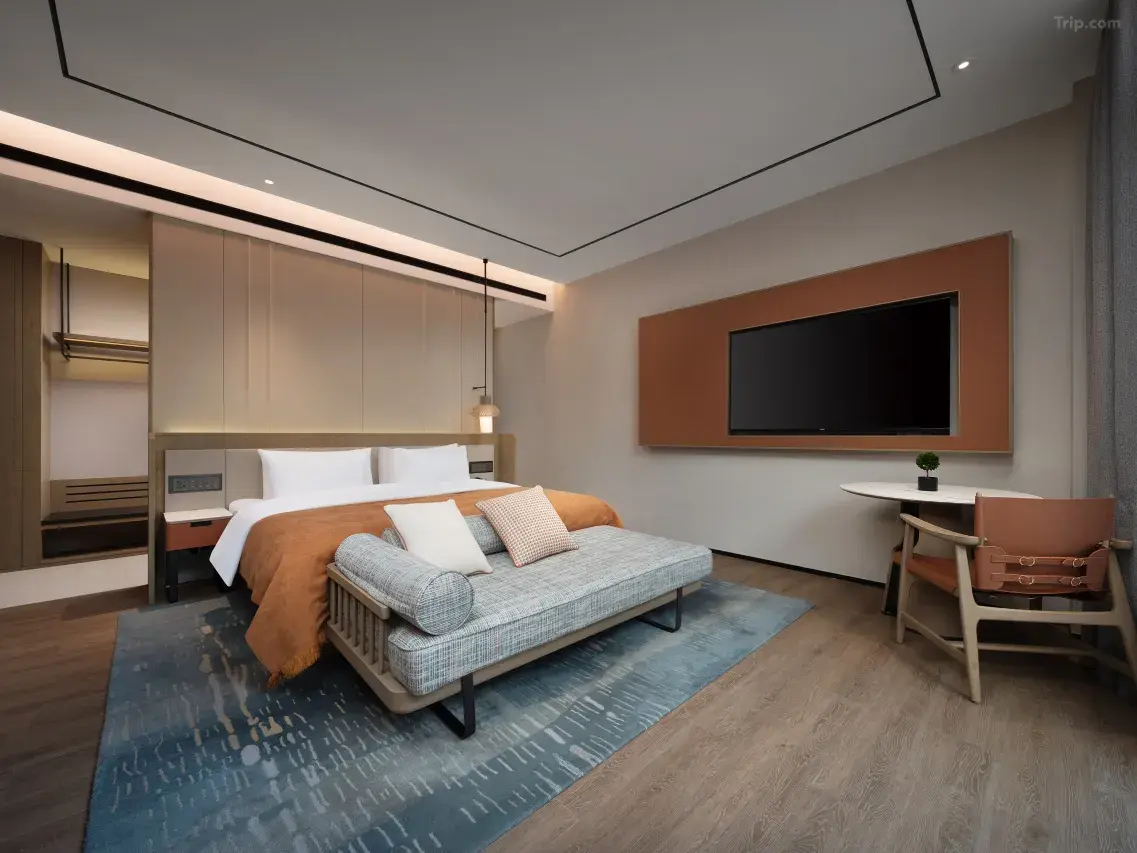
Address: No. 1, Dongruan Avenue, Qingchengshan Town, Dujiangyan, Sichuan, China
Phone: +86-28-60239999 | +86-28-60960990
4. Z HOTEL (Qingchengshan)
The Z HOTEL (Qingchengshan) is one of the newest hotels in Dujiangyan, having opened in 2023. The hotel offers easy access to Qingchengshan Railway Station, just 2km away. This hotel is located near many of Dujiangyan's attractions including Hexiang Villa - Conference Room, Qingcheng Front Mountain - Sightseeing Bus and Qingcheng Mountain Xinshanmen.
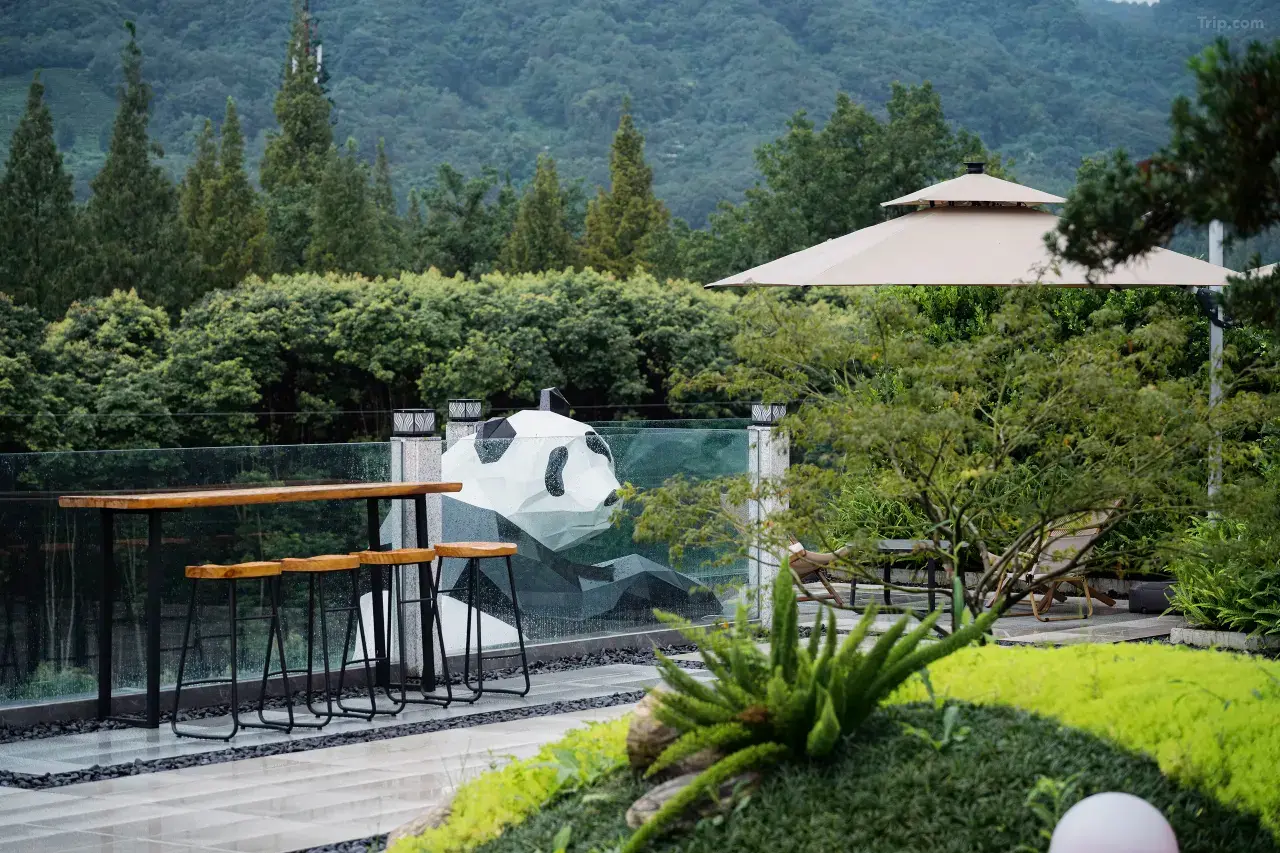
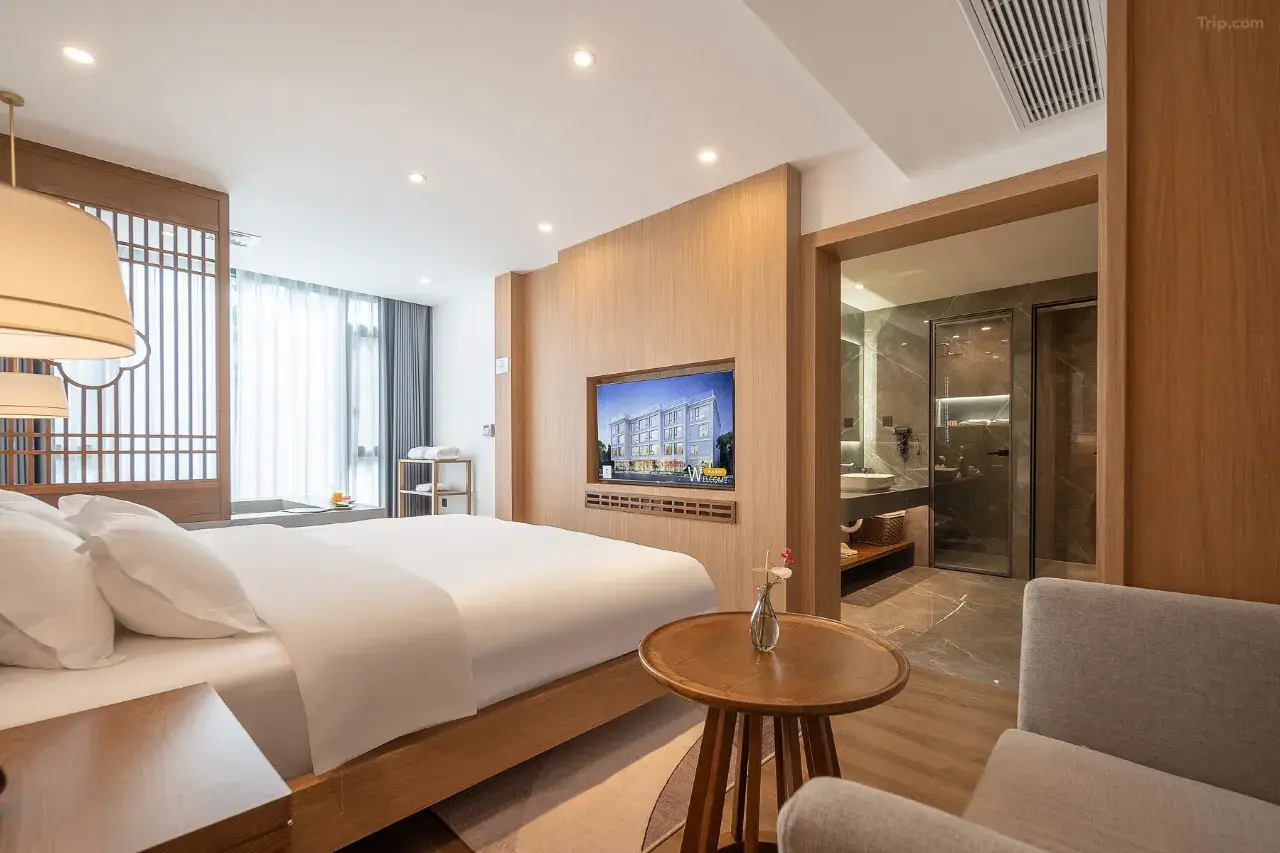
Address: No.10, Qingxia 2nd Alley, Qingchengshan Town, No.2, Dujiangyan, Sichuan, China
Phone: +86-28-87222022 | +86-17302859906
B. Restaurant Recommendations
1. A Quiet Drink in the Courtyard
A Quiet Drink in the Courtyard is a unique restaurant located in Dujiangyan, highly favored by customers for its excellent value and top-notch service. The restaurant offers an elegant atmosphere filled with cultural charm and thematic elements, allowing guests to experience the strong local feature. The portion sizes are generous, and the flavors are exceptional. Whether locals or tourists, everyone can enjoy delicious dishes here. The staff provides warm and attentive service, from menu recommendations to guiding customers to shopping spots after the meal, reflecting their care and attention to detail. Especially the considerate service from the young staff, which makes guests feel truly welcomed. A Quiet Drink in the Courtyard is not only a great place for dining but also an ideal spot to relax and unwind during your travels. Whether for family gatherings or group outings, this restaurant caters to diverse needs, ensuring every customer has a delightful dining experience.
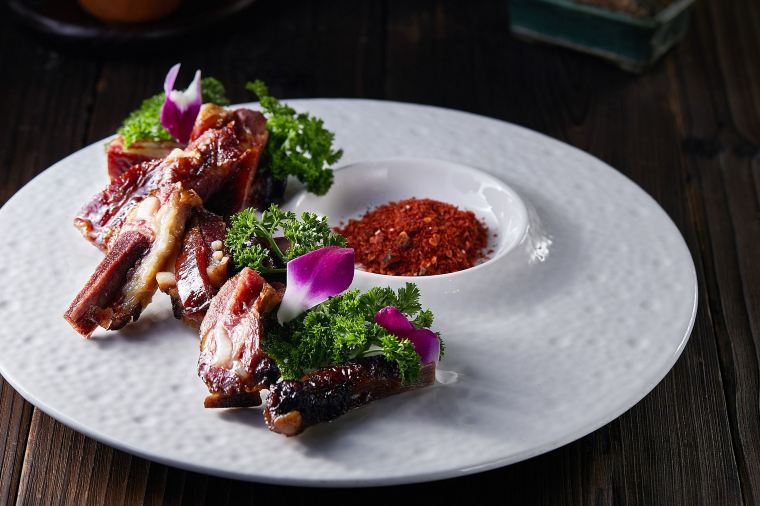
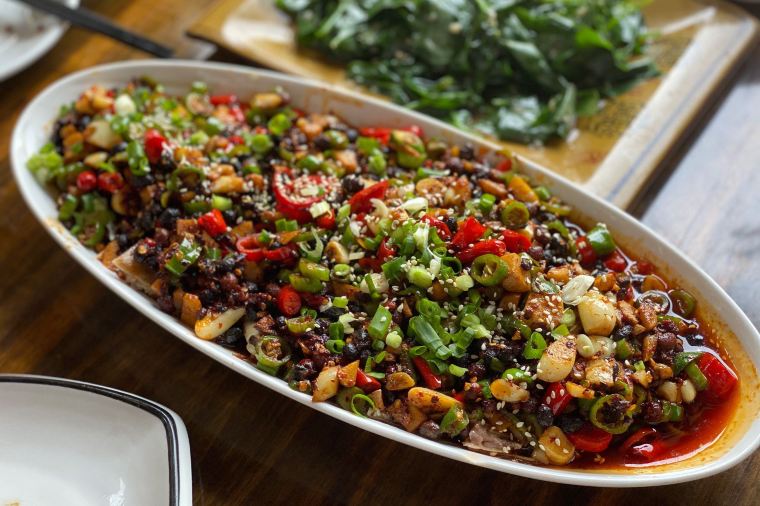
Address: No. 31-35 Ruilian Street (Exit of Xingfu Road, Guxian Parking Lot), Sichuan, China
Phone: +86-87262252
Opening hours: 11:00 AM-03:00 PM 05:00 PM-09:00 PM
2. LIANG SAN MEI
Liang San Mei is a unique restaurant located at the foot of Qingcheng Mountain, specializing in its signature dish, firewood chicken. The restaurant offers an elegant atmosphere with rich flavors, attracting many food lovers to taste its offerings. While some diners feel that the service and environment are average, most people praise the attitude of the staff. The restaurant's owner is warm and hospitable, even providing umbrellas and raincoats to customers during a heavy rain, demonstrating thoughtful service. The firewood chicken is highly praised for its flavor, but it’s important to choose the right chicken to avoid toughness that may affect the taste.
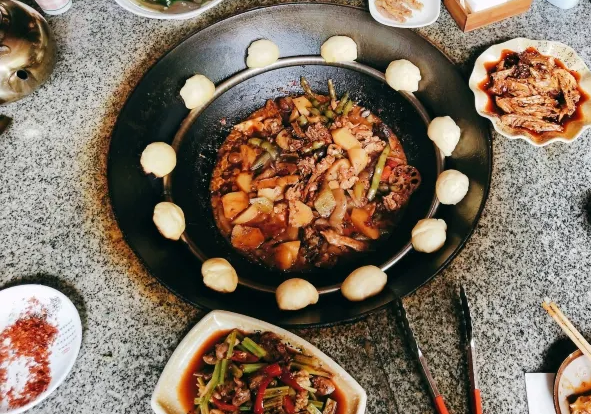

Address: No. 8, Group 12, Xinyi Town Village, Qingchengshan Avenue, Sichuan, China
Phone: +86-18040305576
Opening hours: 08:30 AM-09:00 PM
3. Qingcheng Jia (Qingcheng Mountain Branch Store)
Qingcheng Jia (Qingcheng Mountain Branch Store) is located at the foot of Qingcheng Mountain and is one of the top three restaurants in the area. This restaurant specializes in authentic Sichuan cuisine and Sichuan West farming culture, offering a variety of delicious dishes, including both spicy and non-spicy options. Signature dishes such as Stir-fried Bacon with Garlic Sprouts, Ginkgo Braised Chicken, and Runshan Chicken with Three Preparations are all made with fresh ingredients, delivering a rich and fragrant taste. The environment is beautiful, resembling a garden, where you can feel the refreshing presence of nature. The service is warm and attentive, with the owner and manager personally asking customers for their feedback and suggestions on the dishes. The prices are reasonable, with an average cost of less than 100 RMB per person, offering excellent value for money. Whether you are a tourist or a local resident, it is definitely worth a try. It’s a wise choice to book a private room in advance to avoid waiting in line. Qingcheng Jia is an excellent option for both dining and sightseeing in Qingcheng Mountain.
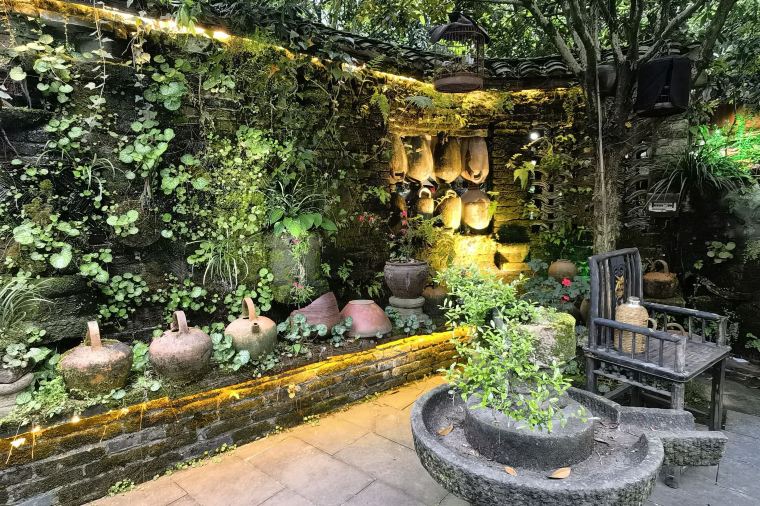

Address: Gate of Shangyuan Qingcheng Training Center, No.52 Huanshan Highway, Sichuan, China
Phone: +86-15882150108
Opening hours: 11:30 AM-02:00 PM 05:00 PM-08:00 PM
Practical Tips for a Seamless Experience
1. Essential Packing List
· Footwear: Non-slip hiking shoes (mid-high top style is recommended to protect ankles). Some sections of the Rear Mountain trail are covered with moss, which is especially slippery in the rainy season; the Front Mountain route is relatively gentle, and comfortable sports shoes can also be worn.
· Clothing: Bring thin coats and knitwear in spring; prepare short sleeves, long pants (to prevent mosquito bites) and sun protection clothing in summer; wear long-sleeve shirts + thin down jackets in autumn; wear down jackets, scarves, gloves and other warm supplies in winter.
· Other Items: Sunscreen (SPF30+), sun hat, sunglasses (essential in summer); mosquito repellent (more mosquitoes in Rear Mountain); reusable water bottle (there are many free spring water drinking points in the mountain); small backpack (for carrying personal items); power bank (fewer charging facilities in the scenic area); light folding umbrella (for both sunny and rainy days).
2. Cultural Etiquette
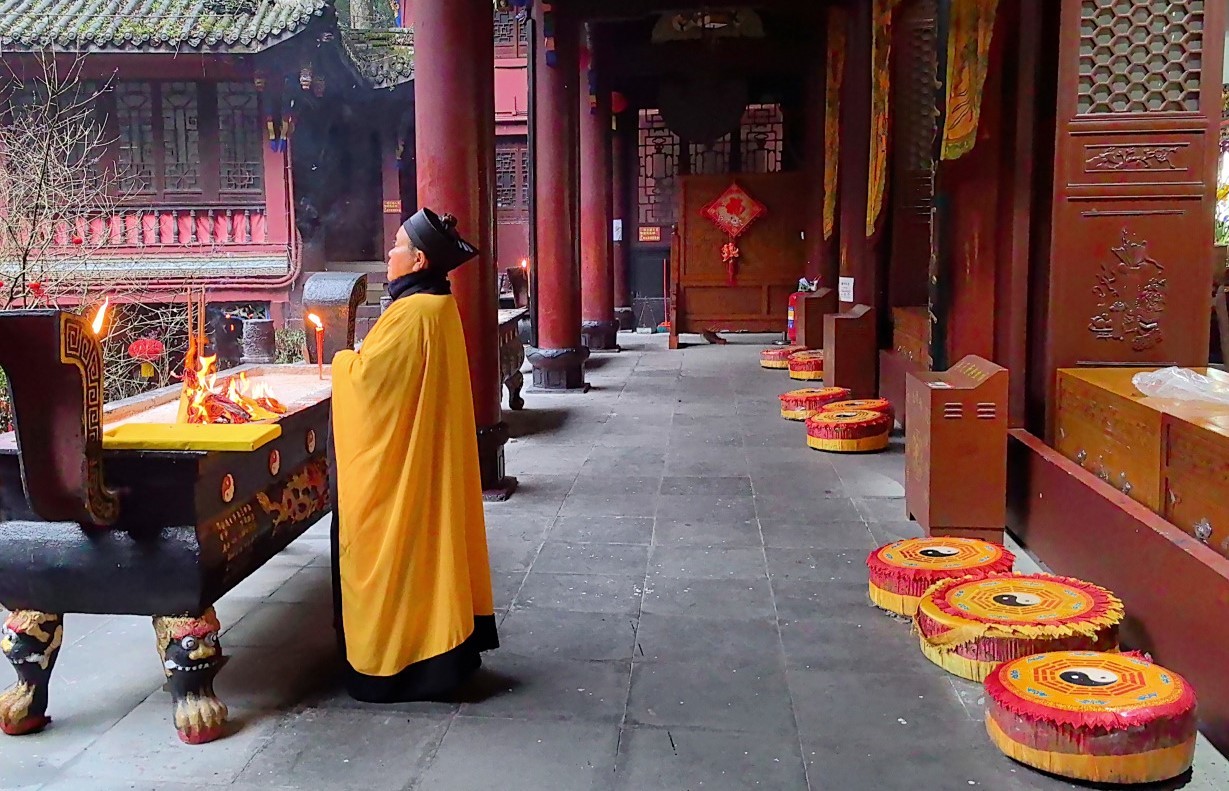
· Respect temple customs: Take off your hat when entering Taoist temples, and do not wear shorts, short skirts or vests; taking photos and making noise are prohibited in the halls, and do not touch the statues and cultural relics; if you need to burn incense, you can ask for incense in the Taoist temple (usually free or voluntary donation), and offer incense according to Taoist etiquette, generally three sticks of incense, symbolizing "Tao, Heaven and Earth".
· Preserve nature: Littering is strictly prohibited, and there are trash cans every 1 kilometer in the scenic area; do not pick flowers and plants or damage vegetation at will; do not enter unopened areas for adventure to ensure your own safety; abide by the "Leave No Trace" principle and visit without leaving traces.
Mount Qingcheng is not only a dual heritage of nature and culture, but also a "living" Taoist culture museum. Here, you can feel the solemnity and sacredness of Taoism in the morning bells and evening drums, listen to the sounds of nature on the forest trails, and taste the fireworks of western Sichuan in the ancient town streets. Whether you climb to Laojun Pavilion to overlook the grandeur of heaven and earth, or sit quietly in front of Tianshi Cave to understand the philosophy of "Tao follows nature", Mount Qingcheng can let you temporarily escape the hustle and bustle of the city and find inner peace and balance. As the ancients said: "Qingcheng is the most tranquil under heaven, seeking immortals and Taoism in this mountain." May every visitor gain their own "Qingcheng insight" in this beautiful and spiritual place.
Your Way Holiday’s Exclusive Guide to Mount Qingcheng and Unforgettable Qingchengshan Experiences
We design private and tailor-made Chengdu tours customized to your travel style at affordable local prices. You’ll enjoy the comfort of a private, spacious car and the company of a professional local guide with over 5 years of experience, dedicated exclusively to you or your group. From transportation and tickets to authentic dining experiences (we always recommend the dishes most loved by locals), everything will be arranged according to your preferences. Please take a look at some of our most popular Chengdu tours below:
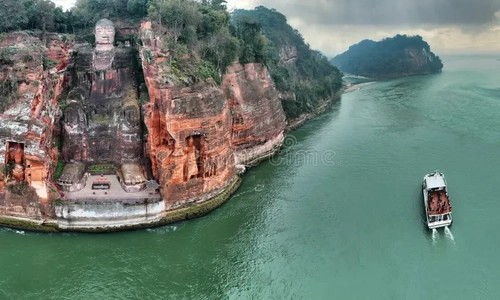 Full Day Chengdu Tour with Leshan Giant Buddha, Hot Pot & Sichuan Opera
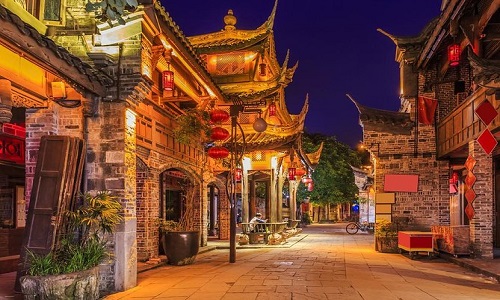 Local Tour in Chengdu: Discover the Authentic Chengdu Lifestyle
Not exactly what you’re looking for? Don’t worry — all of our Chengdu tours can be fully customized based on your interests, schedule, and budget. We specialize in creating unique Chengdu experiences that go beyond the guidebook, giving you the chance to truly connect with the local culture and people. Our enthusiastic tour experts are always ready to provide detailed suggestions and will respond to your inquiry within 24 hours. Ready to explore Chengdu your way? Contact us today and let us design a Chengdu shopping experience that fits your style. Your Way Holiday looks forward to your message! We're ready to design an unforgettable Chengdu trip for you anytime.
Wechat: YourWayHolidayAsia
24 Hours Hotline:
+8613735411378
Certificate of Excellence
2012~2026

Your Way Holiday
(Your Privacy is Protected)
1 to 1 tailor-made service from our professional travel advisors for the most sophisticated
Constantly excellent reviews for attraction, hotel and service Competitive price
Local experts provide quality tours Best selected knowledgeable local guides Authentic local restaurants
7*24 hours available to create you a worry-free tour. No Hidden Fees and absolutely no pressure to buy. Secured