24 Hours Hotline: +8613735411378
Email:[email protected]
24 Hours Hotline: +8613735411378
Email:[email protected]

Overview
Sera Monastery is one of the six main monastery of Gelug Sect in Tibetan Buddhism. Together with Drepung monastery and Gandan monastery, Lhasa's three monastery are the latest one built. The temple is located at the foot of serawuzi mountain, 3km away from Lhasa, surrounded by willow forests. Since ancient times, it has been a place where eminent monks and living Buddhas preached, surrounded by many small monastery. In the East and south of the monastery, there are pupupujue monastery, miqiongreniku monastery, gongbasa monastery, pabenggang monastery, Zaxi Qulin monastery, Qusang monastery, Gali nunnery monastery; behind the monastery, there are zhukangrique monastery, selaqiding monastery, etc.
Main Structure
Cuoqin Hall
Cuoqin hall is the largest Hall of Sela monestery and the management center of religious affairs. It was built in 1710 under the direct sponsorship of Lhasa Khan, a descendant of Gushi Khan (1582-1654), who was in power from 1705 to 1717. The main hall is located in the northeast of sera temple. It is four stories high and consists of square in front of the hall, sutra hall and five Buddha halls.
Jizha Cang Hall
Jizhacang is one of the largest halls in sera monestery, with an area of 1702 square meters, second only to the Cuoqin hall. It was first built in 1435 and was founded by gongjiuluozhen renqinsenge. Jizhacang is four stories high, and there are 100 stone pillars in the Sutra hall alone. Thangkas, umbrella covers and curtains are hung in the Sutra hall. Biographies of Sakyamuni and various Dharma protectors are painted on the walls around the hall.
Maizhacang Hall
Maizhacang is the early building of Sera monestery, founded in 1419. It is said that the original palace was destroyed by lightning and was rebuilt by Gongqin qianqu Pemba in 1761. The area is 1620 square meters. In the Sutra hall, there are 8 long pillars and 62 short pillars. The main bronze statues are the Buddha of the future, wuliangshou Buddha, pharmacist Buddha, Miaoyin Bodhisattva, zongkaba master and apprentice, seventh Bodhisattva, zongkaba master and apprentice, seventh Dalai, the third generation of zamolin living Buddha (gongjuedan bergenzan) and pabangka living Buddha on both sides.

Collection of cultural relics
There are a large number of cultural relics in sera monestery, such as Buddha statues, Thangka, scriptures, magic tools, and offering utensils, which are extremely precious. According to the history of Ming Dynasty, When Sakyamuni returned to Tibet from Beijing in the 14th year of Yongle reign of the Ming Dynasty (1416 AD), the emperor granted "Buddhist scriptures, Buddha statues, Dharma sticks, robes, silk and gold and silver wares", including 108 letters of the Tripitaka Sutra (engraved with Zhu) and the eighteen Arhats and four heavenly kings carved on sandalwood;
Legend
There are two opinions on the origin of sera monestery
1) During the foundation laying and construction of the monestery, there was a fierce hailstorm. Hailstorm was pronounced as "Sala" in Tibetan, so the monestery was named "Sera Monestery", meaning "Hail Monestery";
2) The monestery is built in a place where wild rose flowers are in full bloom, so it is named "Sera Monestery". The Tibetan pronunciation of wild rose is also "Sera". The temple is called "Sera Mahayana Monestery".
Information
Admission Fee: CNY 50
Opening Hours: 09:00-16:00
Visit time: 2-3 Hours
Best time to visit: Mar-Oct
Duration:6-8 Hours
Attractions(Cities): Chengdu Panda Research Base, People's Park, Jinli Ancient Street, Kuanzhai Alley
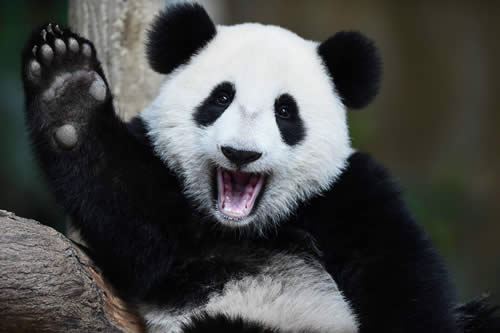
Tour Style:One day, one private car, and an English-speaking local guide who has already booked every ticket on the list. Mornings start early at the Chengdu Research Base of Giant Panda Breeding so you catch the pandas while they are still active; after that, the pace slows to a hillside teahouse in Renmin Park, gaiwan jasmine tea in hand. Between the two you walk Jinli's lantern-lit lane and finish in Kuanzhai Alley, where restored Qing courtyards now sit alongside small shops and tea rooms. Pick-up and drop-off match your schedule — a Chengdu hotel, a train station, or the airport.
Duration:8 Hours
Attractions(Cities):Chengdu Giant Panda Research Base, Leshan Giant Buddha
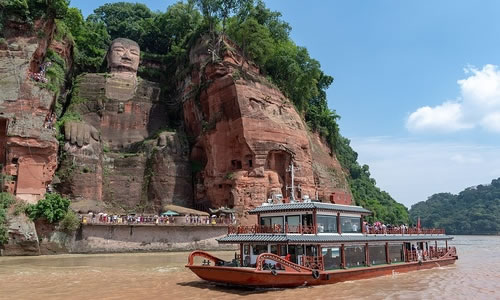
Tour Style:Two UNESCO-listed sights on one private day out of Chengdu. The morning starts at the Chengdu Research Base of Giant Panda Breeding while the animals are still active in the cool hours, then the driver takes you south along the expressway to Leshan, where a 71-metre stone Buddha carved between 713 and 803 AD still stands at the junction of three rivers. Walk the Nine Bends Plank Road, take the river boat, or do both. English-speaking local guide, private air-conditioned car with an experienced driver, Panda Base and Leshan tickets included, hotel, train station, or airport pick-up.
Duration:2 Days, 1 Night
Attractions(Cities):Chengdu Panda Base, Renmin Park, Wuhou Temple, Jinli Street, Wenshu Monastery, Chengdu Museum, Tianfu Square
Tour Style:This two-day private tour moves between the old and new faces of Chengdu at your own pace. Day 1 starts at the Chengdu Research Base of Giant Panda Breeding in the morning, when the pandas are feeding, then takes in the teahouse scene at Renmin Park, the Three Kingdoms shrines of Wuhou Temple, and the snack stalls and craft shops of Jinli Ancient Street. Day 2 covers the Buddhist halls of Wenshu Monastery, the collections of the Chengdu Museum, and the modern plaza at Tianfu Square. A private car and an English-speaking guide carry you between all of them, with pickup from your hotel, train station, or the airport, and the daily order flexes if you want longer at the panda base or a slower teahouse stop. Lunch is left open so your guide can point you to local kitchens rather than tourist menus.
Duration:8-9 Hours
Attractions(Cities):Dujiangyan, Qingcheng Mountain
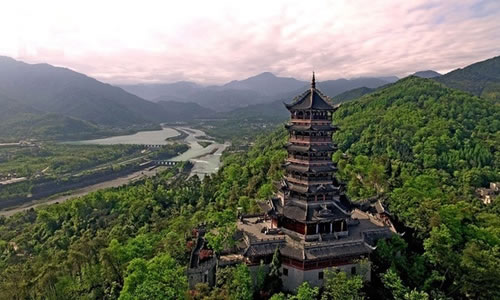
Tour Style:This day trip pairs two UNESCO-listed sights west of Chengdu: the Dujiangyan Irrigation System and Qingcheng Mountain. A private car and driver collect you from your hotel, train station, or the airport and stop first at Dujiangyan, where an English-speaking guide walks you through the 256 BC waterworks that Li Bing and his son built without a dam, still carrying Min River water onto the Chengdu plain after more than 2,000 years. You see the Fish Mouth levee, Flying Sand Reef, and Bottle Neck channel up close. After lunch you drive to Qingcheng Mountain, a founding site of Taoism, and take the cable car and stone paths past the front-mountain temples. Lunch is left out on purpose so your guide can point you to a local Sichuan kitchen; pace, photo stops, and vegetarian or lighter requests are easy to adjust on a private tour.
Duration:3 Days 2 Nights
Attractions(Cities):Leshan Giant Buddha, Mount Emei, Chengdu Research Base of Giant Panda Breeding, Renmin Park, Jinli Ancient Street, Kuanzhai Alley
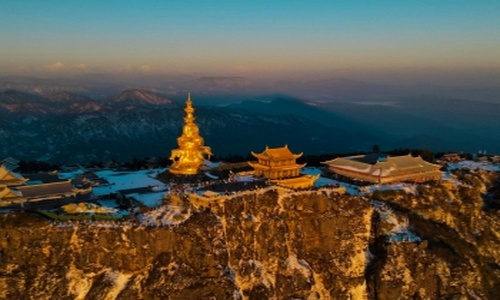
Tour Style:This three-day private tour pairs Chengdu with two mountain and heritage sights. Day one covers the Giant Panda Breeding Research Base in the morning, then Renmin Park teahouse, Jinli Ancient Street, and Kuanzhai Alley. Day two drives about two hours to the 71-metre Leshan Giant Buddha, seen from the cliff path or a Dadu River boat, then on to an overnight at the foot of Mount Emei. Day three rises by eco-bus and cable car to the Golden Summit at 3,077 metres and the old temples before the return to Chengdu. A private car, driver, and English-speaking guide handle tickets and transfers, and pick-up and drop-off run from your Chengdu hotel, station, or airport.
Wechat: YourWayHolidayAsia
24 Hours Hotline:
+8613735411378
Certificate of Excellence
2012~2026

Your Way Holiday
(Your Privacy is Protected)
1 to 1 tailor-made service from our professional travel advisors for the most sophisticated
Constantly excellent reviews for attraction, hotel and service Competitive price
Local experts provide quality tours Best selected knowledgeable local guides Authentic local restaurants
7*24 hours available to create you a worry-free tour. No Hidden Fees and absolutely no pressure to buy. Secured