24 Hours Hotline: +8613735411378
Email:[email protected]
24 Hours Hotline: +8613735411378
Email:[email protected]
Overview
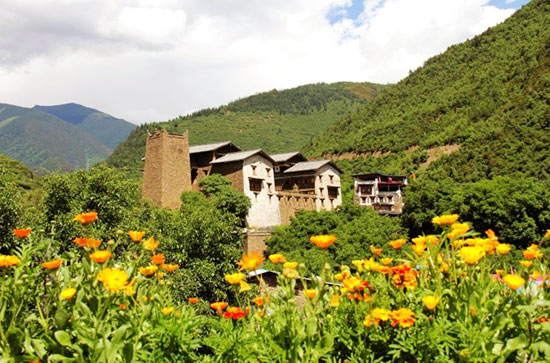
The Zhuokeji Chieftain’s Fortress (Zhuokeji Tusi Guanzhai) is located in Zhuokeji Town, 7 km east of Ma’erkang (Barkam) County, Sichuan Province, at an altitude of 2700 meters above the sea level, at the ridge near the south-east bank of Suomo River. Its strategic potential with the momentum of dragon and tiger, with its tall and majestic shape, performs a transmission of the majesty of a former chieftain. The well-proportioned fortress is surrounded by hills, echoing the rowing Tibetan houses, seamlessly making a picture. The fortress covers an area of 1480 square meters and is a construction built of a composition of clay, stone and wood. The nearby Jiarong Tibetan Village is a tranquil and peaceful village. The entire hillside village is well-proportioned, with the clear Suomo River flowing through in front of the village. The estate of the fortress echoes the residential community of Jiarong across the water.
Structure
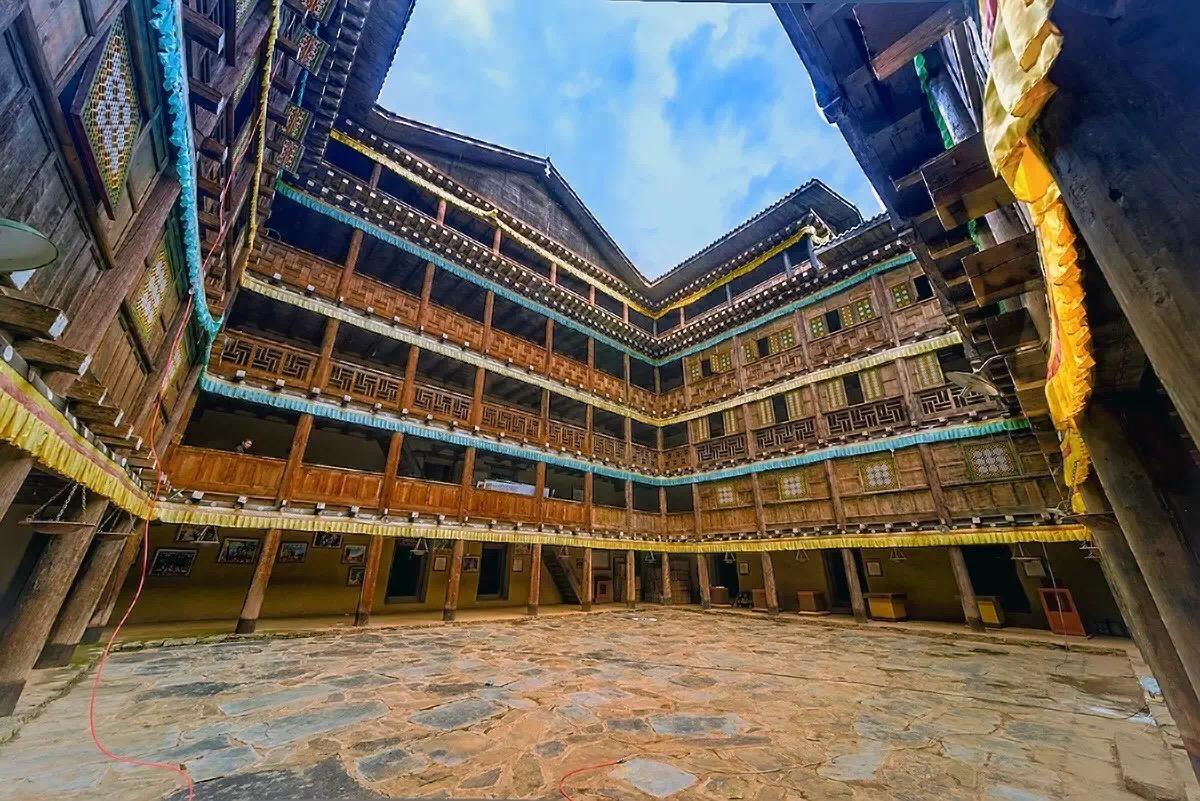
The architecture style of the Zhuokeji Chieftain’s Fortress varies from those in Han areas. It sits northwest and faces toward the southeast. The entire building is made up of two parts: the Government Office and the west gate of the stone building. Its main building has a front side with a length of 37.84 meters, 37.2 meters long of its side edge, 19.5 meters of the entire height, 1.1 meters thick of stone facades and 0.9 meters of the interior walls. Under the second floor of the main building are a traditional square. Since a courtyard is left in the middle, the structure appears to be a Chinese character "?"-shape. Above the second floor, of the east, west, north, a heightening four-layer structure has been added, to form a Chinese character "?"-shape. The roof of the second floor has a Tibetan style flat top on the south, and east, west and north roofs use Han-style triangle roof wooden trusses as a load-bearing frame, capped with bluestone sheet laminated waterproof layer. In the north there is a 4-layer Sutra Chapel, where cantilevered out of the wall there is a wood-made turning cloister. East, west, north patio also has a wooden corridor, with the corridors straight through the first floor of the south, on the second floor and the roof of the second floor. There are 21 corridors through the wooden roof, with each column 15 meters high, supporting each cloister floor. Looking from the exterior, in addition to Han-style roof, the main and subsidiary towers are typical of Jiarong Tibetan architecture, a style of simplicity, majesty and gravity.
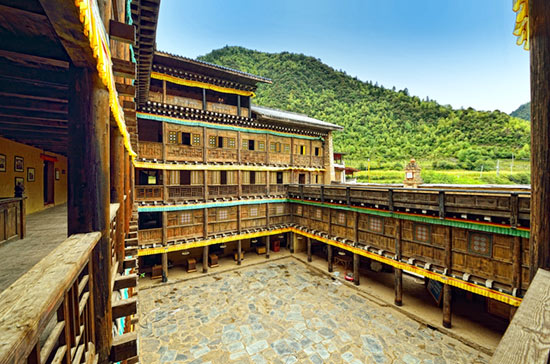
Concerning with the rooms of the fortress main building, the function arrangement has also inherited the traditional culture of the Tibetan Ethnicity. The main building is divided with stone walls into different sizes of 63 houses, along with 53 small rooms, 2 large halls, 4 side rooms, a large living room and 3 kitchens. The ground floor patio is for collective activities, where around the room is for the horse ring and housing officers. The second floor has a kitchen and a guard house, and a large living room and a large hall. The third floor is the housing for the chieftain and his family, and with the treasury, kitchen, and large temple. The temple floor has been opened up to the fourth floor, becoming two-story-high height. The corridors are interlinked to a flat roof on the southern part of the second floor, facilitating drying of goods and carrying out various activities. The rest of the rooms on the fourth floor are for the Yellow, the Red, and the Black Sect monks. The entire building has only one door for entering and going out, which is also a heritage from the Jiarong Tibetan design concept to prevent banditry: with one door closed all the people and livestock stay safe. The chapel and the housing for monks are arranged on the high floors, which in the Tibetan concept of height is a quiet and clean place. This is a worship to the Buddha, Dhamma and Sangha, but also greatly facilitates each household in burning incense and praying, seeking the Buddha, Dhamma and Sangha to bless the family.
Information
Location:Xisuo Village, Zhuokeji Town, 7 kilometers east of Malkang County, Aba Tibetan and Qiang Autonomous Prefecture
Opening time: 08:30-17:30
Admission Fee: CNY60 per person
Time for visiting: 1-2 days
How to get there: You can take long distance from Chengdu to Maerkang bus station, the bus depart at 6:30, 7:00, 7:30 and 12:30. It takes around 6 hours for one way.
Duration:6-8 Hours
Attractions(Cities): Chengdu Panda Research Base, People's Park, Jinli Ancient Street, Kuanzhai Alley
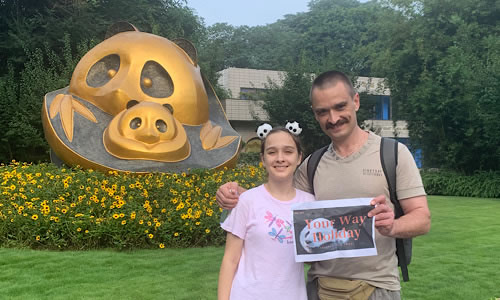
Tour Style:One day, one private car, and an English-speaking local guide who has already booked every ticket on the list. Mornings start early at the Chengdu Research Base of Giant Panda Breeding so you catch the pandas while they are still active; after that, the pace slows to a hillside teahouse in Renmin Park, gaiwan jasmine tea in hand. Between the two you walk Jinli's lantern-lit lane and finish in Kuanzhai Alley, where restored Qing courtyards now sit alongside small shops and tea rooms. Pick-up and drop-off match your schedule — a Chengdu hotel, a train station, or the airport.
Duration:8 Hours
Attractions(Cities):Chengdu Giant Panda Research Base, Leshan Giant Buddha
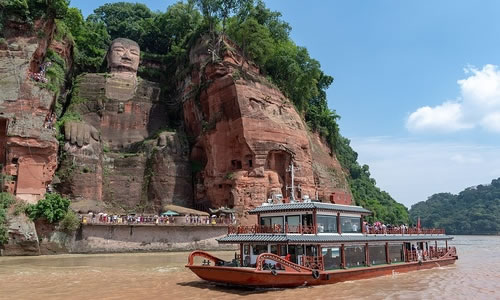
Tour Style:Two UNESCO-listed sights on one private day out of Chengdu. The morning starts at the Chengdu Research Base of Giant Panda Breeding while the animals are still active in the cool hours, then the driver takes you south along the expressway to Leshan, where a 71-metre stone Buddha carved between 713 and 803 AD still stands at the junction of three rivers. Walk the Nine Bends Plank Road, take the river boat, or do both. English-speaking local guide, private air-conditioned car with an experienced driver, Panda Base and Leshan tickets included, hotel, train station, or airport pick-up.
Duration:2 Days, 1 Night
Attractions(Cities):Chengdu Panda Base, Renmin Park, Wuhou Temple, Jinli Street, Wenshu Monastery, Chengdu Museum, Tianfu Square
Tour Style:This two-day private tour moves between the old and new faces of Chengdu at your own pace. Day 1 starts at the Chengdu Research Base of Giant Panda Breeding in the morning, when the pandas are feeding, then takes in the teahouse scene at Renmin Park, the Three Kingdoms shrines of Wuhou Temple, and the snack stalls and craft shops of Jinli Ancient Street. Day 2 covers the Buddhist halls of Wenshu Monastery, the collections of the Chengdu Museum, and the modern plaza at Tianfu Square. A private car and an English-speaking guide carry you between all of them, with pickup from your hotel, train station, or the airport, and the daily order flexes if you want longer at the panda base or a slower teahouse stop. Lunch is left open so your guide can point you to local kitchens rather than tourist menus.
Duration:8-9 Hours
Attractions(Cities):Dujiangyan, Qingcheng Mountain
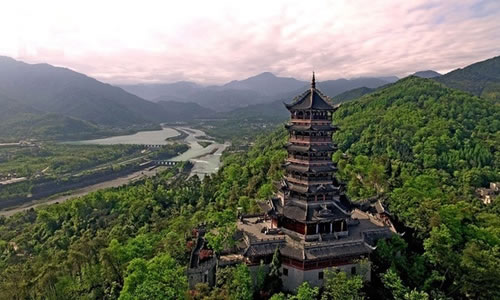
Tour Style:This day trip pairs two UNESCO-listed sights west of Chengdu: the Dujiangyan Irrigation System and Qingcheng Mountain. A private car and driver collect you from your hotel, train station, or the airport and stop first at Dujiangyan, where an English-speaking guide walks you through the 256 BC waterworks that Li Bing and his son built without a dam, still carrying Min River water onto the Chengdu plain after more than 2,000 years. You see the Fish Mouth levee, Flying Sand Reef, and Bottle Neck channel up close. After lunch you drive to Qingcheng Mountain, a founding site of Taoism, and take the cable car and stone paths past the front-mountain temples. Lunch is left out on purpose so your guide can point you to a local Sichuan kitchen; pace, photo stops, and vegetarian or lighter requests are easy to adjust on a private tour.
Duration:3 Days 2 Nights
Attractions(Cities):Leshan Giant Buddha, Mount Emei, Chengdu Research Base of Giant Panda Breeding, Renmin Park, Jinli Ancient Street, Kuanzhai Alley
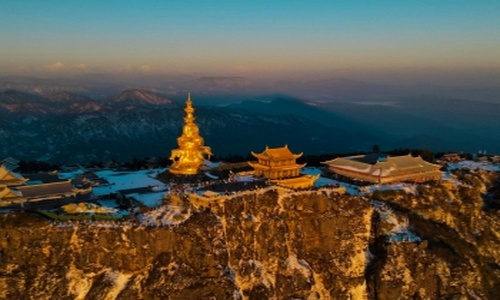
Tour Style:This three-day private tour pairs Chengdu with two mountain and heritage sights. Day one covers the Giant Panda Breeding Research Base in the morning, then Renmin Park teahouse, Jinli Ancient Street, and Kuanzhai Alley. Day two drives about two hours to the 71-metre Leshan Giant Buddha, seen from the cliff path or a Dadu River boat, then on to an overnight at the foot of Mount Emei. Day three rises by eco-bus and cable car to the Golden Summit at 3,077 metres and the old temples before the return to Chengdu. A private car, driver, and English-speaking guide handle tickets and transfers, and pick-up and drop-off run from your Chengdu hotel, station, or airport.
Wechat: YourWayHolidayAsia
24 Hours Hotline:
+8613735411378
Certificate of Excellence
2012~2026

Your Way Holiday
(Your Privacy is Protected)
1 to 1 tailor-made service from our professional travel advisors for the most sophisticated
Constantly excellent reviews for attraction, hotel and service Competitive price
Local experts provide quality tours Best selected knowledgeable local guides Authentic local restaurants
7*24 hours available to create you a worry-free tour. No Hidden Fees and absolutely no pressure to buy. Secured