Mount Emei Travel Guide: Everything You Need to Know About China’s Sacred Buddhist Mountain
Post Date: 2020/08/17 09:20
Mount Emei, one of China’s Four Sacred Buddhist Mountains, is renowned for its spiritual significance and breathtaking natural beauty. Located in Sichuan Province, this UNESCO World Heritage site offers a rich blend of culture, history, and outdoor adventure.
Chengdu: Your Gateway to Adventure – Explore with Our Tailored Itineraries!
Make the most of your Chengdu adventure with tours designed to suit every type of traveler.
Whether you're seeking the thrill of a giant panda encounter, eager to taste the spiciest dishes of Sichuan, or looking for serene spots to relax and unwind, we have the perfect tour for you. Discover everything Chengdu has to offer, with itineraries crafted to give you a perfect mix of culture, food, and nature.
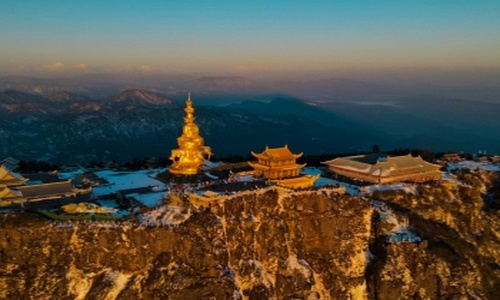 3 Days Chengdu Tour with Leshan Giant Buddha & Mount Emei
 2 Days Chengdu Tour: Blending Modern & Ancient Heritage
Introduction
1. About Mount Emei: Brief Overview
Mt. Emei is situated in Emeishan City, Leshan City, Sichuan Province. The scenic area covers 154 km²,and the peak, Wanfo Summit,is 3099 meters above the sea level. Towering, steep and beautiful, Mt. Emei enjoys the fame of “the most beautiful mountain under the heaven”. It has been listed as a Cultural and Natural World Heritage site by UNESCO, and it is one of the Four Sacred Buddhist Mountains of China, a National Key Cultural Relics Protection Site, a major National Scenic Spots and Historical Site, and an AAAAA-rated national tourist attraction.
Mt. Emei has a varied climate and is covered with rich vegetation, with more than 3,000 species of plants, including rare trees in the world. It is a major characteristic of Mt. Emei that along the trail there are a lot of monkeys, often in groups, extending palms to tourists for food. During ancient times, Mt. Emei was a holy site to learn from the immortals and study Tao, while it is now one of the Four Sacred Buddhist Mountains of China. As the place of enlightenment of the bodhisattva Samantabhadra, Mt. Emei mainly enshrines and worships bodhisattva Samantabhadra. There are about 26 Buddhist temples, including 8 major ones, holding frequent Buddhist services.
“Mt. Emei towers in the west, reaching the sky”, “The land of Shu (Sichuan) has many mountains of Immortals, among which Mt.Emei is far beyond comparison”, great poet Li Bai (701-762) has countless verses praising Mt. Emei.
2. Why Visit Mount Emei?
The charm of Mount Emei lies in its dual gifts of "nature" and "humanity." Here, you can climb to the Golden Summit to overlook the rolling sea of clouds and encounter the rare spectacle of "Buddha’s Light"; wander around Qingyin Pavilion and immerse yourself in the tranquility of the mountains while listening to the gurgling water of the Double Bridge Clear Sound; or wander through thousand-year-old temples, experiencing the profoundness of Buddhist culture amidst curling incense smoke. In addition, Mount Emei showcases distinct charms in each season: admiring blooming azaleas in spring, enjoying cool shade in summer, witnessing fiery red leaves in autumn, and embracing a snowy fairyland in winter. Whether you are a hiking enthusiast, a cultural explorer, or a family traveler, you can find your own travel significance here—whether challenging yourself, purifying your mind, or indulging in the beauty of mountains and rivers.
Geography & Climate
1. Location & Transportation Hub
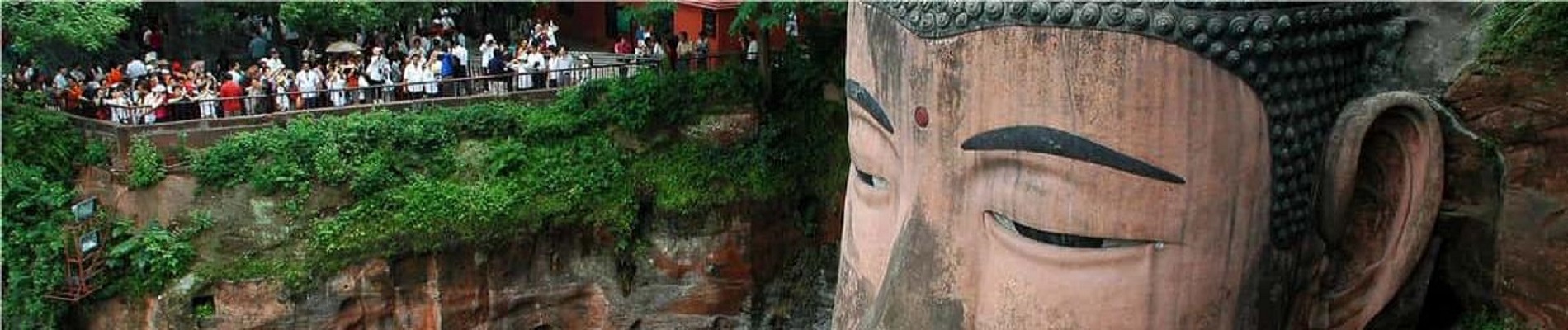
Mount Emei is located in Emei City, Leshan City, Sichuan Province, with a superior geographical location and convenient transportation network. Departing from Chengdu, the provincial capital, it only takes 1.5 hours by high-speed rail to reach Mount Emei Station. After getting off the train, you can transfer to the scenic area sightseeing bus to directly reach the Baoguo Temple Tourist Center. If you choose self-driving, you can take the Chengyu Ring Expressway and Leyashan Expressway, with a driving time of about 2.5 hours. Mount Emei is about 30 kilometers away from Leshan Giant Buddha, a 40-minute drive, and can usually be planned as a two-day combined tour of "Mount Emei + Leshan Giant Buddha." In addition, there are several long-distance bus stations around the scenic area, operating buses to cities such as Chengdu, Chongqing, and Mianyang, meeting the travel needs of different travelers.
2. Climate Characteristics
Mount Emei has a subtropical humid monsoon climate. Influenced by the terrain, the vertical climate difference is significant, showing the characteristic of "four seasons on one mountain, different weather every ten miles." The foot of the mountain (Baoguo Temple, 551 meters above sea level) has an average annual temperature of about 17 Celsius, with cool summers and mild winters; the middle of the mountain (Qingyin Pavilion, 710 meters above sea level) has an average annual temperature of about 14 Celsius, with distinct four seasons and abundant precipitation; the top of the mountain (Golden Summit, 3077 meters above sea level) has an average annual temperature of only 3 Celsius, with a long and cold winter and a snow cover period of up to 4 months (November to March of the next year). The annual precipitation of the scenic area is about 1500 millimeters, concentrated in June-September. At this time, there is more fog and cloud in the mountains, so it is necessary to carry rain gear. Spring and autumn have pleasant climates, which are the golden seasons for travel.
3. Best Time to Visit
Mount Emei is suitable for travel all year round, with distinct characteristics in each season. Travelers can choose according to their interests and needs:
· Spring (March-May)
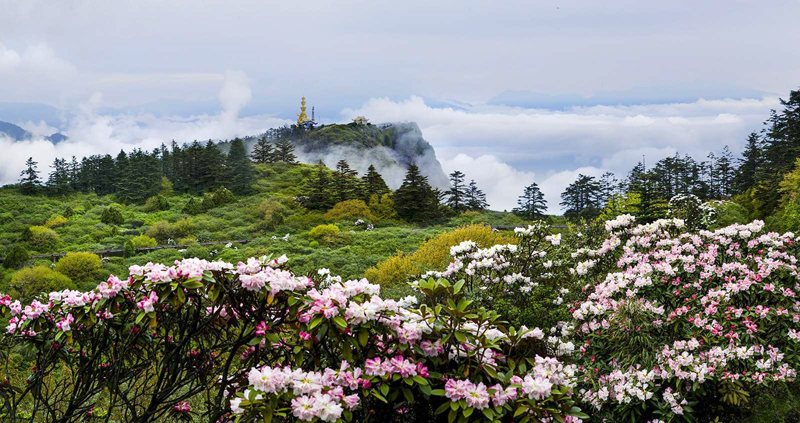
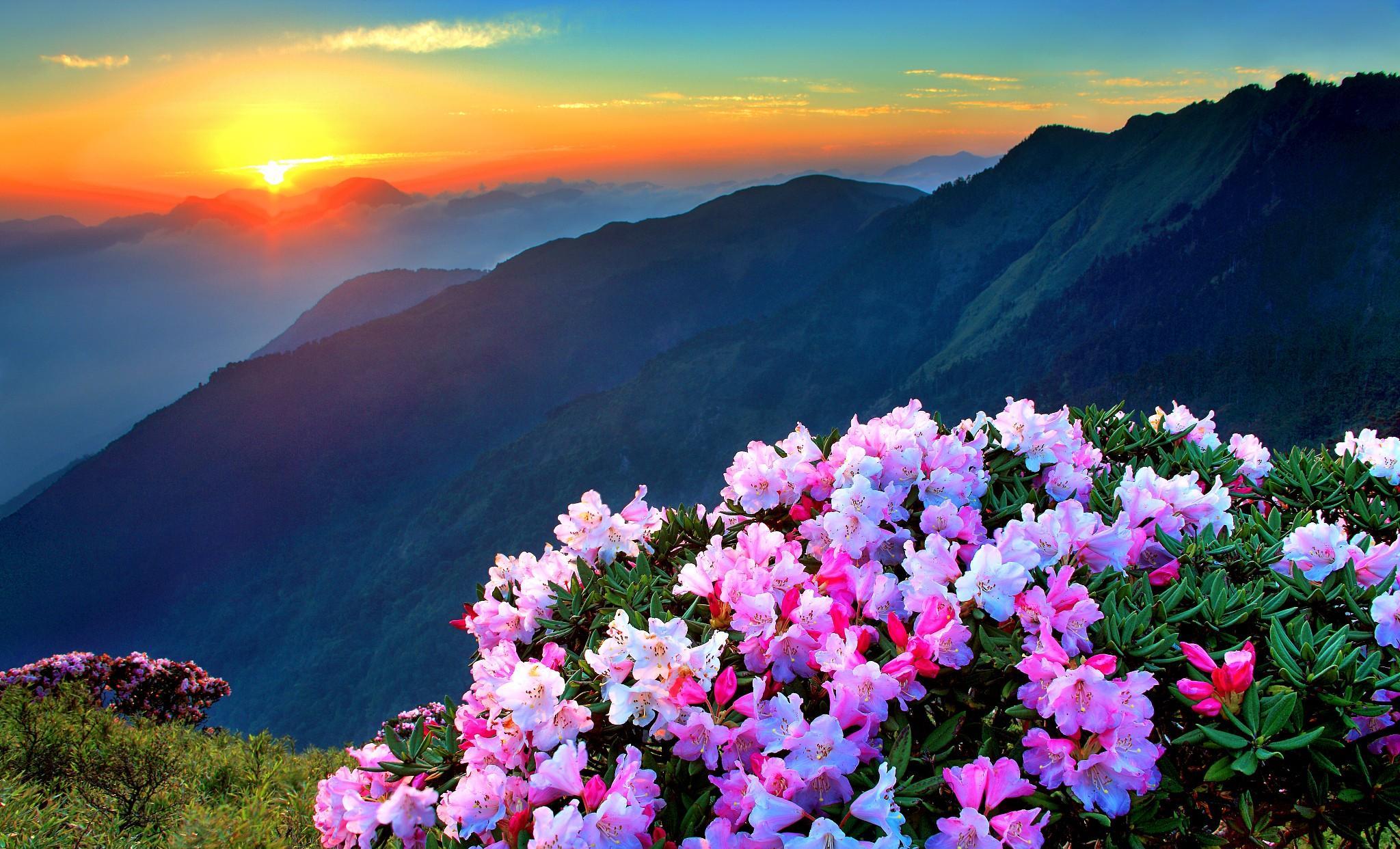
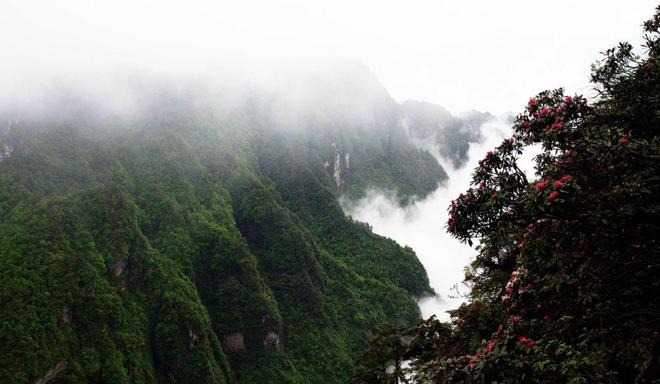
All things revive, and flowers such as azaleas and dovetail trees bloom in the mountains. Especially the alpine azaleas along the route from Leidongping to Golden Summit cover the mountains and plains, with bright colors. At this time, the temperature is moderate (15-20 Celsius at the foot of the mountain, 5-10 Celsius at the top), suitable for hiking and flower viewing. However, the temperature difference between morning and evening in the mountains is large, so it is necessary to carry a thin coat.
· Summer (June-August)
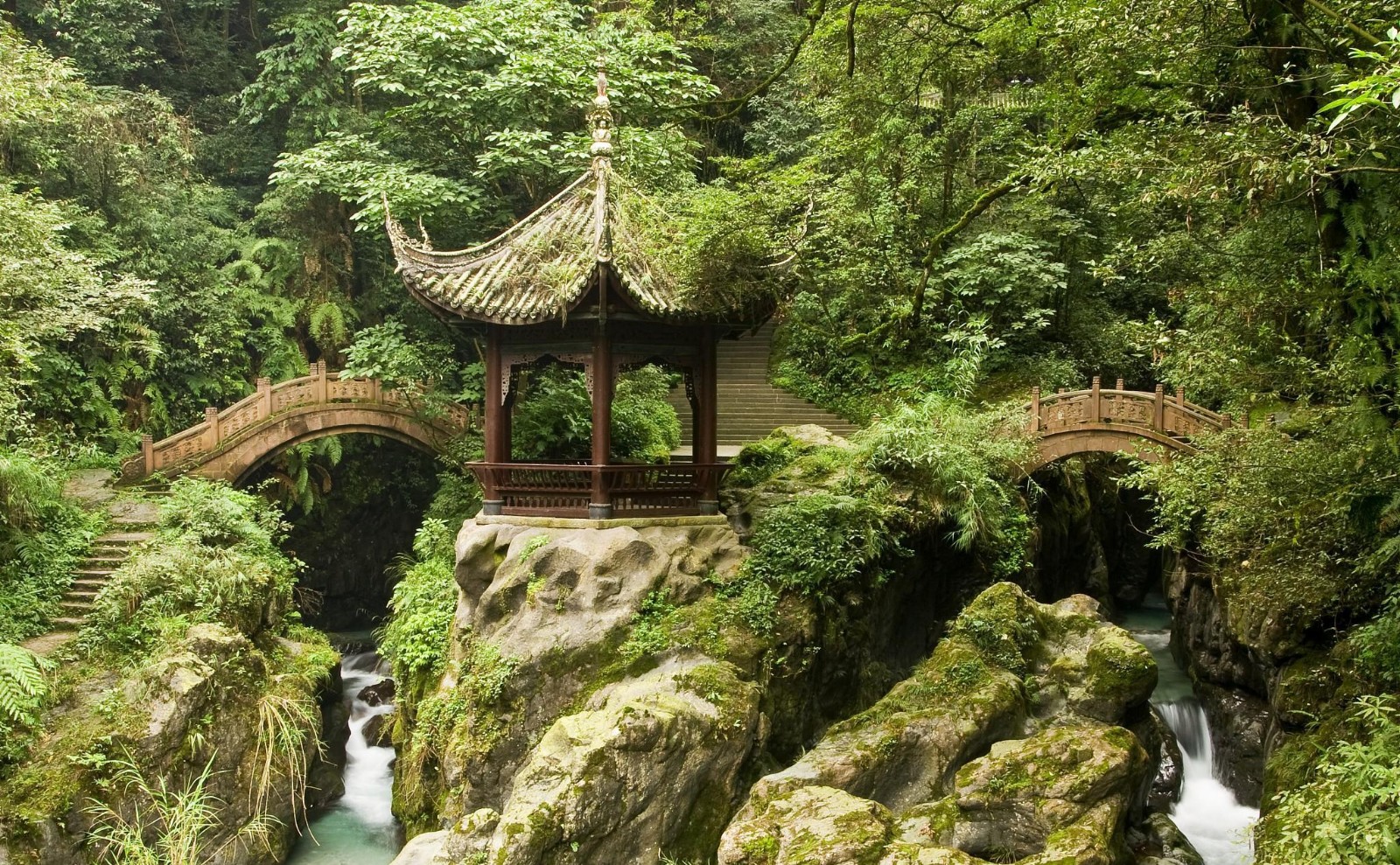
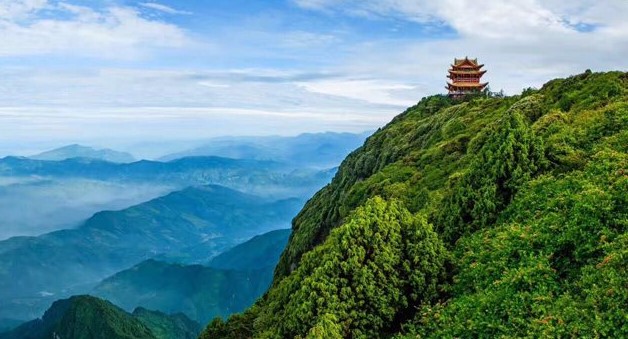
The temperature at the foot of the mountain is about 25-30 Celsius, and only 10-15 Celsius t the top, making it a natural summer resort. At this time, the mountains are covered with dense vegetation and fresh air, which is ideal for summer cooling and hiking adventures. However, June-September is the rainy season, with frequent showers and fog, which may affect the viewing of landscapes (such as sea of clouds and sunrise). It is necessary to check the weather forecast in advance.
· Autumn (September-November)
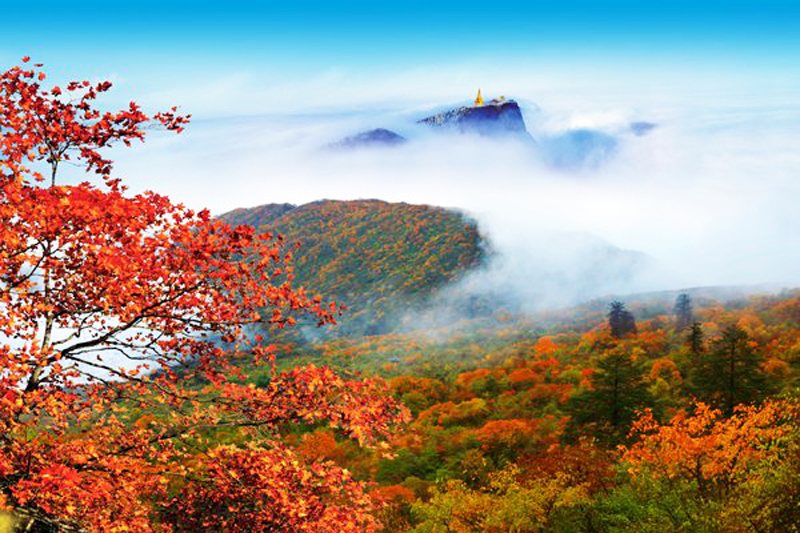
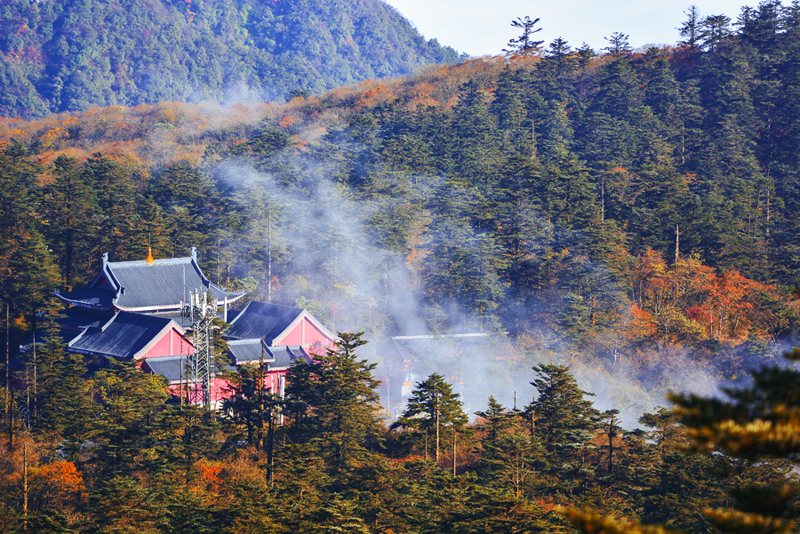
The sky is clear and the visibility is high, making it the best season to watch the sea of clouds, sunrise, and Buddha’s light. The leaves in the mountains gradually turn red, yellow, and green, forming a beautiful picture of layered forests. The temperature is about 10-20 Celsius, with a dry and comfortable climate, suitable for various travel activities.
· Winter (December-February)
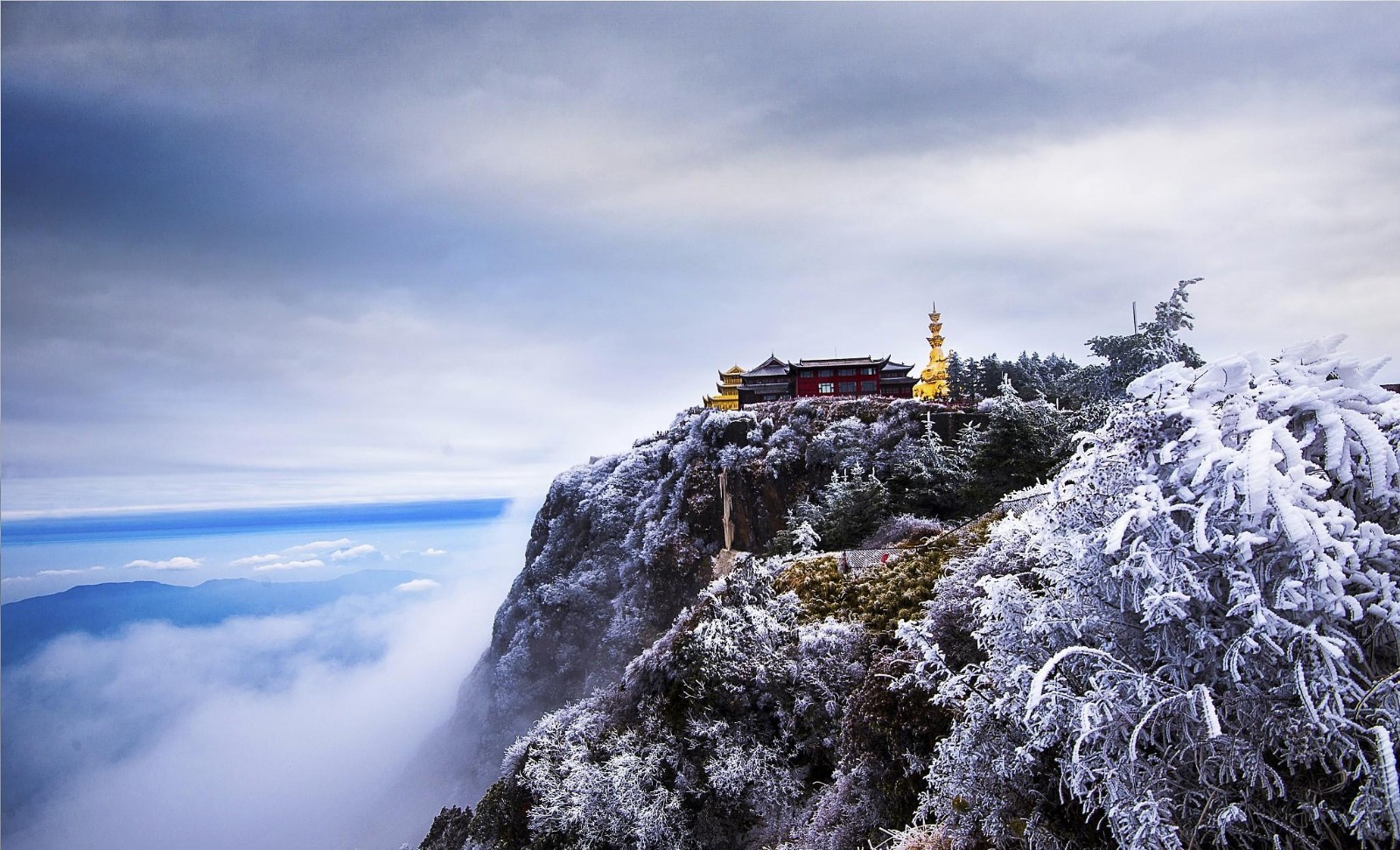
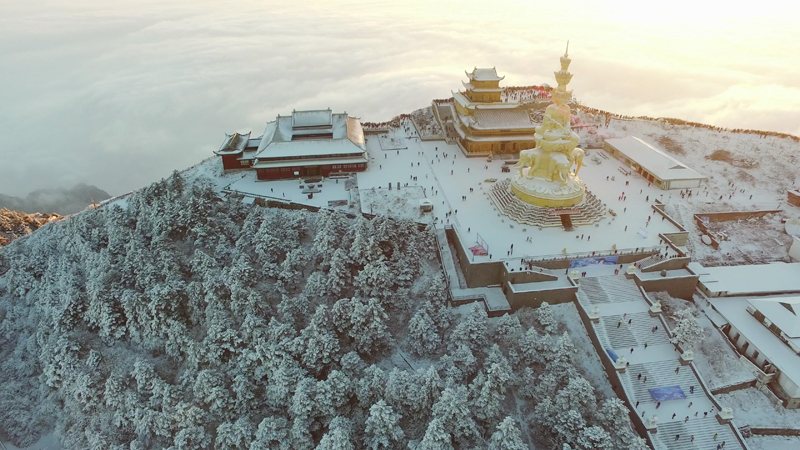
Mount Emei is covered in silver, turning into a snowy fairyland. The snow scenery of the Golden Summit, combined with the sea of clouds and sunrise, is like a fairyland. At this time, you can experience special activities such as skiing and hot springs. However, the temperature at the top of the mountain is low (-5 Celsius to 5 Celsius), so you need to wear thick and warm clothes. Some hiking routes may be closed due to snow, so it is necessary to pay attention to the scenic area announcements.
Cultural & Religious Significance
A. Buddhist History
The Buddhist history of Mount Emei can be traced back to the Yongping period of the Eastern Han Dynasty (58-75 AD). Initially, it was a Taoist practice site, and later Buddhism was introduced and gradually flourished. During the Wei, Jin, Southern and Northern Dynasties, the number of Buddhist temples on Mount Emei gradually increased. In the Tang Dynasty, with the prosperity of Buddhism, Mount Emei was officially designated as the Taoist site of Samantabhadra Bodhisattva. Emperor Taizong of Tang, Li Shimin, issued an imperial edict to rebuild the temples on Mount Emei and sent eminent monks to preside over Buddhism. Since then, the temple complex has continued to expand. During the Song and Yuan dynasties, Buddhist culture continued to develop, and the architectural style of the temples integrated the characteristics of Confucianism, Buddhism, and Taoism. In the Ming and Qing dynasties, Buddhism on Mount Emei reached its peak. Most of the existing core temples such as Baoguo Temple, Fuhu Temple, Qingyin Pavilion, Wannian Temple, and Golden Summit were rebuilt or expanded during this period. Today, Mount Emei has 28 temples, among which Baoguo Temple, Fuhu Temple, Qingyin Pavilion, Wannian Temple, and Golden Summit are listed as national key cultural relics protection units. Buddhist activities have a long history, attracting millions of believers and tourists every year for worship and sightseeing.
B. Key Buddhist Temples
1. Giant Buddha Zen Monastery
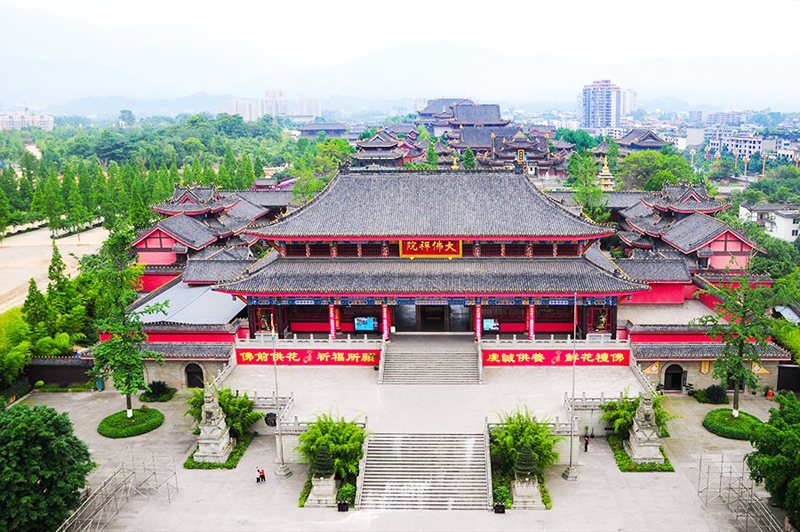
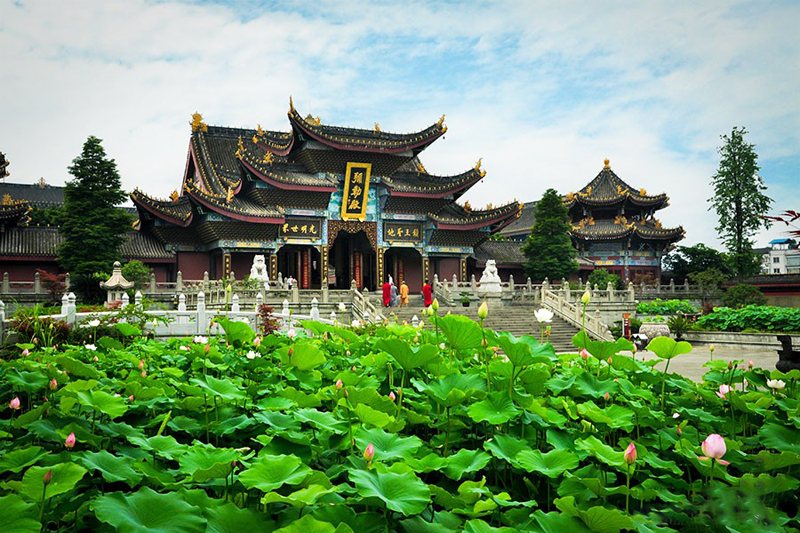
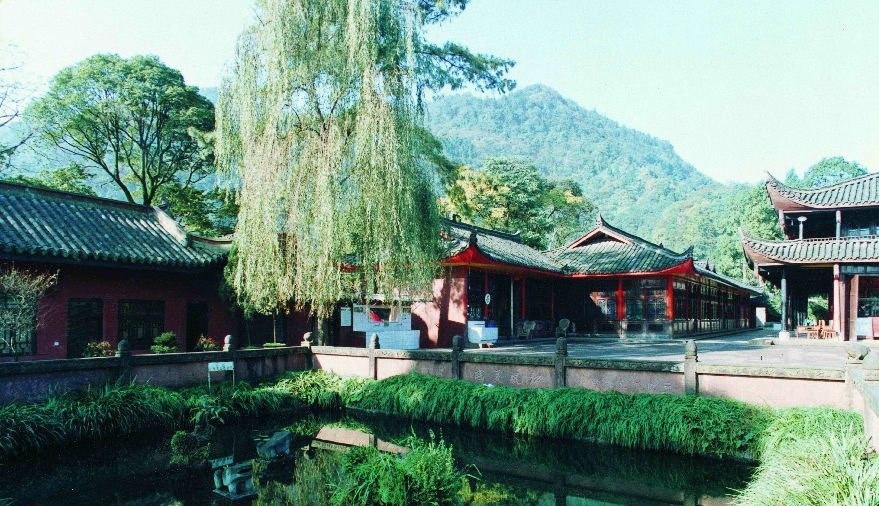
The Emei Mountain Giant Buddha Zen Monastery is the most magnificent Han Buddhist temple in Asia. It stands majestically to the south of Emei City, by the banks of the Huxi River. The Buddhist cultural tourism site of the Emei Mountain Giant Buddha Zen Monastery, centered around the monastery, integrates religious pilgrimage, sightseeing, ecological experiences, and urban leisure all in one.
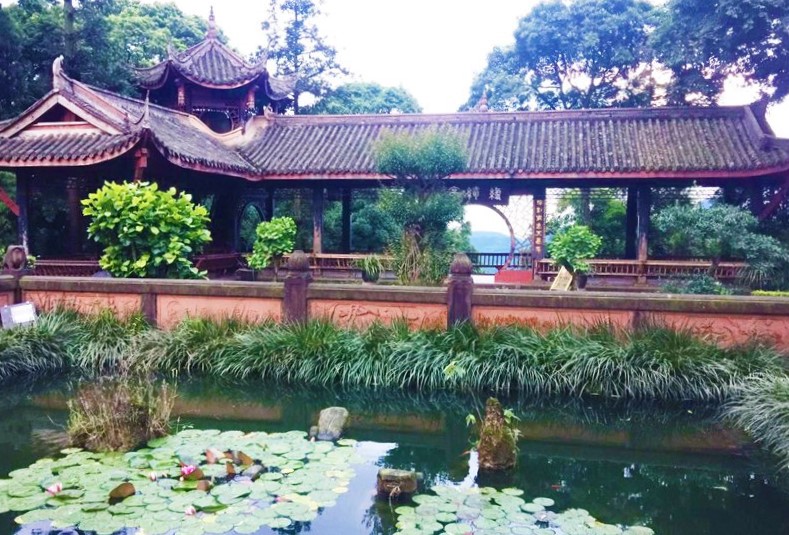
The Emei Mountain Giant Buddha Zen Monastery, covering over 400 acres with a building area of 56,000 square meters, is one of Asia’s largest Buddhist monasteries and a major pilgrimage site for Emei Mountain. It is a comprehensive religious, cultural, and educational center, integrating Buddhist worship, sightseeing, ecological experiences, and urban leisure. The monastery is divided into three functional areas: the northern area for religious worship, the central area for Buddhist cultural gardens, and the southern area for Buddhist educational institutions, including the Sichuan Buddhist Academy. The main worship area, organized along an east-west axis, includes multiple halls and courtyards, with a total elevation difference of 33 meters. The public garden area features three large ponds and lush landscaping, providing a serene environment. The southern cultural and educational zone includes the Sichuan Emei Mountain Buddhist Academy and is a hub for Buddhist education and talent development. The monastery is a key center for Buddhist studies and the cultivation of monks, symbolizing the "Sangha" (monastic community) and serving as a vital center for Buddhist cultural propagation. The public garden is open year-round for free, offering a relaxing space for local residents.
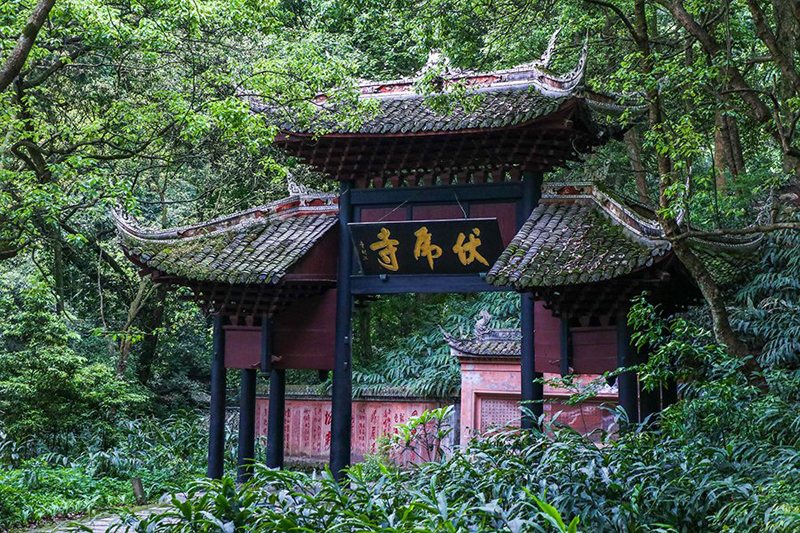
2. Fuhu Temple
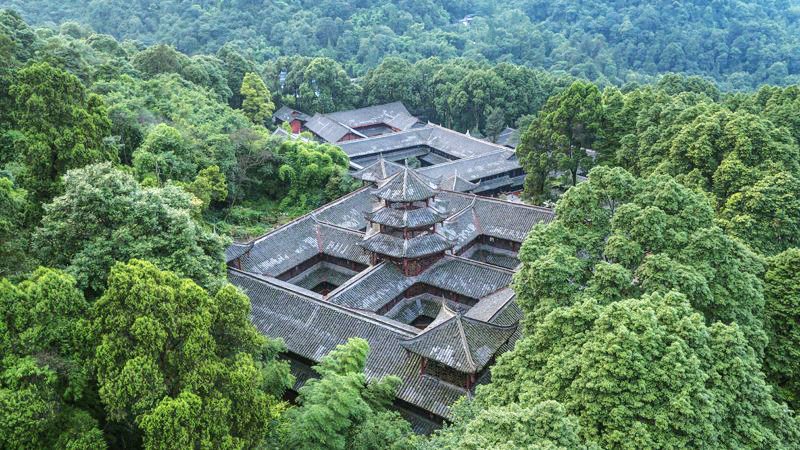
Fuhu Temple is one of the eight major temples of Emei Mountain. It was originally built during the Tang Dynasty, renovated during the Southern Song Dynasty (Shaoxing period), and extensively rebuilt during the Qing Dynasty under the guidance of Master Guan Zhi, taking twenty years to complete. It is now one of the largest temples on the mountain. Upon entering the temple, visitors are greeted by the Maitreya Hall, which houses a golden and clay statue of Maitreya seated, with the Four Heavenly Kings statues on either side. Behind the Maitreya Hall is the Weituo Hall, which contains a statue of Weituo. The temple also features the Huayan Pagoda Pavilion, which houses a Ming Dynasty copper Huayan Pagoda that stands 5.8 meters tall and has 14 levels. The pagoda is adorned with over 4,700 small Buddha statues, and the body is engraved with the text of the Avatamsaka Sutra. This copper pagoda is regarded as the largest and most exquisite of its kind in China due to its historical significance and craftsmanship.
Fuhu Temple, located about one kilometer west of Baoguo Temple, was first built during the Jin Dynasty as the Medicine Master Hall, and later renamed variously as "Dragon God Hall," "Huxi Zen Forest," and "Huxi Jing She." The temple was named "Fuhu Temple" because the mountain resembles a reclining tiger, and there were legends of tigers in the nearby forests. To address this, the "Vajra Victory Pillar" was erected in front of the Wuliang Hall, designed like a tower and inscribed with Sanskrit mantras. The temple's architecture has experienced several periods of construction and destruction over the centuries, but it was rebuilt during the eighth year of the Shunzhi reign in the Qing Dynasty (1651). Today, Fuhu Temple houses a large community of nuns, making it one of the largest nunneries in China. The temple complex includes the Mountain Gate, Maitreya Hall, Mahavira Hall, Guanyin Hall, guest hall, and dining hall, among other buildings.
3. Baoguo Temple
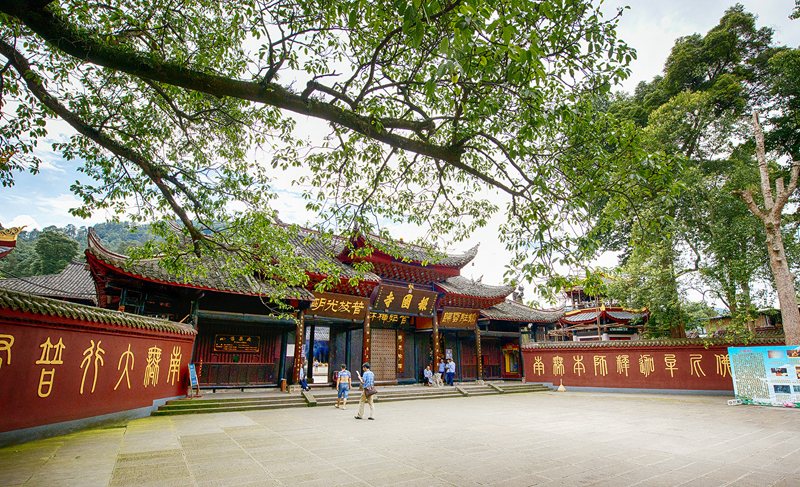
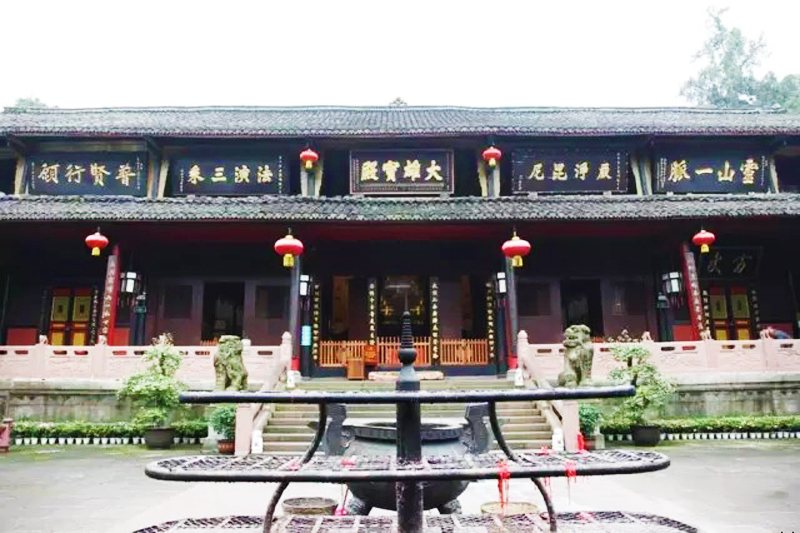
Located at the foot of Mount Emei, it is the first temple when entering the mountain. Founded in the Ming Dynasty, it was originally named "Huizong Hall" and later renamed "Baoguo Temple," meaning "serving the country and the monarch, and saving all sentient beings." The temple faces south, covering a construction area of 16,000 square meters, with a symmetrical layout along the central axis, including the mountain gate, Maitreya Hall, Mahavira Hall, Seven Buddhas Hall, and Sutra Collection Building. The temple houses a large number of cultural relics and historic sites, such as the Ming Dynasty bronze Avatamsaka Pagoda, Qing Dynasty porcelain Buddha, and Thousand Buddha Lotus Lamp. Among them, the Avatamsaka Pagoda is 14 meters high, with more than 4,700 Buddha statues cast on the tower body, showcasing exquisite craftsmanship. Baoguo Temple is the seat of the Mount Emei Buddhist Association and an important place for tourists to rest and learn about Buddhist culture.
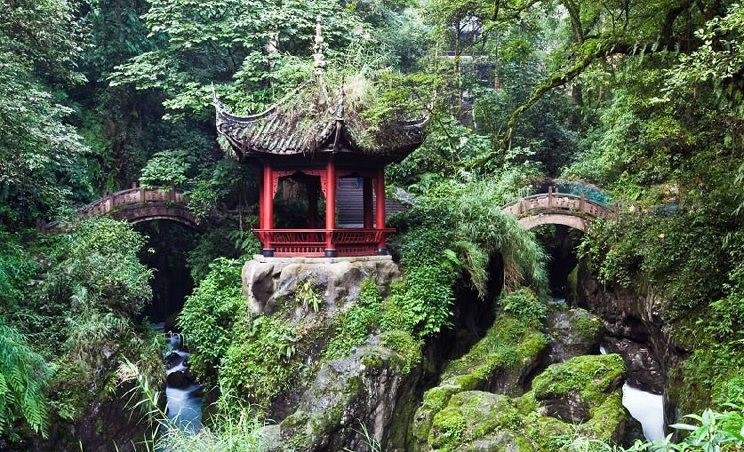
4. Qingyin Pavilion
Qingyin Pavilion, also known as Woyun Temple, is one of the key eight temples of Emei Mountain. It was built during the reign of Emperor Xizong of the Tang Dynasty by Master Huitong. The temple houses statues of Shakyamuni, Manjusri, and Samantabhadra. Originally constructed in the fourth year of Emperor Xizong's reign (877), the temple was later renamed Qingyin Pavilion by Master Guangji in the early Ming Dynasty, inspired by the line "Why need silk and bamboo? The mountains and waters have their own pure sound" from the Invitation to Seclusion by the Jin poet Zuo Si.
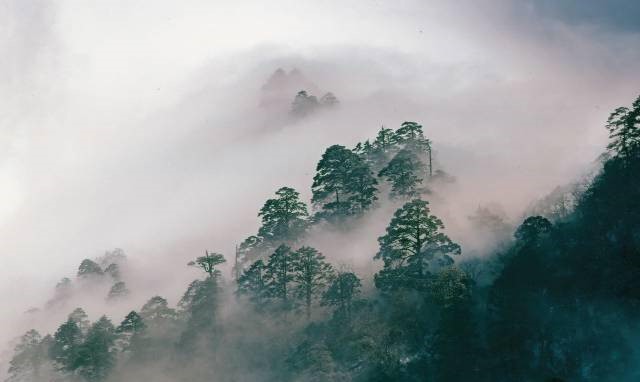
The pavilion is located on a ridge between the Heihe and Bailong Rivers, soaring high above the landscape in a dramatic and perilous position. Behind and beside the pavilion, the forest is dense and lush, with towering green trees, especially a large area of cedar trees behind the pavilion that appear as emerald green, enhancing the temple's ancient and elegant atmosphere. Centered around Qingyin Pavilion, a group of temples including Niuxin Temple, Guangfu Temple, Bailong Temple, and Baiyun Gorge, all surrounded by natural mountains and waters, form a vast and rare Buddhist temple garden in the wilderness. This landscape creates a harmonious fusion of nature and spirituality, making it one of the most unique and grand Buddhist temple environments in the world.
5. Wannian Temple
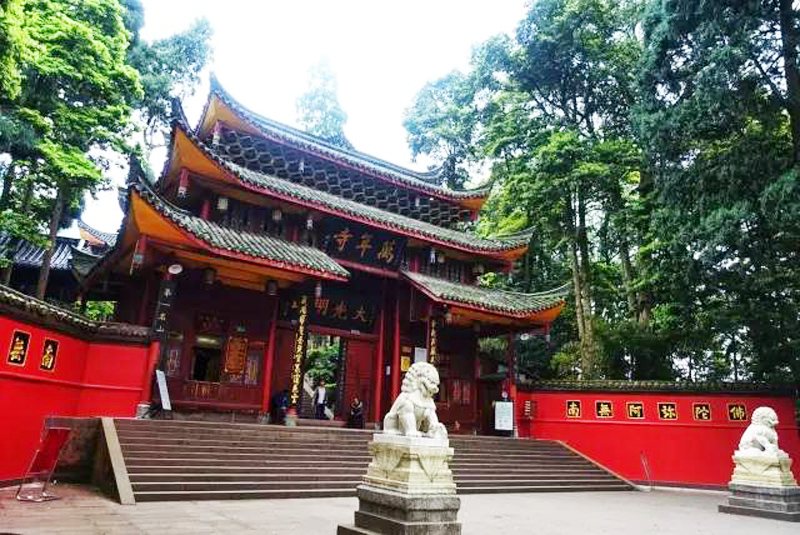
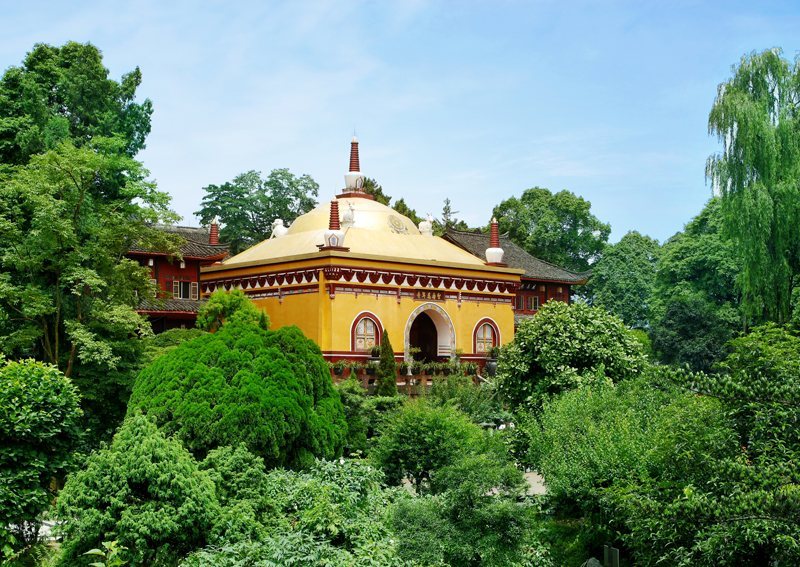
Wannian Temple is located on Emei Mountain, about 15 kilometers uphill from Baoguo Temple, at the foot of Lion Peak. It is one of the main temples of Emei Mountain. The temple was originally established during the Eastern Jin Dynasty and was first named Puxian Temple. During the reign of Emperor Xizong of the Tang Dynasty, Master Huitong rebuilt the temple and renamed it Baishui Temple. In the Song Dynasty, it was again renamed Baishui Puxian Temple. In the 29th year of the Ming Dynasty's Wanli reign (1601), Emperor Shenzong bestowed the name Shengshou Wannian Temple to celebrate the 70th birthday of the Empress Dowager.
The current structure of Wannian Temple was restored in 1954 with funding from the People's Government. The temple complex includes the Mahavira Hall, Wuye Hall, Xingyuan Building, and Dining Hall. The Mountain Gate, Maitreya Hall, and the inner halls, including the Bilu Hall and Prajna Hall, were rebuilt in 1986. In 1991, the left-side Yuming Bell Tower, the right-side Drum Tower Corridor, and the surrounding wall were reconstructed, making Wannian Temple the largest temple on Emei Mountain.
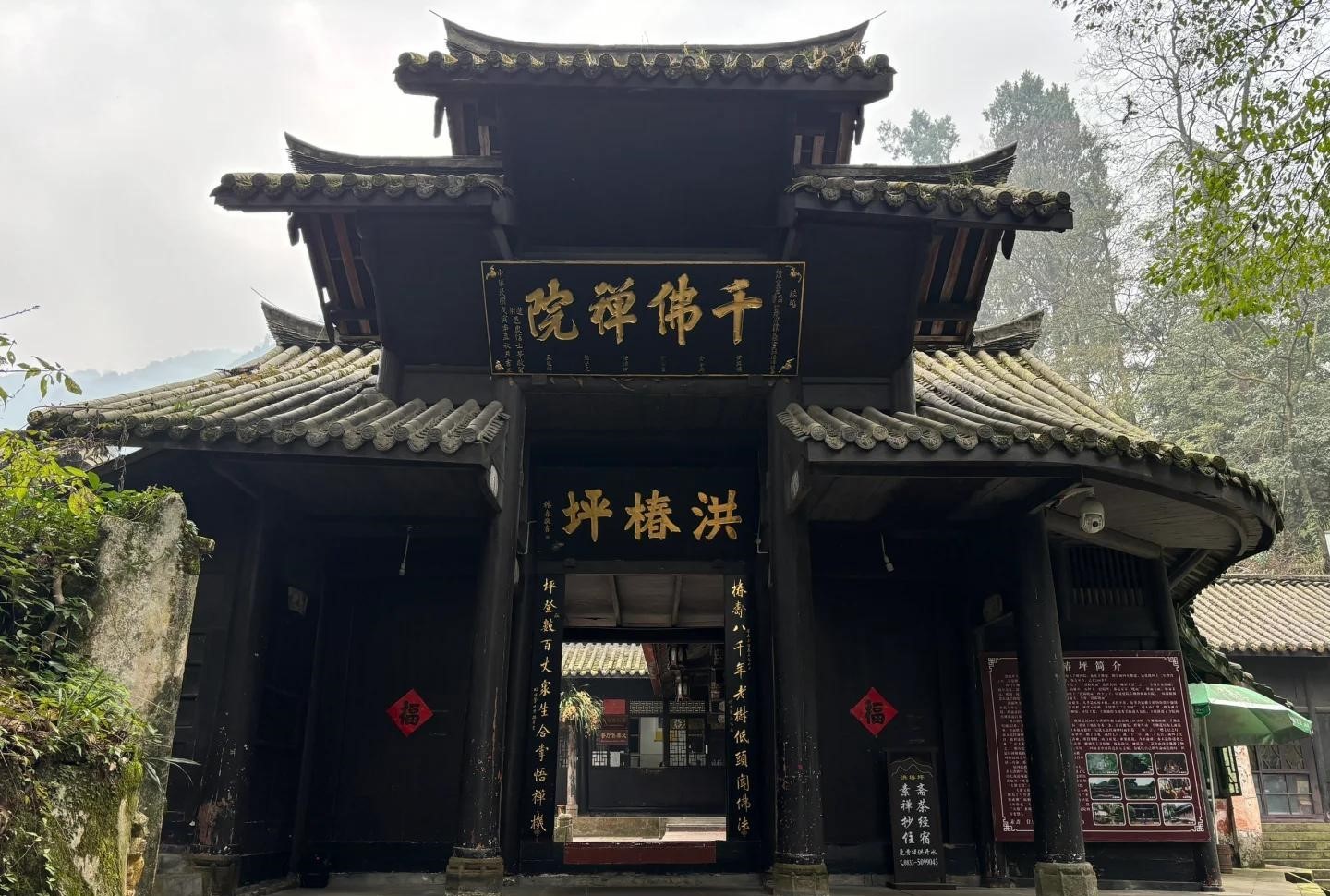
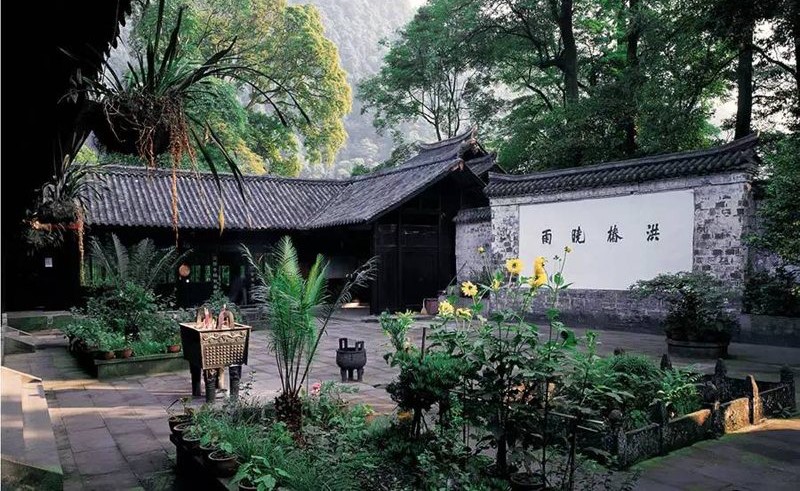
6. Hongchunping
Hongchunping is located beneath Huangmao Peak on Emei Mountain. The name "Hongchunping" comes from the three ancient Hongchun trees in front of the temple, which are over a thousand years old. It is one of the key eight temples of Emei Mountain. The temple was originally built during the Ming Dynasty and was called Qianfo Nunnery. It was renovated during the Qing Dynasty, and its current name derives from the three Hongchun trees located in front of the temple. It is said to be the place where Master Baozhang once meditated in a thatched hut.
The temple complex is divided into the Guanyin Hall, Mahavira Hall, and Puxian Hall, with a statue of Bodhidharma placed behind the halls. Hongchunping is home to numerous valuable cultural relics. Notable among them are the many high-quality couplets, the exquisite Qing Dynasty lotus lanterns in the temple, and the wooden "Zhengming Si Stele" from the Qianlong period, which holds significant historical value.
7. Xianfeng Temple
Xianfeng Temple is one of the eight major temples of Emei Mountain. Located beneath Xianfeng Rock at an altitude of 1,725 meters, the temple originally went by the name Ciyan Temple and faces the peak of Huayan. The temple was first established in the 18th year of the Yuan Dynasty (1281), originally as a small hermitage. In the early Ming Dynasty, the temple built a scripture hall to store the large Tripitaka granted by Emperor Shenzong. In the 40th year of the Wanli reign (1612), Master Benjiong expanded it into a large temple, naming it "Xianfeng Chanlin." The temple was destroyed by fire in the 16th year of the Chongzhen reign (1643). However, it was rebuilt in the 44th year of the Qianlong reign (1779) by Monks Tai'an and Yusheng and renamed "Xianfeng Temple," a name it retains to this day.
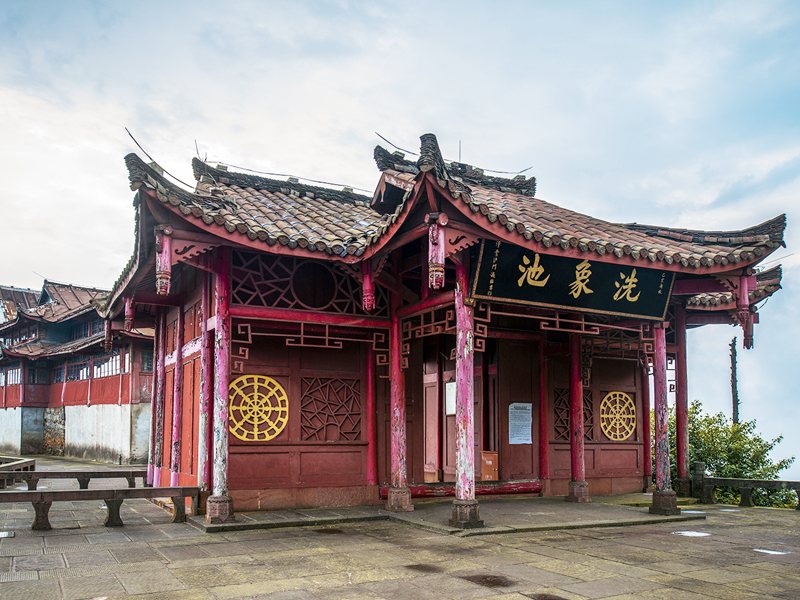
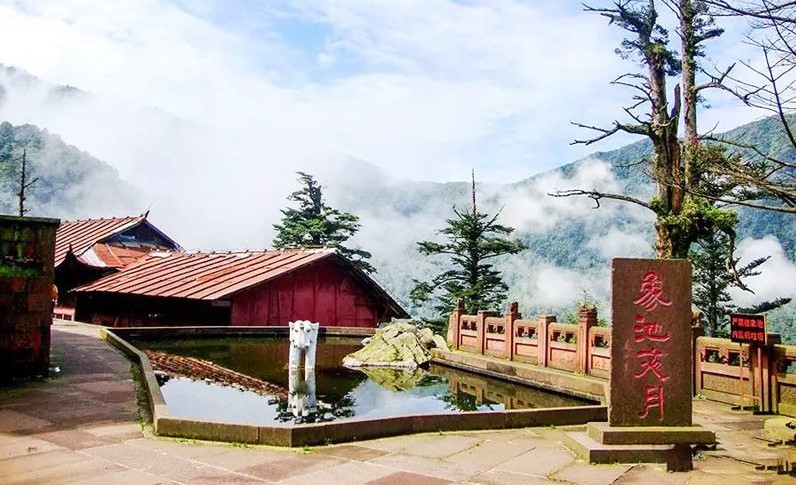
8. Xixiang Pool
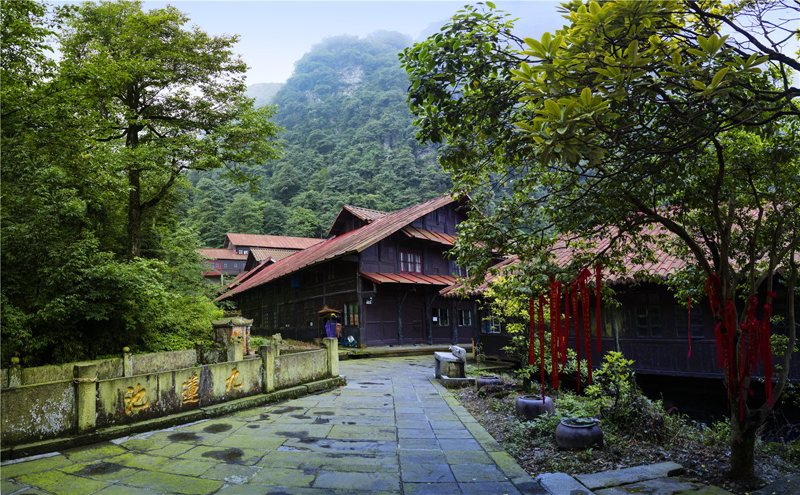
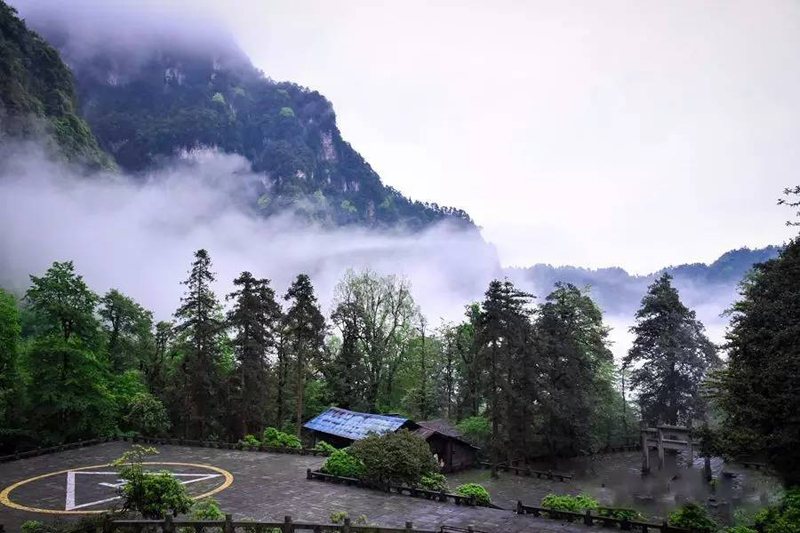
Xixiang Pool is one of the eight major temples of Emei Mountain. Located at an altitude of 2,070 meters on Zuantian Slope, it is 25 li uphill from Xianfeng Temple. During the Ming Dynasty, it was originally a pavilion called "Chuxi Pavilion," which was later converted into a hermitage named "Chuxi An." In the 38th year of the Kangxi reign (1699), Master Xingneng (also known as Hongchuan Laoren) renovated it into a temple. In the early years of the Qianlong reign (1736), Monk Yuezheng repaired the Zuantian Slope in front of the temple and the Luohan Slope behind the temple, and transformed the small pool in front into a hexagonal shape, placing a stone elephant by the pool to correspond with the legend of Samantabhadra's elephant bath.
According to legend, when Samantabhadra passed by riding an elephant, the white elephant bathed in the pool, thus the pool was renamed "Xixiang Pool," also known as Tianhua Zen Monastery. Today, the temple complex includes the Maitreya Hall, Mahavira Hall, Guanyin Hall, the Scripture Hall, and the guesthouse.
9. Huazang Temple
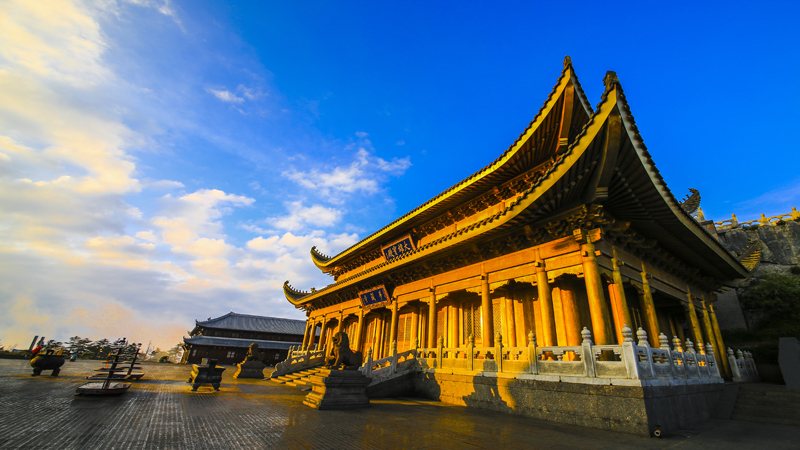
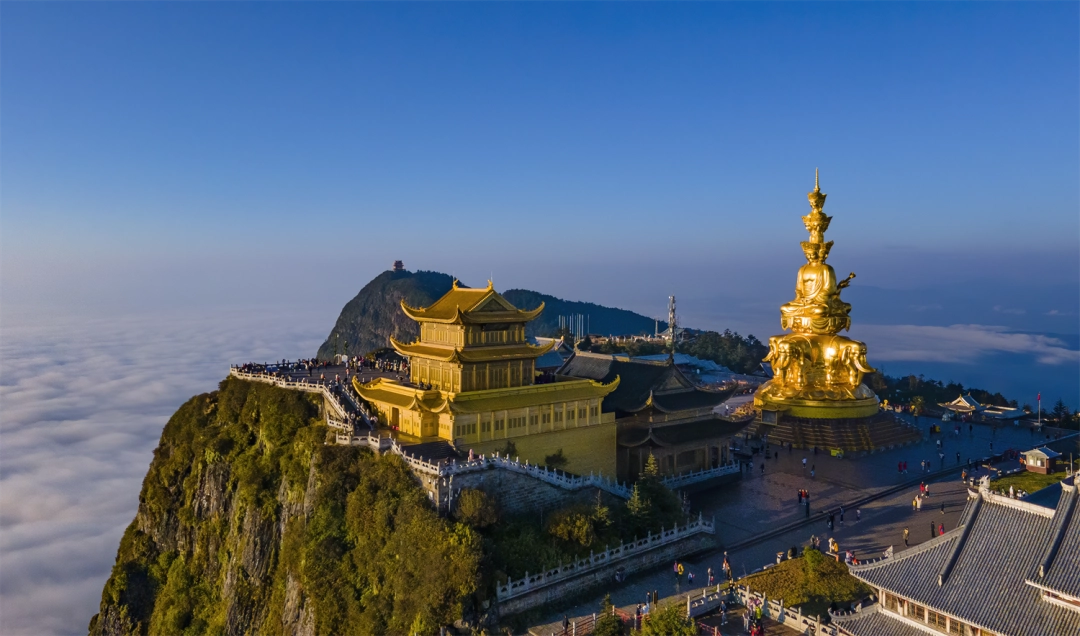
Huazang Temple, fully named "Yongming Huazang Temple," is located at the main peak of the Golden Summit of Emei Mountain, at an altitude of 3,077 meters. It was originally established during the Eastern Han Dynasty and is one of the eight key temples of Emei Mountain. It is also recognized as a national key temple.
C. Cultural Heritage
1. Buddhist Art
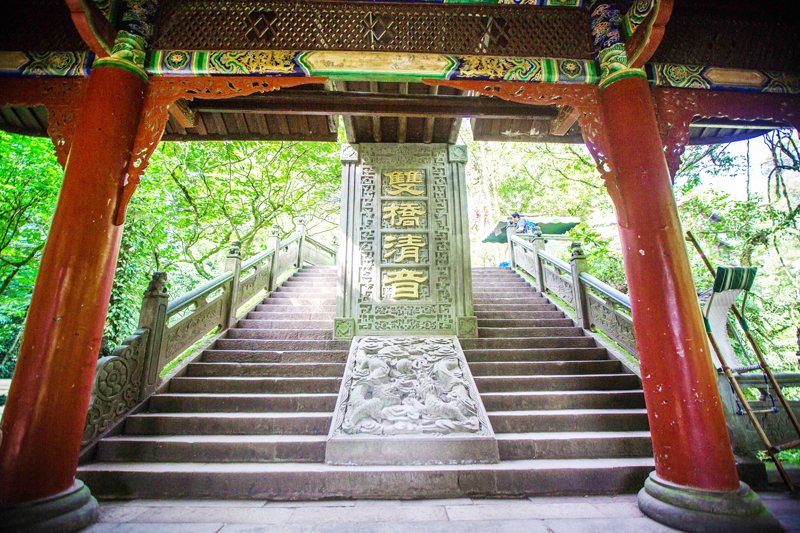
The Buddhist art of Mount Emei covers multiple fields such as sculpture, murals, calligraphy, and music. The Buddha statues in the temples are exquisitely crafted with various materials, including bronze casting, wood carving, stone carving, and clay sculpture. For example, the bronze statue of Samantabhadra riding an elephant in Wannian Temple and the Ten Directions Samantabhadra Golden Statue on the Golden Summit are vivid in shape, showcasing the superb casting skills of ancient China. Murals are mostly painted on the inner walls of temple halls, with themes of Buddhist stories, landscapes, and figures, featuring bright colors and smooth lines, with high artistic value. Calligraphy works mainly include inscriptions and stone carvings by eminent monks and literati of past dynasties, such as the plaque "Baoguo Temple" in Baoguo Temple and the inscription "Double Bridge Clear Sound" in Qingyin Pavilion. Different calligraphy styles reflect profound cultural heritage. In addition, the Buddhist music of Mount Emei has a long history, mainly featuring Buddhist chants and musical instrument performances, with melodious tunes that can calm people’s minds.
2. Folk Legends
Many touching folk legends circulate on Mount Emei, among which the most famous are the "Legend of Emei Buddha’s Light" and the "Legend Related to the Legend of the White Snake." The legend of Buddha’s Light tells the story of an ancient eminent monk who encountered the Buddha’s Light while practicing on the Golden Summit and suddenly realized the true meaning of Buddhism. In the Legend of the White Snake, Bai Suzhen practiced for a thousand years on Mount Emei, learned magic skills, and then went down the mountain to meet and fall in love with Xu Xian. This legend adds a romantic color to Mount Emei. In addition, there are legends such as "Samantabhadra Bodhisattva crossing the river on an elephant" and "fairy stories of Jiulao Cave," which have been passed down from generation to generation, enriching the cultural connotation of Mount Emei.
3. Traditional Festivals
The traditional festivals of Mount Emei are mainly Buddhist festivals, among which the most grand is the "Samantabhadra Bodhisattva’s Birthday Dharma Assembly," held on the 21st day of the second lunar month every year. At that time, major temples will hold grand Dharma assemblies. Believers dress in festive clothes and go to the temples to worship and pray for blessings. The temples are filled with curling incense and echoing Buddhist chants, presenting a spectacular scene. In addition, the "New Year Blessing Dharma Assembly" on the first day of the first lunar month and the "Guanyin Bodhisattva’s Birthday Dharma Assembly" on the 19th day of the sixth lunar month are also large-scale, attracting a large number of believers and tourists to participate, becoming an important opportunity to experience the Buddhist culture of Mount Emei.
Chengdu’s Hidden Wonders: Let Us Show You the Road Less Traveled!
Chengdu is filled with hidden gems, waiting to be discovered.
While the giant pandas and Sichuan hotpot are famous, there’s so much more to explore. Let our tours guide you to off-the-beaten-path spots where you can experience local life up close, whether it’s wandering through peaceful temples, exploring scenic mountain trails, or tasting rare regional dishes. Step beyond the usual tourist attractions and discover the heart of Chengdu in a way only locals know.
 7-Day Sichuan Tours: Discover Chengdu, Jiuzhaigou, Leshan, and Emei
 Full Day Chengdu Tour with Leshan Giant Buddha, Hot Pot & Sichuan Opera
Mount Emei Highlights
A. Newly opened scenic spots in Mountain Emei
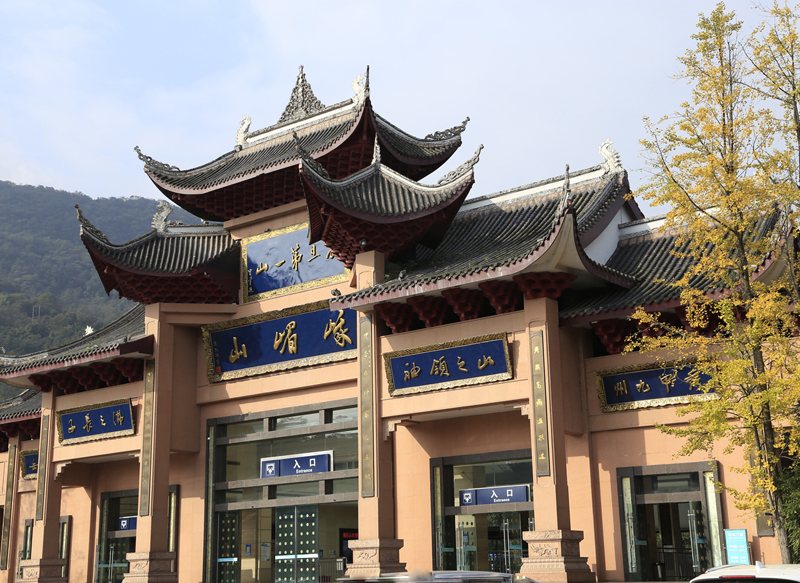
1. Mingshan Starting Point archway
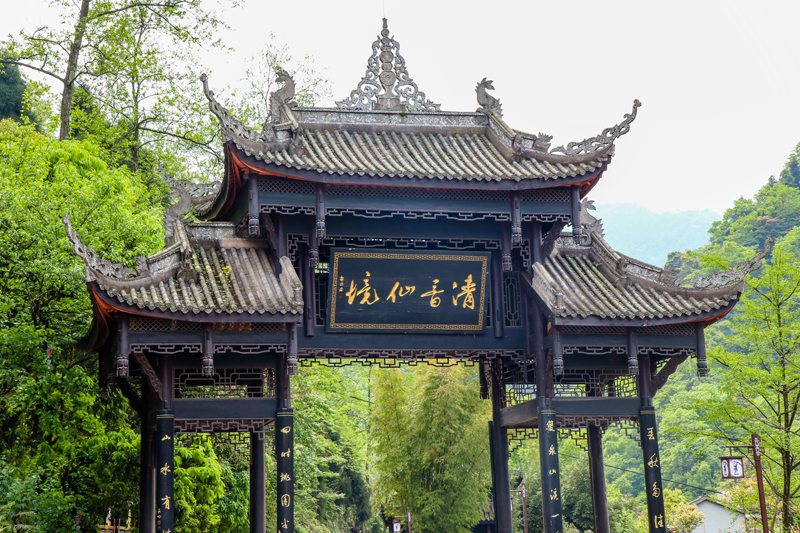
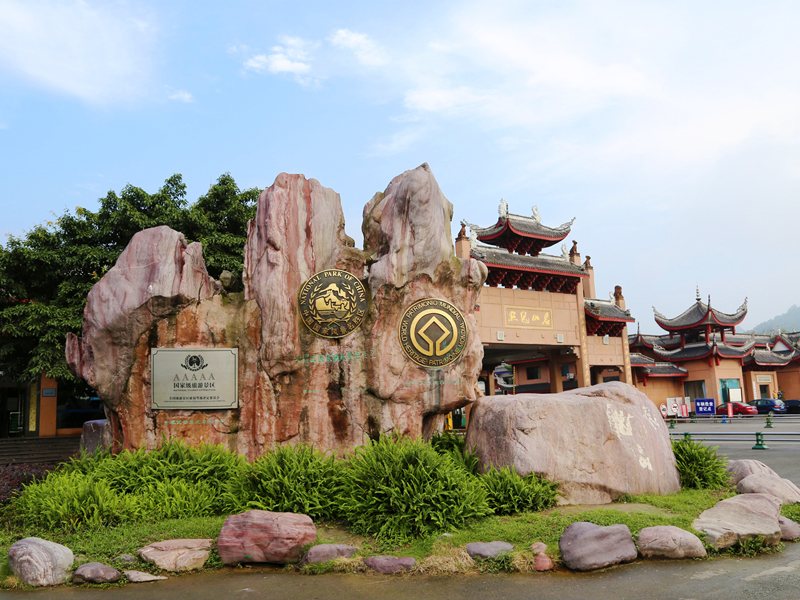
Mingshan Starting Point archway is located in Huangwan Township, the "hidden paradise of Emei Mountain," and serves as the gateway to the Emei Mountain scenic area. The "Mingshan Starting Point" archway combines the architectural styles of both northern and southern China. It embodies the solemn grandeur of northern architecture while incorporating the fine craftsmanship typical of southern designs. The top of the archway features the characteristic upturned corners found in traditional Emei Mountain residences. The entire structure is designed in an antique style, exuding an ancient and elegant charm. It serves as both a transportation hub for the scenic area and an administrative office, and is also an important part of the "Digital Emei Mountain" initiative.
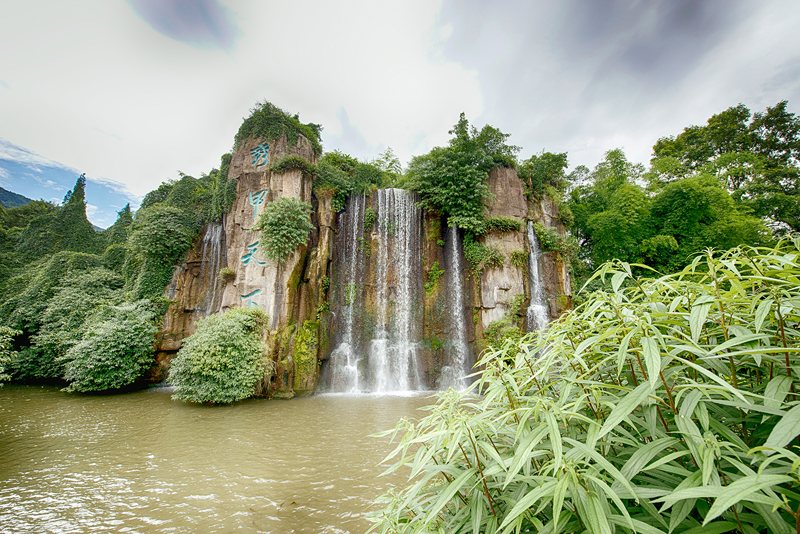
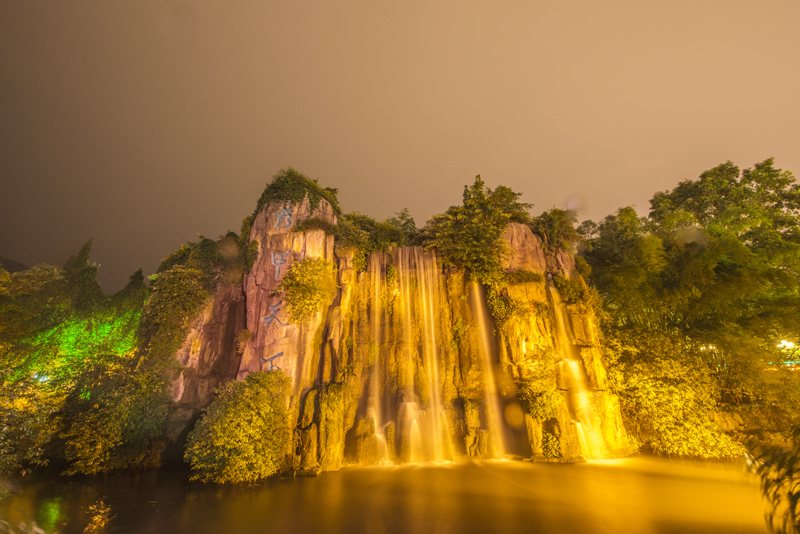
2. Xiujia Waterfall
Xiujia Waterfall is one of the main architectural features of the Welcome Square. The phrase "Xiu Jia Tian Xia" encapsulates the idea of "Emei Mountain’s beauty surpasses all," with the word "Jia" emphasizing both the prominence of Emei's natural beauty and the bold spirit of the people of Emei.
At the same time, "Xiu Jia Tian Xia" complements the "Tian Xia Ming Shan" archway, offering an interpretation and enhancement of the "Tianxia Mingshan" concept. "Tian Xia Ming Shan—Xiu Jia Tian Xia" summarizes both the historical significance and scenic characteristics of Emei Mountain.
3. Yingbin Beach
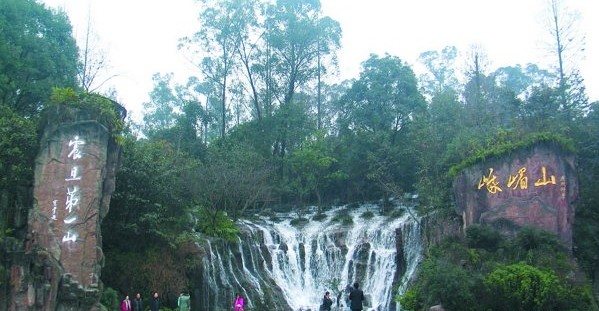
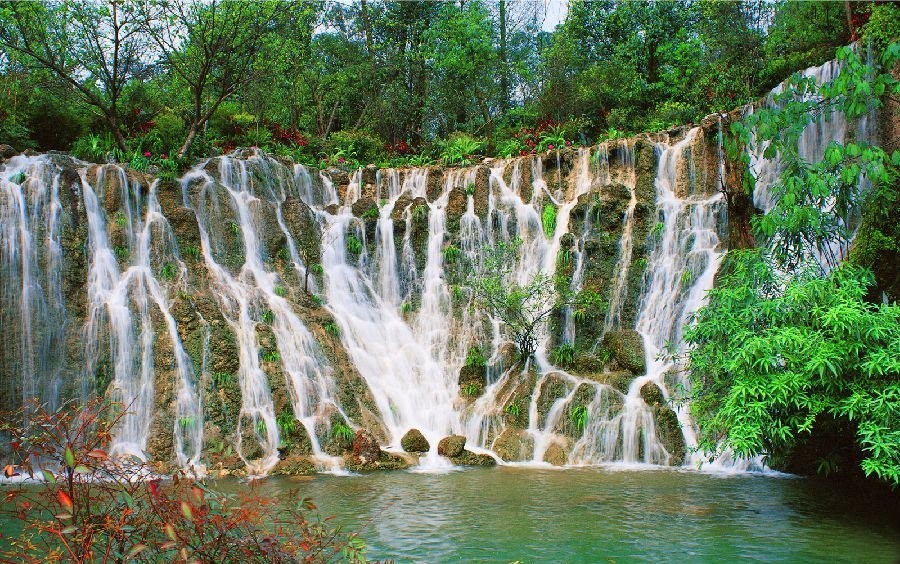
Yingbin Beach is the iconic structure of the Welcome Square, facing the tourist hub of the lower mountain area—the Welcome Square. From left to right, it features "Zhendan First Mountain," as proposed by Master Baozhang, followed by the three characters "Emei Mountain," personally inscribed by Emperor Kangxi, and the World Heritage emblem. It is backed by the first tourist center in a national scenic area—the Emei Mountain Tourist Center, as well as the Emei Mountain Museum, one of Sichuan Province's key museums.
Surrounded by lush greenery, the Emei Mountain spring cascades over the rocks, its water shimmering white like a silk ribbon and resembling pearls set in emerald. The water splashes and dances joyfully, creating a cheerful, melodic sound that symbolizes the warm hospitality of the people of Emei Mountain, welcoming visitors from all corners of the world.
4. Cliff Carvings
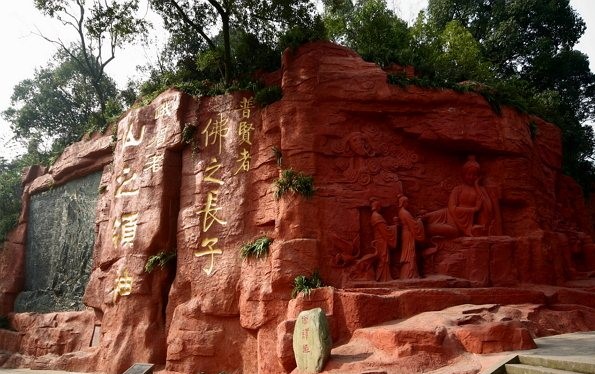
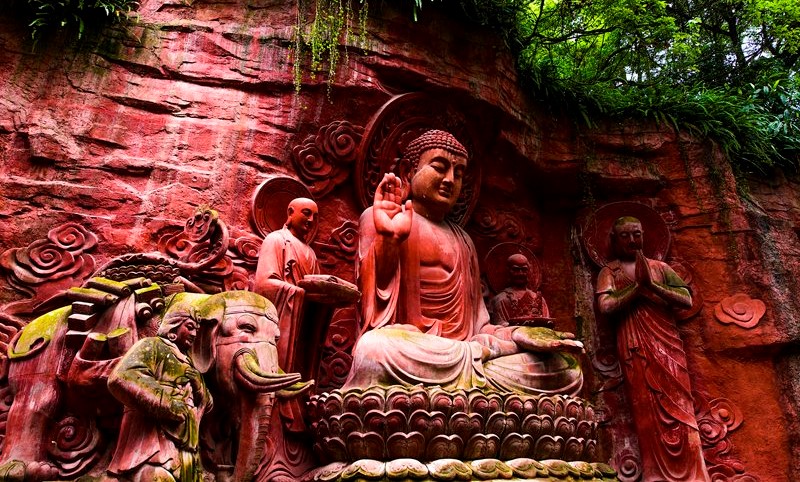
Facing the Cliff Carvings, one is humbled by the long history of Emei Mountain, and struck by its majestic presence as "the number one mountain in the world." The nine large vermilion characters on the rock, "Shenzhou First Mountain" and "Leader of the Mountains," clearly mark Emei Mountain's prominent status among China's famous mountains, showcasing its natural beauty and cultural significance to the world.
5. First Mountain Pavilion
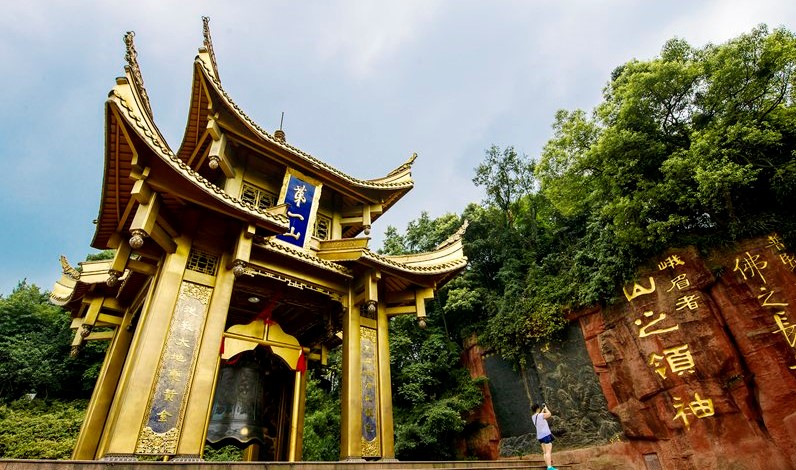
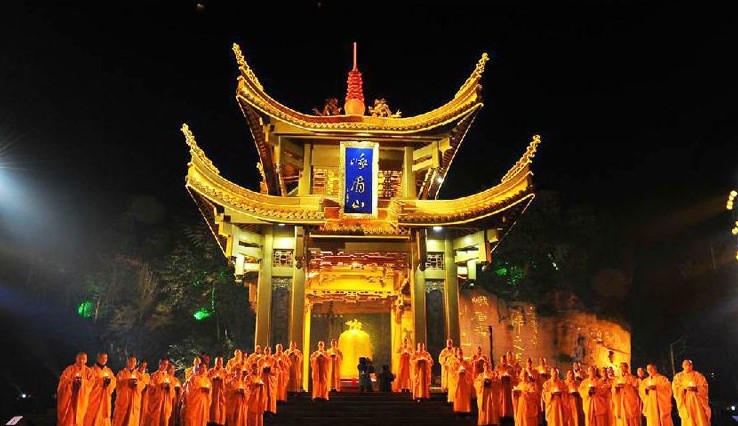
The First Mountain Pavilion, located at the center of the lower mountain tourist area, is 6.7 meters long and 14.05 meters high. It showcases the rich and profound cultural heritage of Emei Mountain, embodying its grandiose momentum and expansive spirit. It serves as a microcosm of Emei Mountain’s ancient and modern culture. As the largest bronze pavilion in China, it also marks the starting point for visitors beginning their ascent to the mountain. The pavilion was constructed by China’s master craftsman, Zhu Bingren, and is part of the larger bronze architectural project that includes the Golden Summit of Emei Mountain and the Mahavira Hall, making it a world-renowned large-scale bronze structure.
6. Qingyin Pinghu (Qingyin Lake)
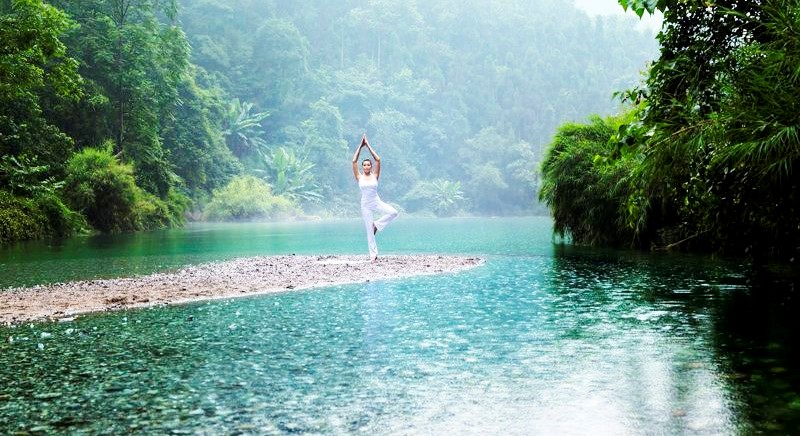
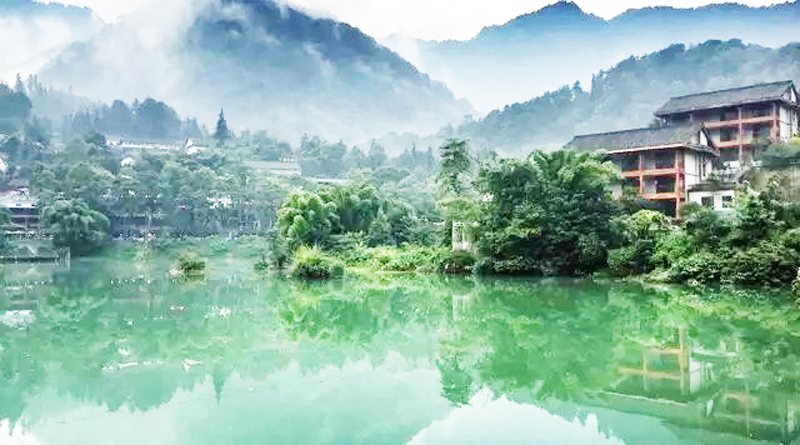
Qingyin Pinghu (Qingyin Lake) is located at Qingyin Pavilion, covering an area of 300,000 square meters. It is a green ecological lake with pure and crystal-clear water. Surrounded by lush green peaks and verdant hills, the lake is framed by towering ancient trees. The water, like jade, is seamlessly embedded within the landscape, with varying depths and gentle ripples. It's hard to tell whether the trees reflect their greenery onto the lake, or if the lake has tinted the trees with its own shade of green.
7. Xiaoping's Affection for Emei Mountain
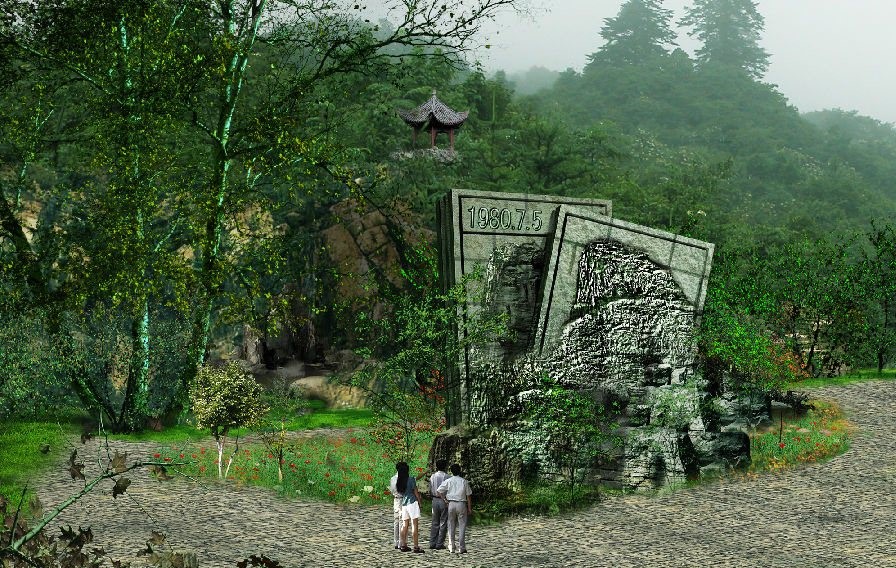
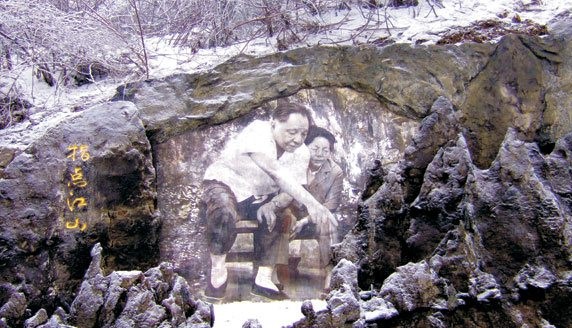
In the summer of 1980, Comrade Deng Xiaoping, the chief architect of China’s reform and opening-up and then Vice Chairman of the Central Committee, visited Emei Mountain. Upon reaching the end of the scenic area’s road—Shuangshui Well—he took a short rest. From this vantage point, overlooking the beautiful landscape of Emei Mountain, Deng Xiaoping was full of energy and vision. He remarked, "Emei Mountain is a cultural scenic area, a treasure trove. It must be well protected, well planned, and comprehensively developed. We must strengthen construction and management. To accomplish things, we must have the spirit of climbing without stopping."
In honor of this great leader, a memorial pavilion was built here, known as the Deng Xiaoping Mountaineering Memorial Pavilion. The site includes monuments such as the Memorial Stele, the Deep Bond of Fish and Water, Pointing to the Landscape, and the Spirit of Never Stopping in Climbing, as a tribute to his enduring legacy.
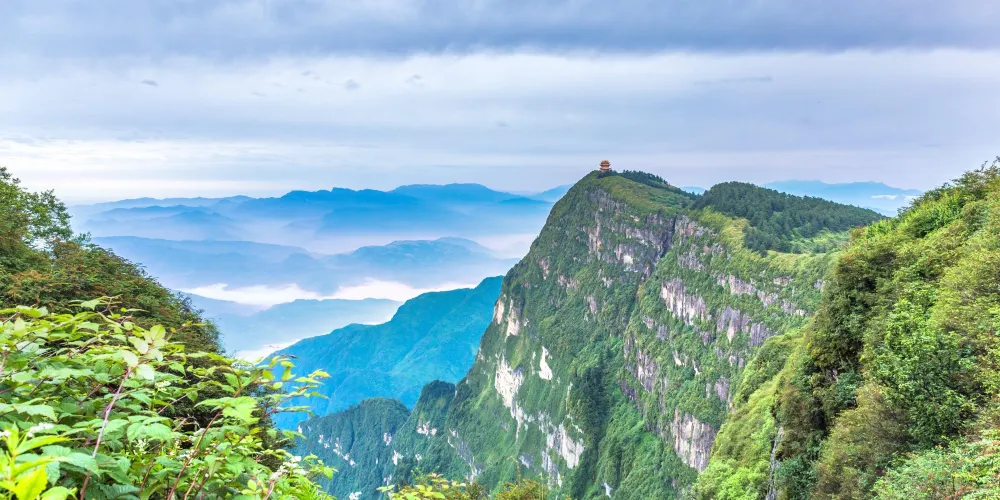
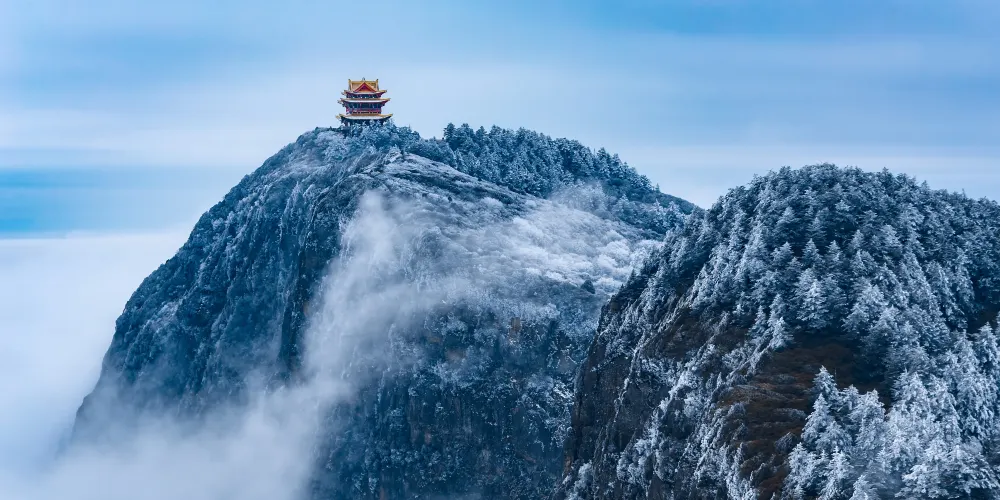
8. Wanfo Peak
Wanfo Peak is the highest summit of Emei Mountain, standing at an altitude of 3,099 meters. Its name, "The Dwelling of Samantabhadra Surrounded by Ten Thousand Buddhas," reflects the profound spiritual significance of the site. Wanfo Peak is located within the original forest ecological tourism area of Emei Mountain, home to attractions such as the Ten Thousand Buddhas Pavilion, highland rhododendron forests, Black Bear Valley, and Immortal's Turn-back.
The Ten Thousand Buddhas Pavilion stands 21 meters tall and is majestic and solemn, with the "Wishing Ancient Bell" hanging from the top of the pavilion, exuding a sense of grandeur. The bell ringing ceremony at the pavilion is highly ritualistic, with the bell traditionally struck 108 times. The ringing follows a precise sequence: once in the morning and once in the evening, each time struck 18 times in quick succession, 18 times slowly, and 18 times at a moderate pace. This sequence is repeated twice, totaling 108 strikes.
The 108 bell strikes symbolize the 12 months of the year, the 24 solar terms, and the 72 climate periods (5 days each), reflecting the cyclical nature of time. It represents the eternal cycle of the year, wishing for national peace, people's well-being, and happiness. In Buddhism, it is believed that striking the bell 108 times can help eliminate the 108 worldly troubles and distractions. The bell ringing at Wanfo Pavilion, perched at the peak of Emei Mountain, is a symbolic act of reverence towards Samantabhadra, echoing the sound of the bell to open the gates to the Pure Land of Ultimate Bliss, transmitting heartfelt wishes of peace and prosperity.
B. Traditional scenery of Mount Emei
1. Shengji Evening Bell
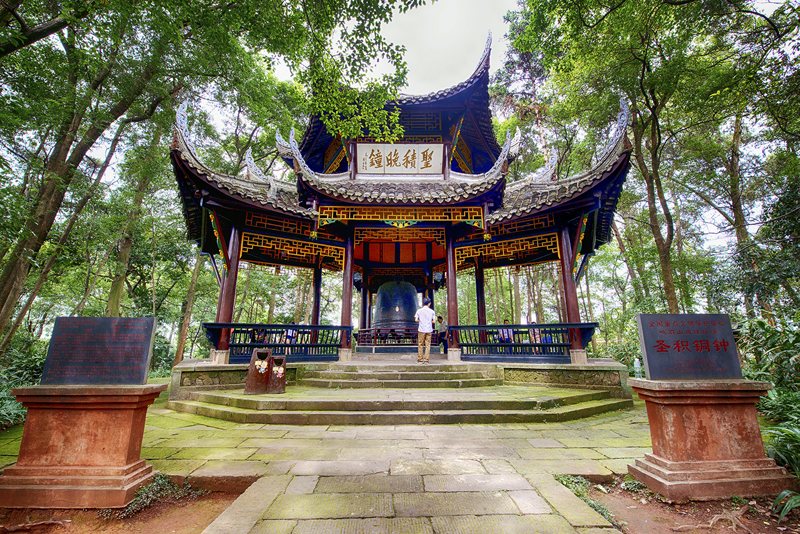
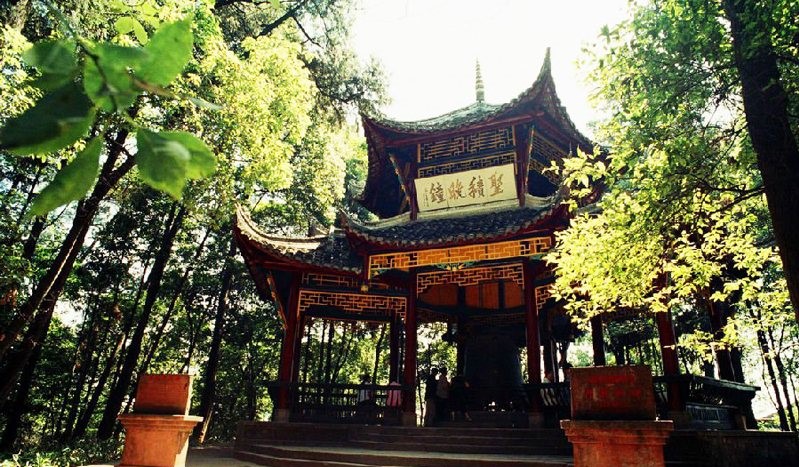
The Shengji Evening Bell is one of the ten traditional scenic spots of Emei Mountain. It is located on Fenghuang Fort opposite Baoguo Temple in the lower mountain area. The bell was cast in 1564 during the time when Master Biechan was residing at Shengji Temple. Named after the temple, the bell weighs 12.5 tons, stands 2.3 meters tall, has a diameter of 2 meters, and a lip thickness of 10 centimeters. It is the largest bell on the mountain, known as the "King of Bells in Bashu" (Bashu referring to the Sichuan region).
2. Luofeng Peak
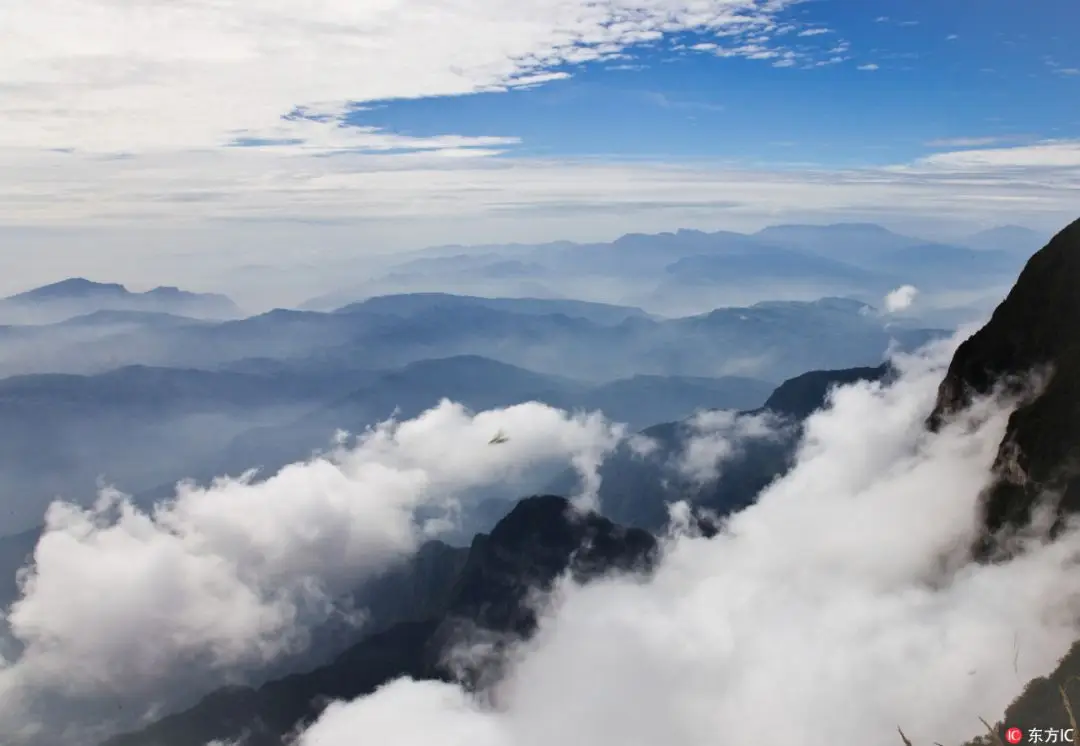
Luofeng Peak is located to the right of Fuhu Temple and offers the best vantage point for a panoramic view of the Emei Plain. From the peak, visitors can enjoy an expansive view of the vibrant and flourishing Emei Plain. When light clouds drift over Fuhu Ridge and descend toward Luofeng Peak, enveloping the plain, it creates a surreal experience for travelers, making them feel as though they are suspended between heaven and earth.
3. Lingyan Diecui (Lingyan's Verdant Layers)
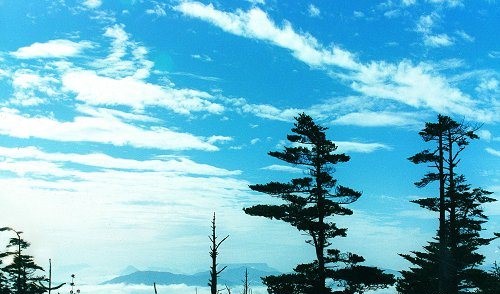
The site of Lingyan Temple is located at the southern foothills of Emei Mountain. It is traditionally believed to be the place where the Indian monk Baozhang once built his hut. During the Ming Dynasty, Lingyan Temple boasted 48 halls, making it an impressive and grand structure, with thriving incense offerings and a bustling community. However, after years of war and neglect, the temple was completely destroyed. Despite this, the stunning natural beauty of Lingyan Diecui (Lingyan’s Verdant Layers) remains intact.
From the Lingyan Temple ruins, when you gaze to the north, you are presented with a magnificent natural scene of overlapping mountains. In the foreground, the green peaks rise and fall in undulating waves, interspersed with lush forests and tall bamboo. In the distance, the peaks of Wanfo Ding, Qianfo Ding, and Jin Ding appear like enormous emerald screens stretching across the sky, their majestic outlines standing tall and soft against the horizon. The mountains' layers, from low to high and near to far, create a dramatic wave-like effect, with the green color shifting from bright emerald to deep indigo, transitioning to gray-blue and pale gray. These layers extend deep into the distance, meeting the boundary where the mountains kiss the blue sky, creating a breathtaking and richly layered landscape.
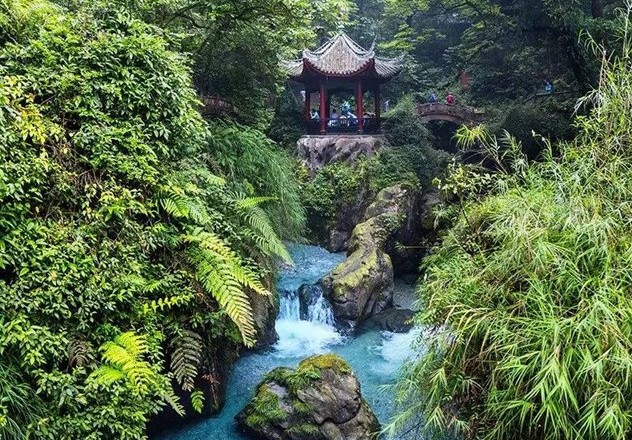
4. Shuangqiao Qingyin
Shuangqiao Qingyin (Double Bridges and Pure Sound) is one of the traditional ten scenic spots of Emei Mountain. Qingyin Pavilion is a unique architectural and landscaped temple set amidst mountains and water. Centered around the temple, a 4-kilometer radius of pavilions, towers, and lush green hills form a natural landscape picture. Below Qingyin Pavilion, there is a pavilion called "Jiewang Pavilion," situated between two rivers: the Bailong River (White Dragon River) on the left and the Heilong River (Black Dragon River) on the right. Spanning across both rivers are two arched bridges, shaped like rainbows, elegantly soaring in the air. These bridges are known as the "Shuangfei Bridge" (Double Flying Bridges).
5. Baishui Qiufeng (Autumn Breeze of Baishui)
Baishui Qiufeng (Autumn Breeze of Baishui) is located at an altitude of 1,020 meters, beneath Shizi Ridge at the Wanian Temple. The temple was originally founded during the Eastern Jin Dynasty, and in the Tang Dynasty, Master Huitong resided here. It is said that due to the frequent destruction of temples on Emei Mountain, which was traditionally associated with the fire element, the temple was renamed Bai Shui Temple.
The temple is situated on a mountain peak that rises dramatically above the surrounding peaks, with lush greenery and a picturesque environment year-round. However, it is especially enchanting during the crisp autumn months. While the summer heat still lingers at the foot of Emei Mountain, the three peaks of the Golden Summit are already dusted with the first snow, and the ancient Wanian Temple, located in the middle mountain region, is experiencing its golden season. The forests are rich with vibrant colors, and the red leaves are intoxicating. The Baishui Pool within the temple ripples with clear waters, the sound of frogs playing like a melody, and the fragrance of osmanthus flowers fills the air, creating a refreshing and serene atmosphere. This idyllic scene gives the place its name—“Baishui Qiufeng,” or "Autumn Breeze of Baishui."
6. Hongchun Xiaoyu (Morning Rain at Hongchunping)
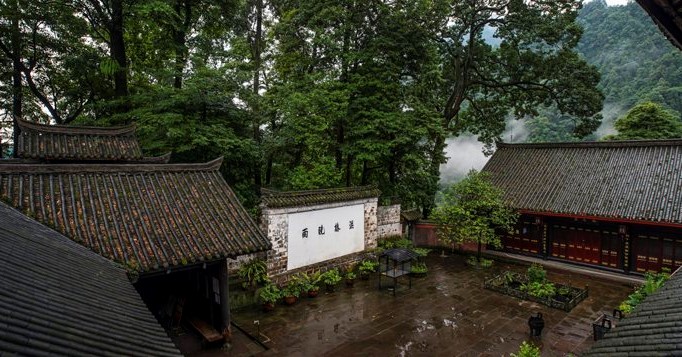
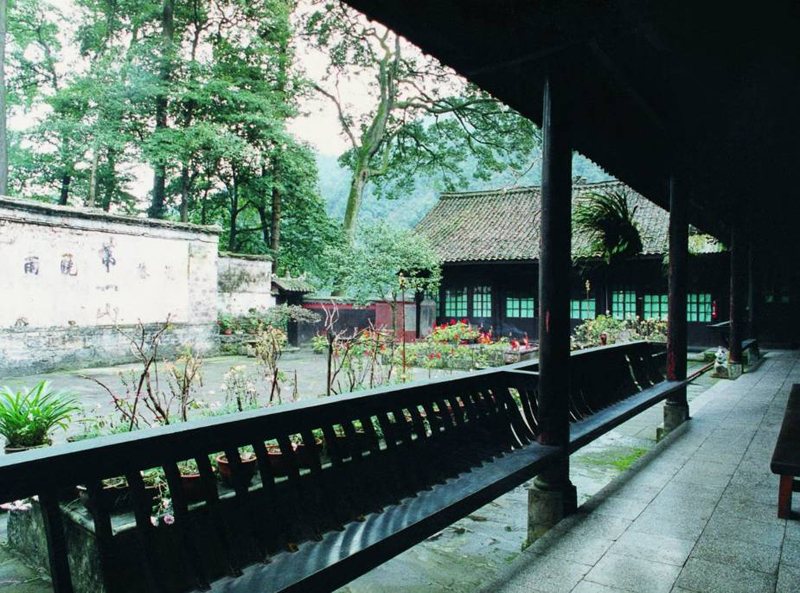
Hongchunping is located below Tianfeng Pool at an altitude of 1,120 meters. The area is named after three ancient Hongchun trees outside the temple. During the Kangxi reign of the Qing Dynasty, the emperor inscribed the plaque "Wang Chen Lü" (Forget the Dust and Worries) for the temple, with the couplet: "The crane often flies near, the gull is unperturbed by the cup's movement." During the Qianlong reign, another plaque was given with the couplet: "The water of the washing bowl spring is warm, and the incense smoke is purer in the morning." This serene setting, with its historical inscriptions, reflects the temple's peaceful and reflective atmosphere, where visitors can immerse themselves in the tranquility of nature.
7. Daping Jixue (Snow Clearing at Daping)
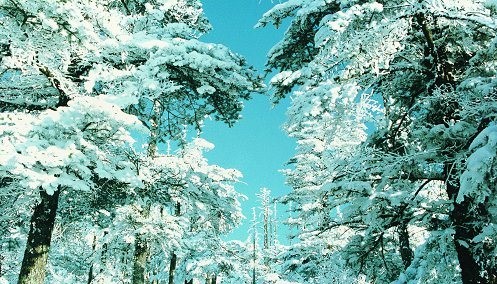
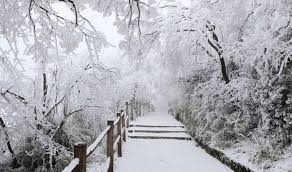
Daping, located at an altitude of 1,450 meters in the central region of Emei Mountain, is surrounded by peaks such as Huayan Ding, Changlao Ping, and Yunu. The terrain is steep, with a solitary peak and ridgeline, and only the northeast slopes provide access. Daping is renowned for the "Daping Jixue" (Snow Clearing at Daping), one of Emei Mountain's ten scenic spots. After the first snowfall of winter, Daping is covered in swirling snow, with tall evergreen trees resembling jade branches. The mountain transforms into a silver world, where snow-covered trees and ice flowers create a serene, breathtaking scene. The peaks surrounding Daping form a vast snow lotus, with Daping at its heart, capturing the beauty of snow in both form and color.
8. Jiulao Xianfu
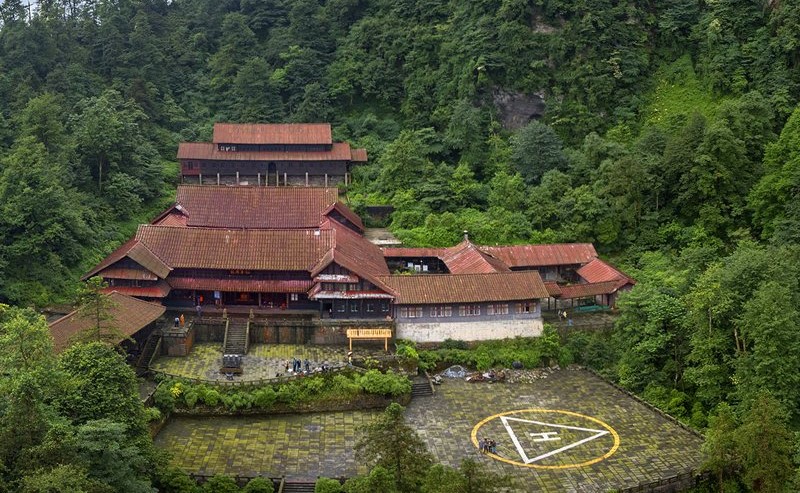
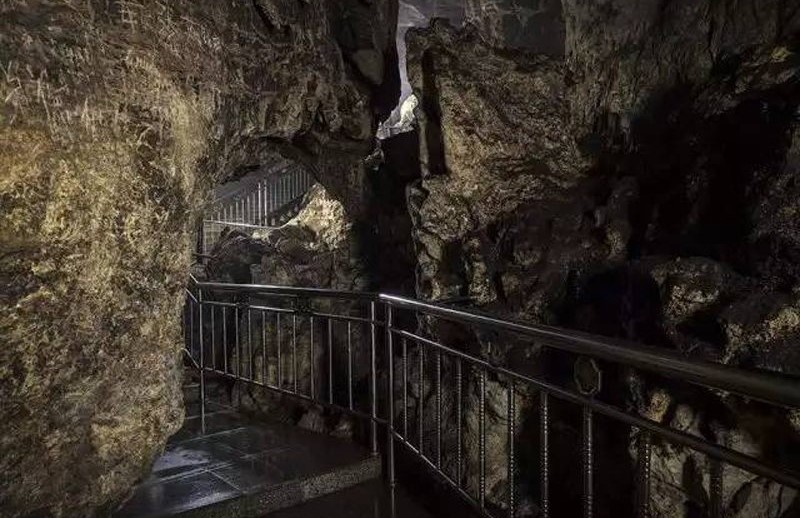
Jiulao Xianfu refers to both Xianfeng Temple and Jiulao Cave. Xianfeng Temple, also known as Xianfeng Chan Temple, was once a Taoist temple. Located 500 meters from the temple, Jiulao Cave is named after a legend in which Emperor Huang met an old man outside the cave while visiting the Heavenly True Emperor. The old man said there were nine companions with him, thus the cave was named "Jiulao Cave," also known as the meditation retreat of the God of Wealth, Zhao Gongming. The cave is 4 meters high and 1,500 meters long, featuring limestone formations. As you walk through, you can admire the natural rock shapes carved into the cave walls and ceiling, along with dazzling stalactites, stalagmites, and stone flowers. The cave is also home to large groups of bats and swallows, adding lively energy to this mysterious maze, making it a popular destination for adventure seekers.
9. Xixiang Pool Moonlit Night
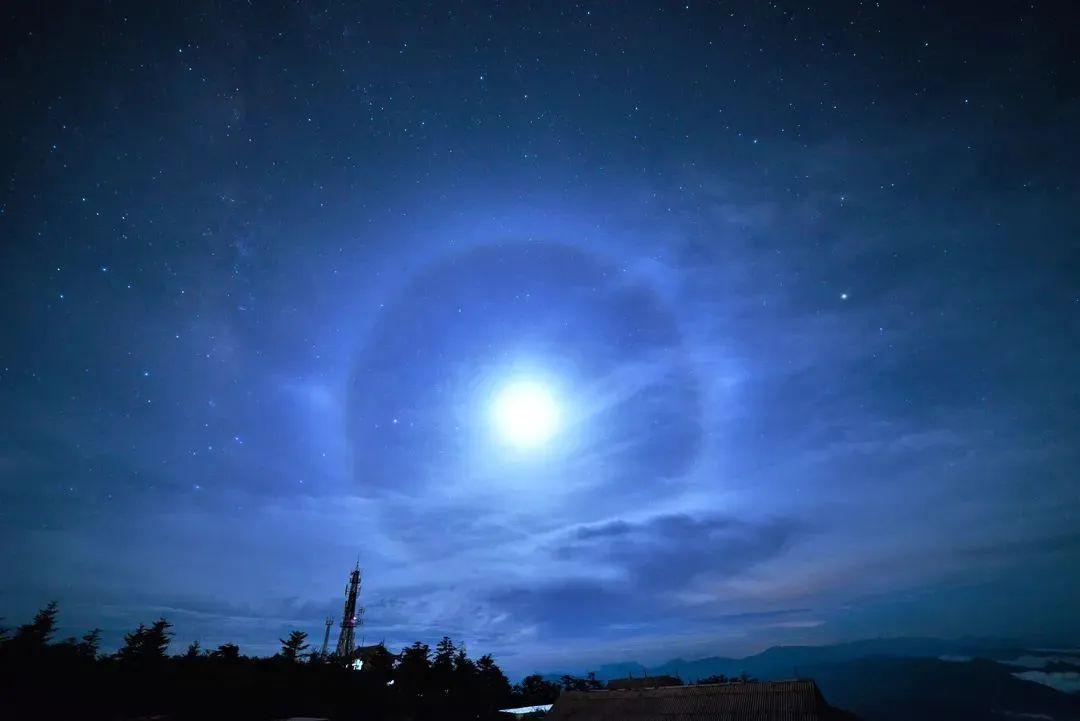
Xixiang Pool, located at an altitude of 2,070 meters on Zuantian Slope, is considered the best spot on Emei Mountain for moon gazing. Surrounded by towering fir trees and dense bamboo groves, the area offers a serene and dust-free environment on summer and autumn nights. The silver moonlight spills over the mountains, forests, and pools, creating a harmonious reflection with the moon in the sky, evoking a sense of tranquility and wonder. The famous Tang Dynasty poet Li Bai was inspired by this enchanting moonlight, composing the timeless verse: "The moon over Emei Mountain is half full in autumn, its reflection flows into the Pingqiang River. At night, I depart from Qingxi towards the Three Gorges, longing for you but unable to see you in Yuzhou."
10. Jinding Xiangguang (Golden Summit Auspicious Light)
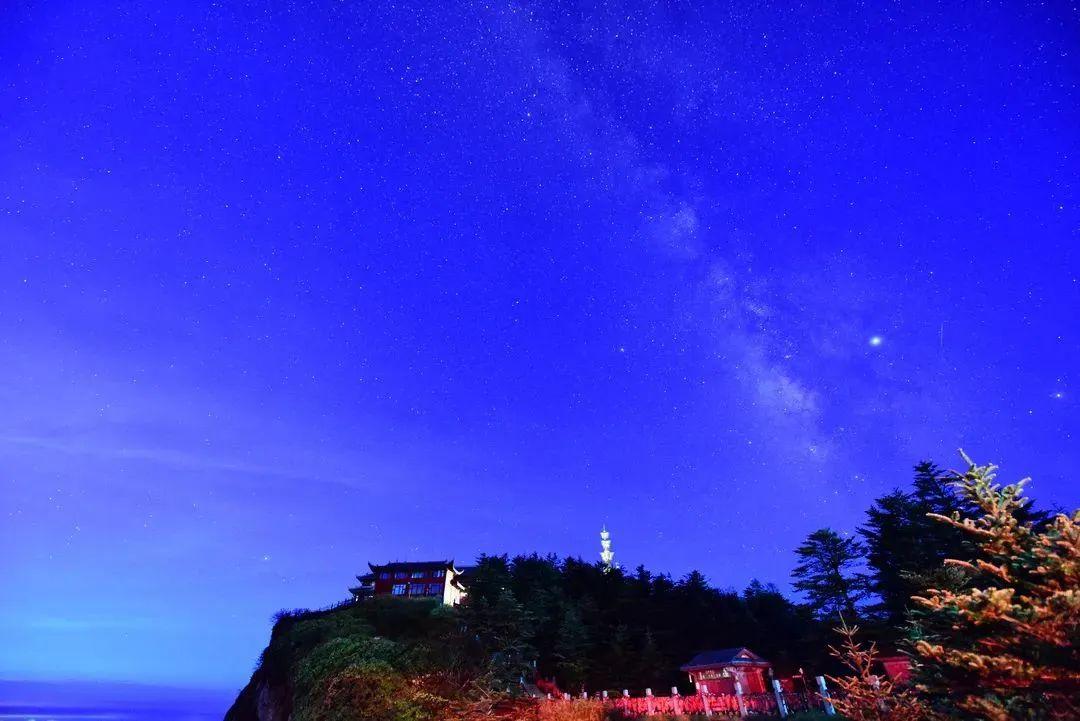
Jinding (Golden Summit) is the symbol of Emei Mountain, and "Jinding Xiangguang" (Golden Summit Auspicious Light), one of the ten scenic wonders of Emei, represents the essence of the mountain. It is composed of four magnificent phenomena: sunrise, sea of clouds, Buddha’s light, and sacred lanterns.
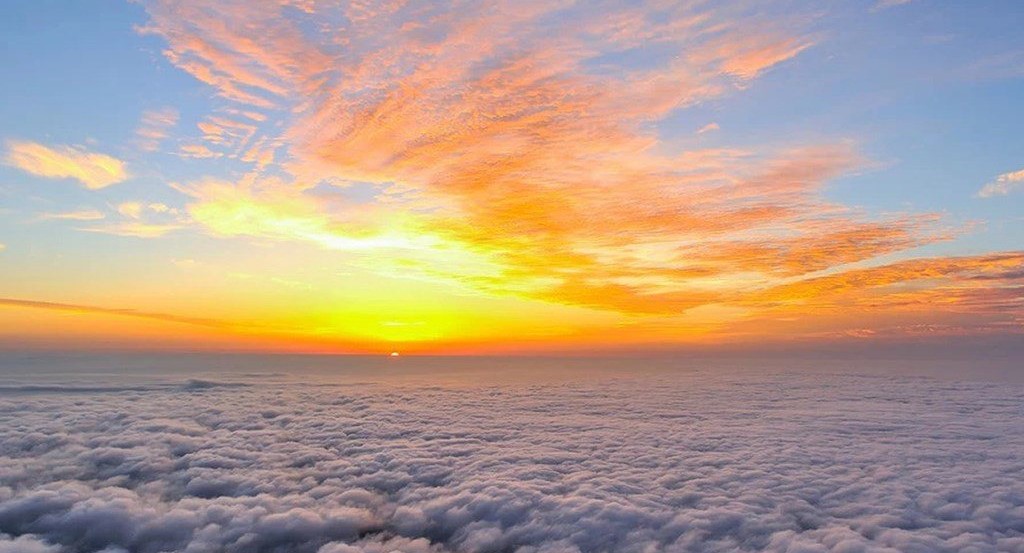
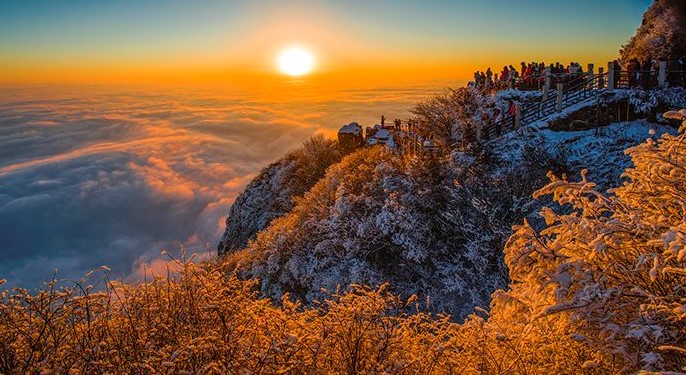
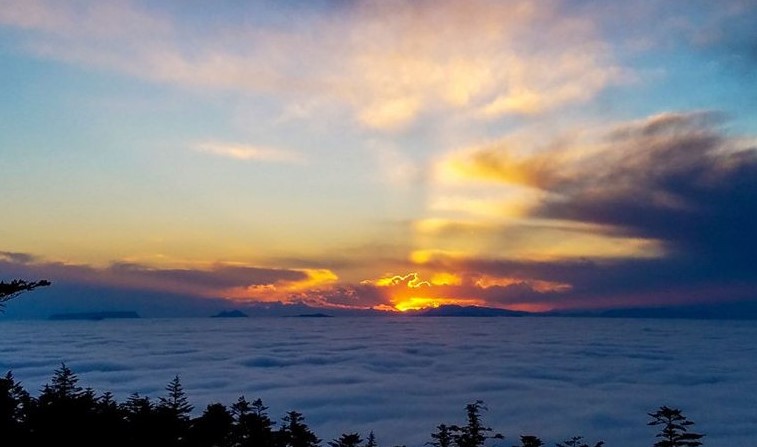
Sunrise: At an altitude of 3,077 meters, the view from Jinding is grand and expansive, making the sunrise even more awe-inspiring. Just before dawn, the sky transforms beautifully. Gradually, a sliver of light appears on the horizon, followed by strands of red clouds, cradling a few golden-tipped clouds. The arrival of daylight is imminent. Beneath the colorful clouds, the vast purple-blue sky bursts with a flash of purple-red, slowly rising into a small arc, then a half-circle, turning orange and golden-red. A slight jump follows, leaving a fleeting trail of light, and then a round red sun emerges, embedding itself at the edge of the sky. As the sun rises, the morning glow fills the sky, casting golden rays across the land. Emei Mountain, bathed in golden light, seems to don a magnificent golden robe, revealing its full, graceful form.
C. Six Wonders of Mount Emei
1. Emei Sacred Lamp
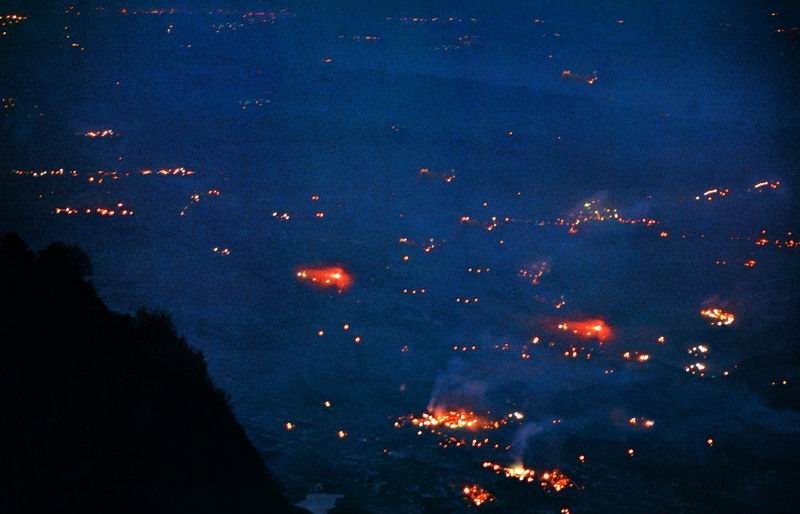
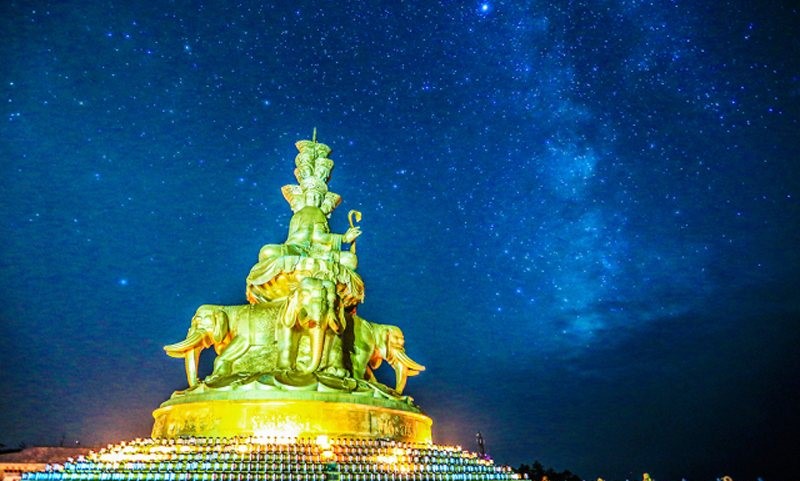
The Sacred Lamp, also known as the Buddha's Lamp, is a mysterious phenomenon seen on the Golden Summit during moonless nights. Beneath She Shen Rock, floating green orbs of light often appear, starting as one or two points and then multiplying into thousands, resembling twinkling stars that flicker and leap in the dark valleys, moving erratically. In ancient times, these lights were praised as "ten thousand lamps towards Samantabhadra."
The phenomenon of the Sacred Lamp is highly unique, and there are three main theories explaining its origin. One theory suggests it is the phosphorescent fire from the valleys, while another points to the glow of fireflies. A third explanation attributes it to a type of fungal ring on certain trees, which emits light when the humidity in the air reaches 100%. However, despite these theories, the Sacred Lamp remains an unsolved mystery.
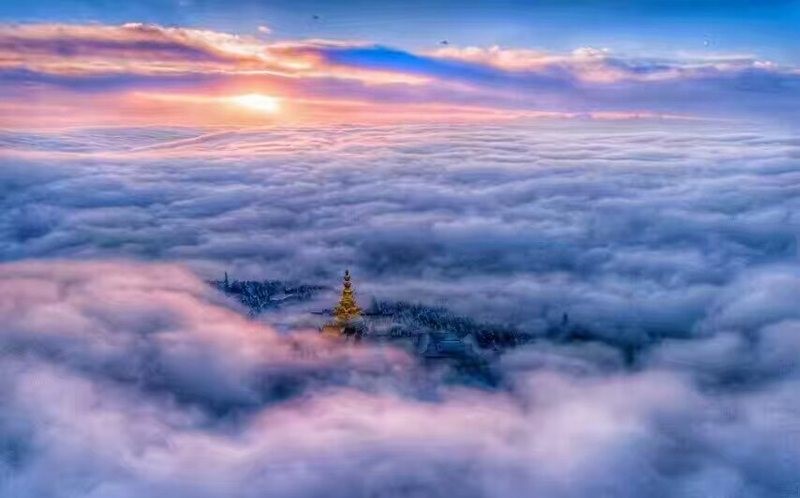
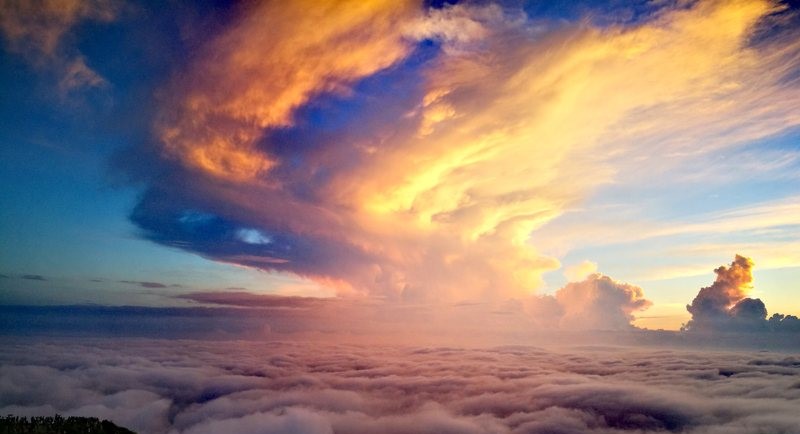
2. Sea of Clouds
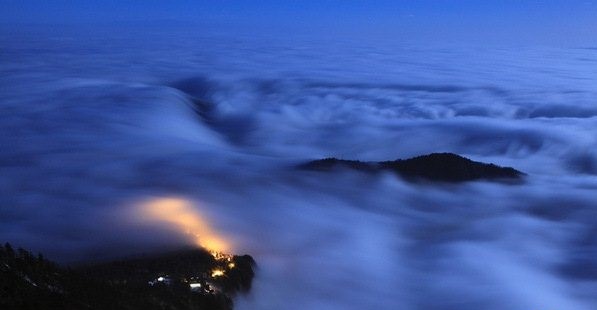
Emei Mountain has a dramatic elevation difference of 2,500 meters, with cloud layers typically forming between 1,000 to 2,000 meters above sea level. As a result, clouds are visible year-round above Xiangchi Pool. Upon reaching the Golden Summit, clouds lie beneath your feet, while descending to Xianfeng Temple, they hover above your head. At Huayan Ding, one finds themselves surrounded by clouds, creating a unique and ever-changing landscape.
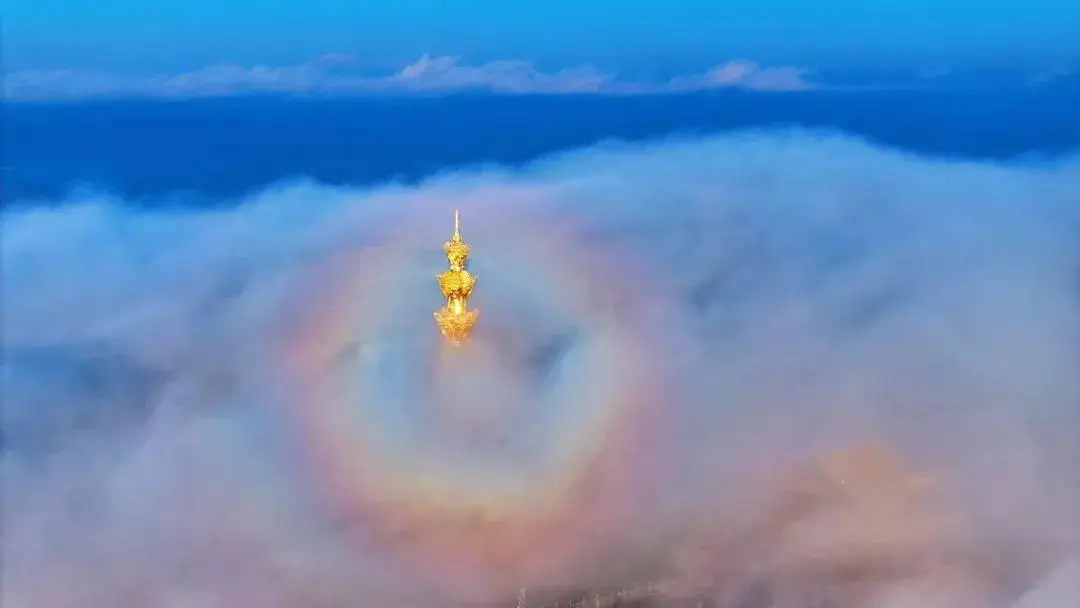
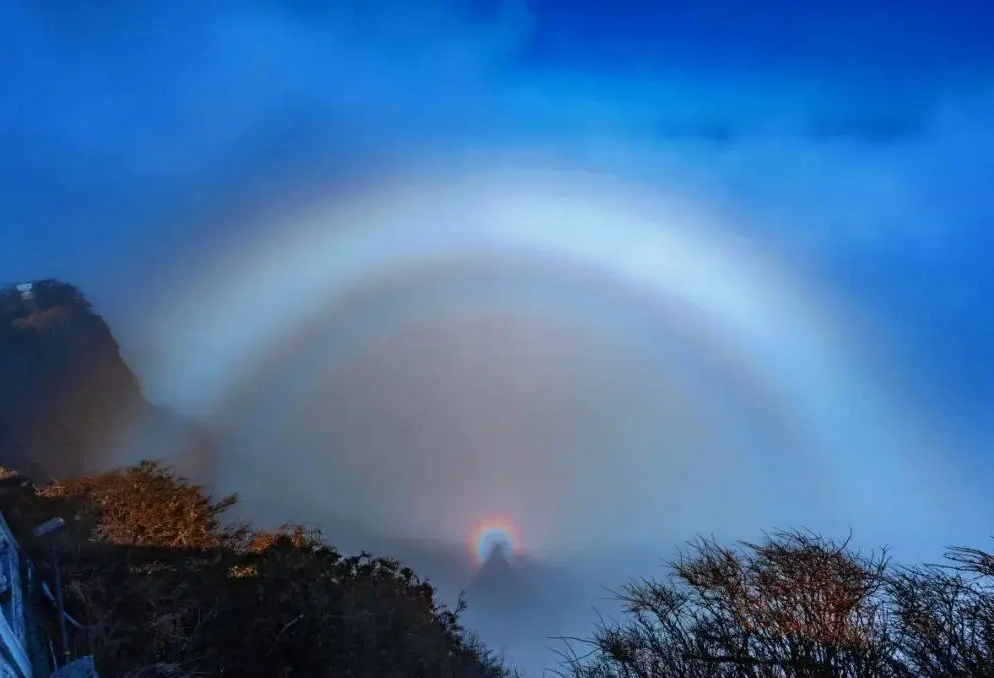
3. Emei Buddha's Light
The Emei Mountain Buddha's Light appears at the Golden Summit. When sunlight shines from behind the observer onto the vast sea of clouds, the deeper layers of clouds reflect the light back. As the light passes through the droplets or mist particles in the upper layers of clouds, it diffracts and forms a massive, colorful halo. From the She Shen Rock at the Golden Summit, when you look down, you can see a multicolored halo floating above the clouds, with your own shadow placed within the halo. As you move, your shadow moves with you, never separating. No matter how many people are present, each person only sees their own shadow, and "the halo moves with the person, and the shadow stays within the halo." This is the astonishing phenomenon known as the Emei Buddha's Light.
4. Sunrise on Emei Mountain
The sunrise on Emei Mountain varies greatly due to different weather conditions and seasons, displaying a wide range of forms. On clear days, the sun rises directly from the horizon, offering a magnificent view of the entire sunrise process. On some days, there may be clouds on the horizon, and by the time the sun rises, it may already be a full red sun above the horizon. On cloudy days, the view may be limited to the morning glow and the sea of clouds, creating a different but equally breathtaking scene.
5. Golden Pavilion
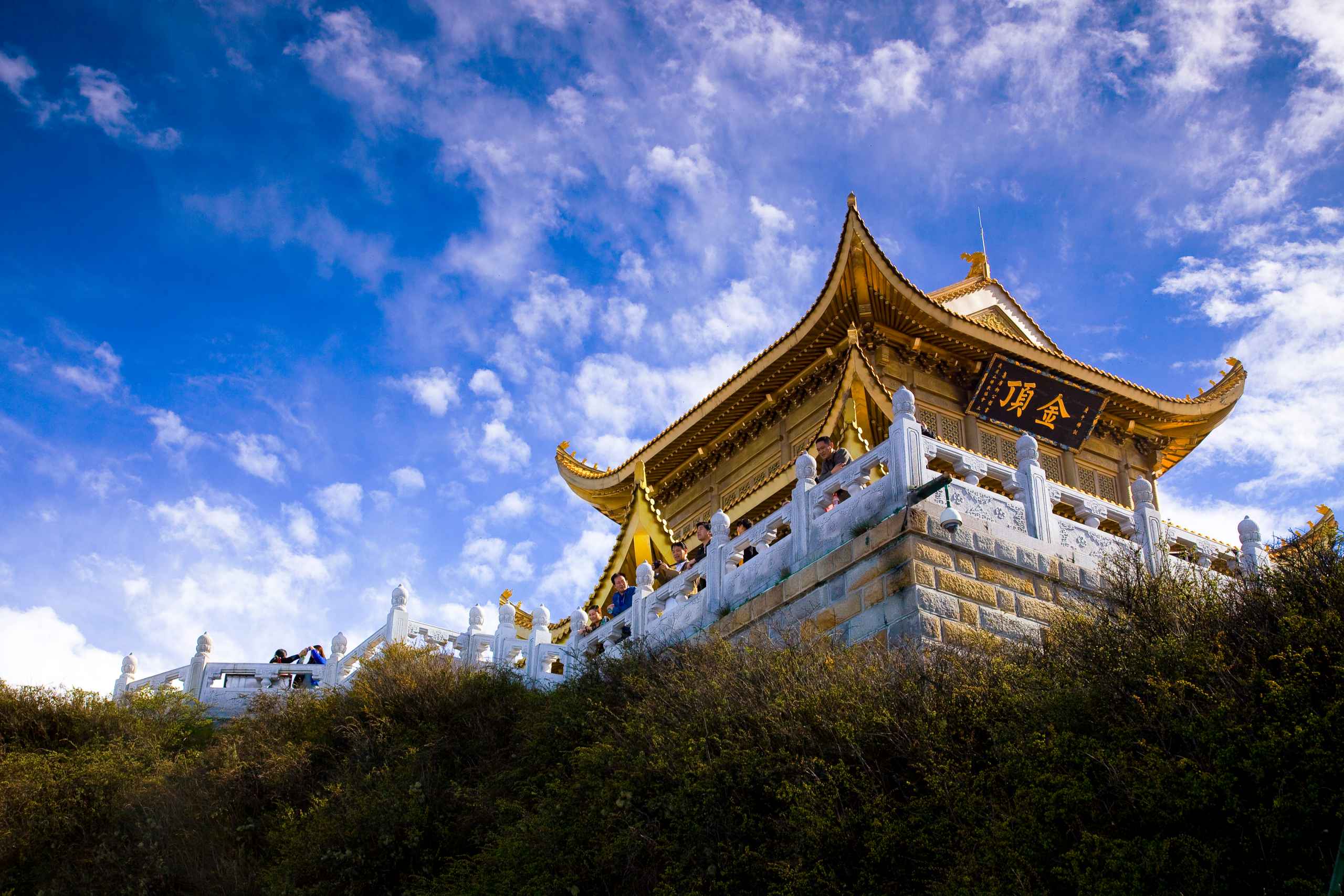
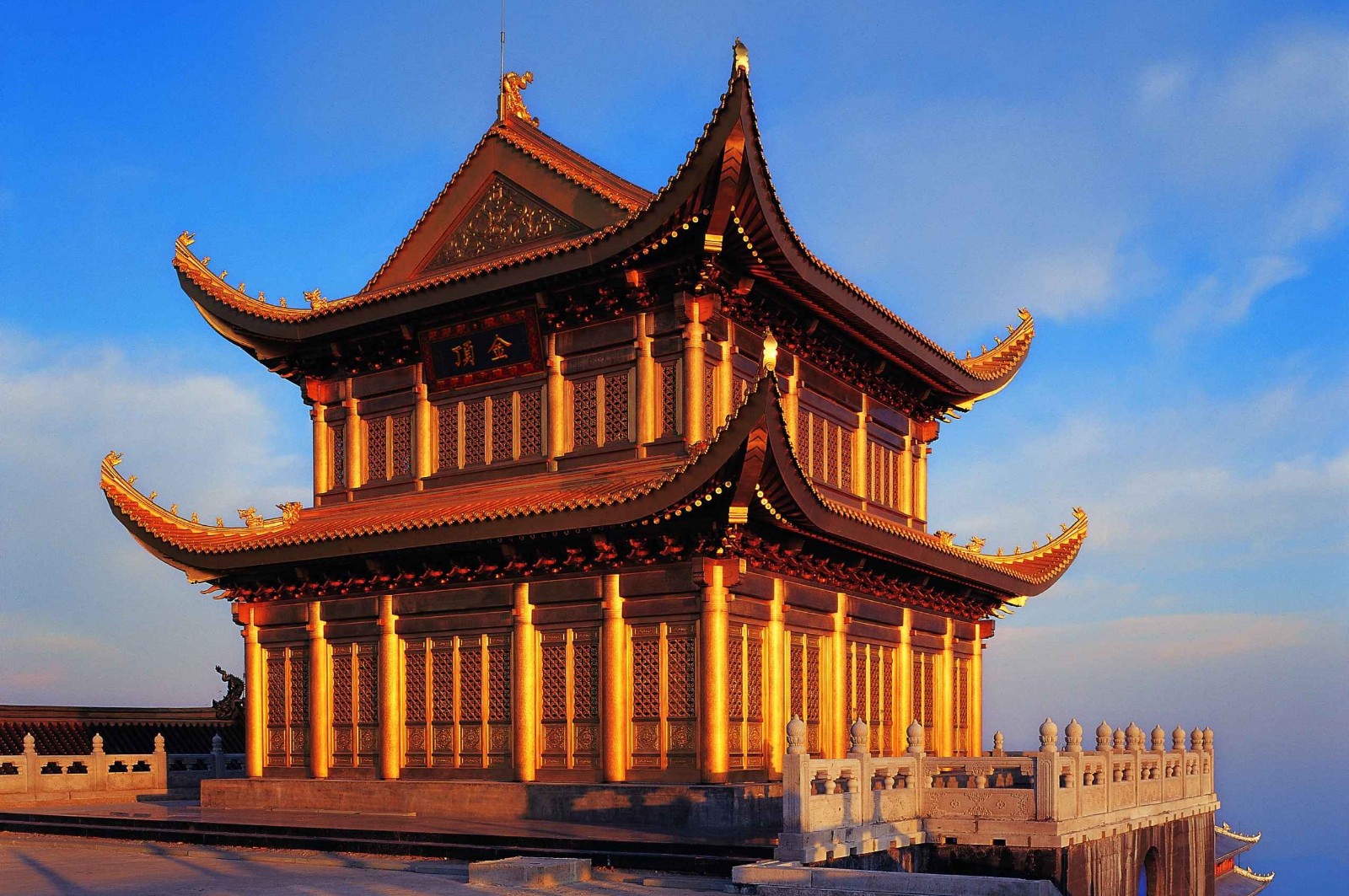
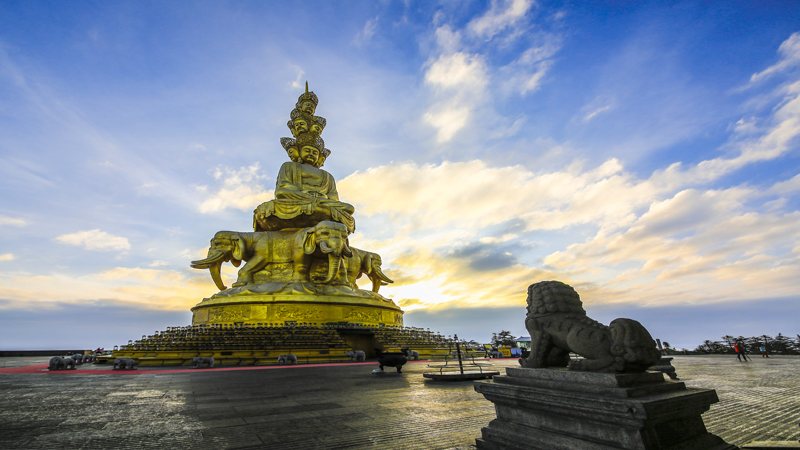
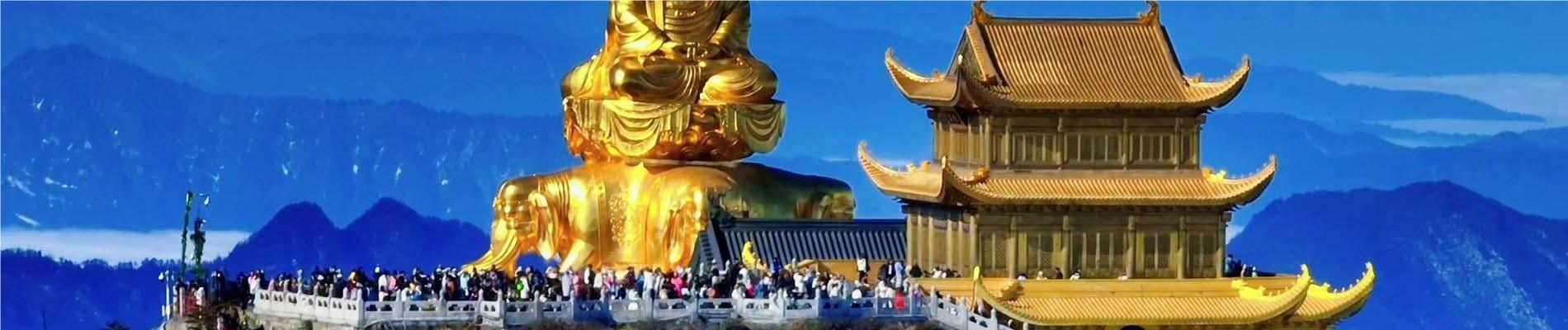
The Golden Pavilion, also known as the "Golden Summit" of the sacred Buddhist mountain Emei, is an awe-inspiring structure made of gold and copper alloys, shining brilliantly with its golden and jade-like hues. It stands as one of the six major scenic wonders of the Golden Summit of Emei Mountain, alongside the Golden Buddha, sunrise, sea of clouds, Buddha's light, and the Sacred Lantern, each contributing to the mountain's grandeur and spiritual allure.
6. Golden Buddha
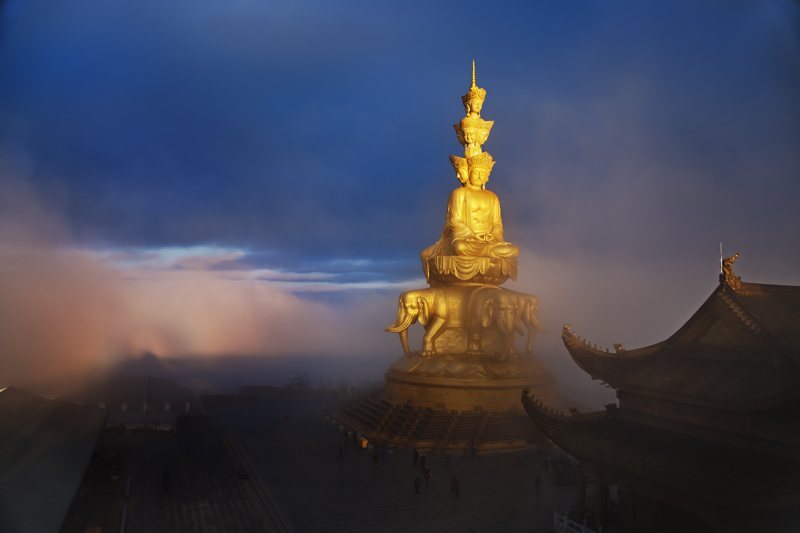
The Golden Buddha at the Golden Summit of Emei Mountain is a magnificent 48-meter-high statue of Samantabhadra, the first four-faced, ten-directional artistic representation of the Bodhisattva. This Buddha embodies a rich confluence of Buddhist rituals, teachings, and artistic form. Made using a copper casting technique with gold plating, the statue weighs 660 tons in total and consists of a pedestal and the ten-directional Samantabhadra figure. The pedestal is 6 meters high and 27 meters wide and long, with carvings of Samantabhadra's ten great vows on all four sides, and decorated with granite reliefs. The ten-directional Samantabhadra statue itself stands 42 meters tall and weighs 350 tons. The design of the Golden Buddha is flawless, with its craftsmanship flowing smoothly, making it a monumental masterpiece of copper-cast Buddhist art. This statue holds immense cultural and aesthetic value, representing a collision of artistic minds from both sides of the Taiwan Strait, and a brilliant result of wisdom and creativity.
Classic Tour Routes
1. Baoguo Temple/Huangwan — Leidongping — Golden Summit — Baoguo Temple/Huangwan
· Route Direction: Baoguo Temple/Huangwan (take sightseeing bus) — Leidongping (transfer to cable car) — Golden Summit — Return via the same route (cable car + sightseeing bus) — Baoguo Temple/Huangwan
· Core Features: A classic all-round route integrating flower viewing, landscape appreciation, religious experience and special activities. Admire rare Davidia involucrata and azaleas in spring, chase the magical Buddha’s light and vast sea of clouds on the Golden Summit, play with lively macaques in the ecological area, and enjoy ice and snow scenery in winter. Stand atop the summit to experience the feeling of "seeing all mountains small," overlook the majestic Gongga Snow Mountain and Wawu Mountain in the distance, and pay homage to the solemn Ten-Thousand Buddhas Samantabhadra Statue and the sacred three-layer temples, immersing in the magnificent rolling sea of clouds.
2. Baoguo Temple/Huangwan — Leidongping — Golden Summit — Wannian Temple — Wuxiangang — Baoguo Temple/Huangwan
· Route Direction: Baoguo Temple/Huangwan (sightseeing bus) — Leidongping (cable car) — Golden Summit — Return to Leidongping (cable car) — Wannian Temple (sightseeing bus + cable car) — Wuxiangang (sightseeing bus) — Baoguo Temple/Huangwan
· Core Features: A four-season all-purpose route covering natural scenery, cultural heritage and folk legends. In spring, hike and admire flowers; in summer, escape the heat and cool down; in autumn, enjoy the mountains covered with red leaves; in winter, experience the fairy-tale ice and snow world. Trace the origin of the patriotic spirit "Serve the Country with Loyalty" at Baoguo Temple, explore the mystery of Fuhu Temple’s "purification from mortal dust"; listen to the frogs croaking like playing the piano in autumn breeze, appreciate the landscape garden-style Buddhist temples; search for the romantic love story of the White Snake, watch the naughty and clever macaques; admire the surging sea of clouds on the Golden Summit and pray for the peace and smoothness of the whole family.
3. Zero-Kilometer Gate — Leidongping — Golden Summit — Zero-Kilometer Gate
· Route Direction: Zero-Kilometer Gate (sightseeing bus) — Leidongping (cable car) — Golden Summit — Return via the same route (cable car + sightseeing bus) — Zero-Kilometer Gate
· Core Features: A time-saving and efficient route focusing on the core landscape of the Golden Summit. The starting point is the Zero-Kilometer Gate, which is closer to the mid-mountain area, reducing the travel time on the mountain. It focuses on experiencing the shocking views of the Golden Summit, such as sunrise, sea of clouds, Buddha’s light and sacred lamps, and paying homage to the Ten-Thousand Buddhas Samantabhadra Statue. The route is simple and direct, suitable for tourists who only want to visit the Golden Summit and have limited time.
4. Baoguo Temple/Huangwan — Wannian Temple — Qingyin Pavilion & Ecological Monkey Area — Wuxiangang — Baoguo Temple/Huangwan
· Route Direction: Baoguo Temple/Huangwan (sightseeing bus + cable car) — Wannian Temple — Hike to Qingyin Pavilion & Ecological Monkey Area — Wuxiangang (sightseeing bus) — Baoguo Temple/Huangwan
· Core Features: A leisure and health-preserving route with pleasant climate all year round and abundant negative oxygen ions, ideal for the elderly to relax and recuperate, and for children to play. Worship the Samantabhadra Dharma Realm at Wannian Temple, listen to the melodious croaking of frogs (playing piano frogs); take beautiful photos of the elegant mountains and rivers, play in the cool streams; search for the trace of the White Snake’s fairy tale and find the romantic classic; admire the "Three Treasures of Wannian Temple" (Buddha’s tooth relic, bronze statue of Samantabhadra riding an elephant, beamless hall) and watch the clever macaques in the ecological monkey area.
Scenic area walkway
Route 1
| Route 2 |
Baoguo Temple – Fuhu Temple (1km) | Qingyin Pavilion – Wannian Temple (2km) |
Fuhu Temple – Leiyin Temple (2km) | Wannian Temple – Xixiangchi (14km) |
Leiyin Temple – Chunyang Hall (2km) | Xixiangchi – Leidongping (7.5km) |
Chunyang Hall – Shenshui Pavilion (2.5km) | Leidongping – Jiyin Hall (1.5km) |
Shenshui Pavilion – Zhongfeng Temple (2km) | Jiyin Hall – Golden Summit (6km) |
Zhongfeng Temple – Guangfu Temple (1.3km) | Mount Emei Urban Area – Baoguo Temple (6.6km) |
Guangfu Temple – Qingyin Pavilion (0.2km) | Leshan Giant Buddha – Baoguo Temple (36km) |
Wuxian Gang – Qingyin Pavilion (1.5km) | Mount Emei High-Speed Railway Station – Baoguo Temple (2km) |
Qingyin Pavilion – Ecological Monkey Area – Hongchunping (6km) | Huangwan Tourist Center – Only Mount Emei Drama Fantasy City (3km) |
Hongchunping – Jiulao Cave (15km) |
|
Jiulao Cave – Xixiangchi (12.5km) |
|
Xixiangchi – Leidongping (7.5km) |
|
Leidongping – Jiyin Hall (1.5km) |
|
Jiyin Hall – Golden Summit (6km) |
|
The Essence of Chengdu: Personalized Tours to Fit Your Style!
Whether you're here for a weekend getaway or an extended stay, Chengdu offers a rich and diverse experience for every traveler.
From charming teahouses to vibrant night markets, from peaceful parks to historical landmarks, our tours are designed to give you a taste of everything this city has to offer. No matter what you're seeking—be it adventure, relaxation, or cultural immersion—our personalized itineraries will ensure your Chengdu experience is exactly what you’re looking for.
 Private Day Tour to Dujiangyan Panda Base and Dujiangyan Irrigation System
2 Days Chengdu Tour: Blending Modern & Ancient Heritage
Private Day Tour to Dujiangyan Panda Base and Dujiangyan Irrigation System
2 Days Chengdu Tour: Blending Modern & Ancient Heritage
What to Do in Emei Mountain
A. Religious Pilgrimage & Temple Exploration
1. Pay Homage at Golden Summit
Visit the Ten-Thousand Buddhas Samantabhadra Statue (30.7 meters tall, the world’s largest bronze Buddha statue of Samantabhadra), pray for peace and blessings, and admire the sacred three-layer temples (Puxian Temple, Huazang Temple, and Golden Temple). The statue glows under the sun, creating a solemn and majestic atmosphere.
2. Explore Ancient Temples
Wander through Baoguo Temple (the "gateway to Emei" with rich cultural relics), Wannian Temple (home to the beamless hall and Buddha’s tooth relic), and Qingyin Pavilion (surrounded by mountains and rivers, known as the "most beautiful temple in Emei"). Experience the tranquility of Buddhist temples and appreciate traditional architecture, murals, and calligraphy.
3. Attend Buddhist Rituals
If visiting during important Buddhist festivals (e.g., Samantabhadra Bodhisattva’s Birthday on the 21st day of the second lunar month), participate in grand Dharma assemblies at major temples. Experience the solemn religious atmosphere and learn about Buddhist customs.
B. Admire Natural Wonders
1. Chase Sunrise & Sea of Clouds
The best spot is Golden Summit (altitude 3077 meters). Arrive early (5:30-6:30 AM in spring/autumn) to witness the sun rising from the horizon, painting the sky in orange and gold, while the sea of clouds rolls below like a vast ocean. Autumn (Sep-Nov) offers the most stable weather for this spectacle.
2. Seek Buddha’s Light (Buddha’s Halo)
If you are coming from nearby cities like Ya’an, Dujiangyan, or Wenchuan, you can also take a bus or drive to Mount Siguniang. Ya’an and Dujiangyan are connected to Chengdu by train, and from there, you can either take a bus or drive to Mount Siguniang.
3. Witness Sacred Lamps
On quiet nights with little wind (especially in autumn), tiny glowing lights appear in the valleys below Golden Summit, floating like will-o’-the-wisps. Legend says these are "sacred lamps" guiding pilgrims, creating an ethereal atmosphere.
C. Interact with Wild Macaques
1. Ecological Monkey Area
Located between Qingyin Pavilion and One-Line Sky, this area is home to over 200 wild macaques. Watch them play, climb, and interact with visitors (keep a safe distance). Note: Do not feed them human food, avoid making sudden movements, and keep valuables (e.g., phones, bags) secure.
2. Monkey Watching at Leidongping
Leidongping is another popular spot to see macaques, especially in winter when they gather near warm areas. Observe their cute behaviors while enjoying the snow scenery.
D. Cultural & Local Experiences
1. Try Temple Vegetarian Food
Enjoy authentic Buddhist vegetarian meals at Wannian Temple or Baoguo Temple. Dishes like "Buddha Jumps Over the Wall" (vegetarian version), braised snow konjac, and glutinous rice cakes are made with local ingredients, offering a healthy and delicious dining experience.
2. Learn Emei Martial Arts
Emei Martial Arts is one of China’s three major martial arts schools. Take a short training session at martial arts halls near Baoguo Temple to learn basic moves and understand the philosophy of "harmony between hardness and softness."
3. Visit Emei Mountain Museum
Located near Baoguo Temple, the museum showcases cultural relics, geological specimens, and Buddhist art. Learn about the mountain’s formation, history, and cultural heritage through exhibitions and interactive displays.
E. Seasonal & Special Activities
1. Spring Flower Viewing
March to May is the blooming season for azaleas, Davidia involucrata, and peach blossoms. Visit Leidongping (azaleas), Wannian Temple (peach blossoms), and Qingyin Pavilion (Davidia involucrata) for a colorful floral feast.
2. Autumn Leaf Photography
September to November, the mountains are painted red and gold. The best photography spots include Hongchunping, Jiulao Cave, and the trail from Leidongping to Golden Summit. Capture the stunning contrast between red leaves and blue sky.
3. Winter Ice & Snow Fun
From December to February, Leidongping and Golden Summit are covered in snow. Enjoy skiing, snowboarding, and snowman-building, or soak in hot springs (e.g., Emei Mountain Hot Spring Resort) to relax after a day of snow activities.
Getting to Mount Emei
1. High-Speed Railway
High-speed railways from multiple cities (including Chengdu, Xi'an, Chongqing, and Kunming) offer direct services to Emeishan City. You can arrive at either [Emei Station] or [Emeishan Station]:
· If arriving at [Emei Station]: Take Bus Route 1 to Huangwan Tourist Center.
· If arriving at [Emeishan Station]: Take Bus Route 12 to Mount Emei Tourism Passenger Transport Center (Baoguo Station).
· Alternatively, you can take the free shuttle bus to Huangwan Tourist Center or Mount Emei Tourism Passenger Transport Center (Baoguo Station).
2. Self-Driving
For self-driving: Exit at [Emeishan Toll Station] on the expressway, then follow the route: Ejiu Road — Jinding South Road — Xiuhu Boulevard — Xiuchuan Road — Huangchuan Road to reach Huangwan Tourist Center.
· Alternatively, you can take the free shuttle bus to Huangwan Tourist Center or Mount Emei Tourism Passenger Transport Center (Baoguo Station).
Where to Stay
1. Hongzhu Mountain Hotel
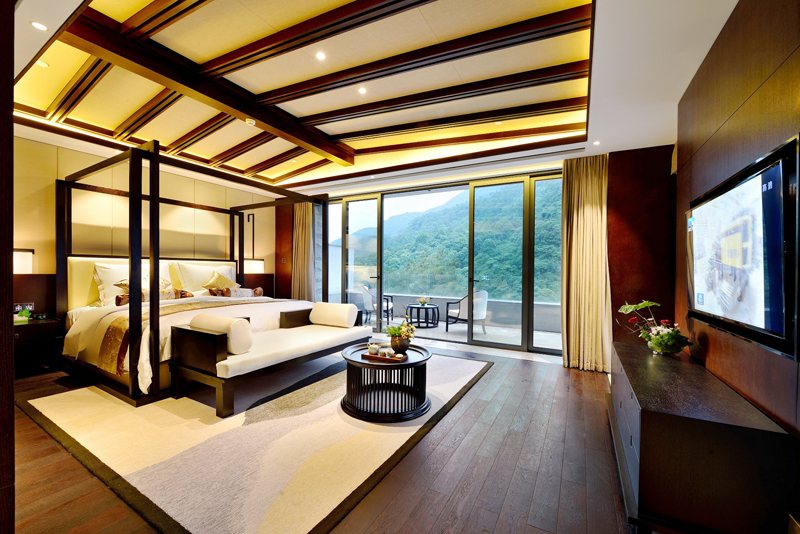
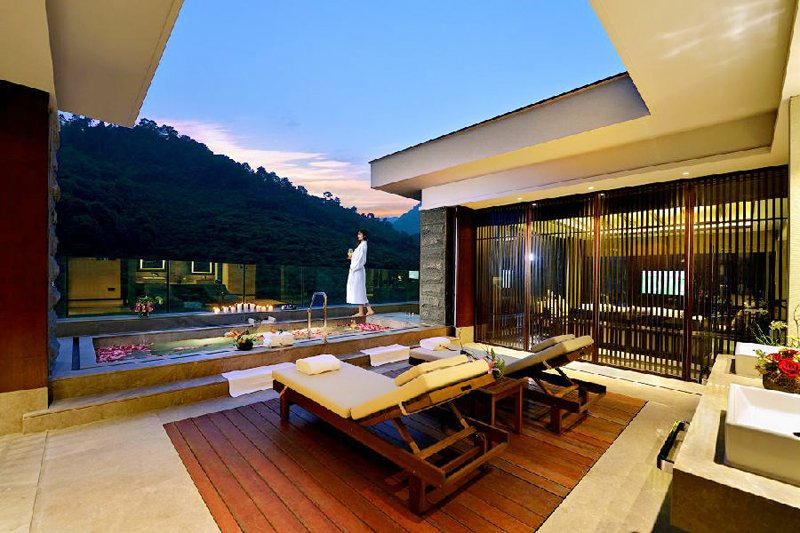
Hongzhu Mountain Hotel is located at the foot of Emei Mountain, a UNESCO World Natural and Cultural Heritage site, just 200 meters from the famous Baoguo Temple. The hotel is nestled in 440,000 square meters of pristine forest and 100,000 square meters of natural lakes. With 5,000 meters of walking paths and an air quality that boasts negative oxygen ion levels 3,000 times higher than the average city, it can truly be described as a hotel planted within the mountains and forest. It's not just a hotel, but a place where you can breathe in the forest's natural essence and embrace the vitality of nature.
Hotel Address: Next to Baoguo Temple, Emei Mountain, Sichuan
Hotel Consultation Hotline: +86-0833-5525888
Official Hotel Website: www.hzshotel.com
2. Emei Mountain Hotel
Emei Mountain Tourism Co., Ltd. Emei Mountain Hotel was established in 1989 and expanded into a four-star hotel in January 2003. It is a conference resort and sightseeing hot spring hotel directly under Emei Mountain Tourism Co., Ltd. The hotel features a courtyard-style architectural layout, nestled amidst lush mountains and flowing waters. Guests can hear the sound of morning bells and evening drums, fully immersing themselves in the spiritual atmosphere of the sacred mountain. The scenic views are pleasant year-round, akin to spring at all times.
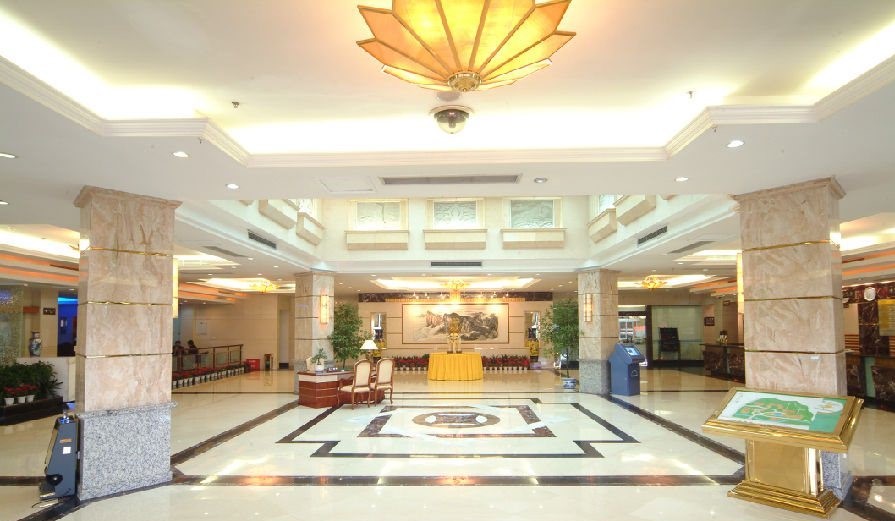
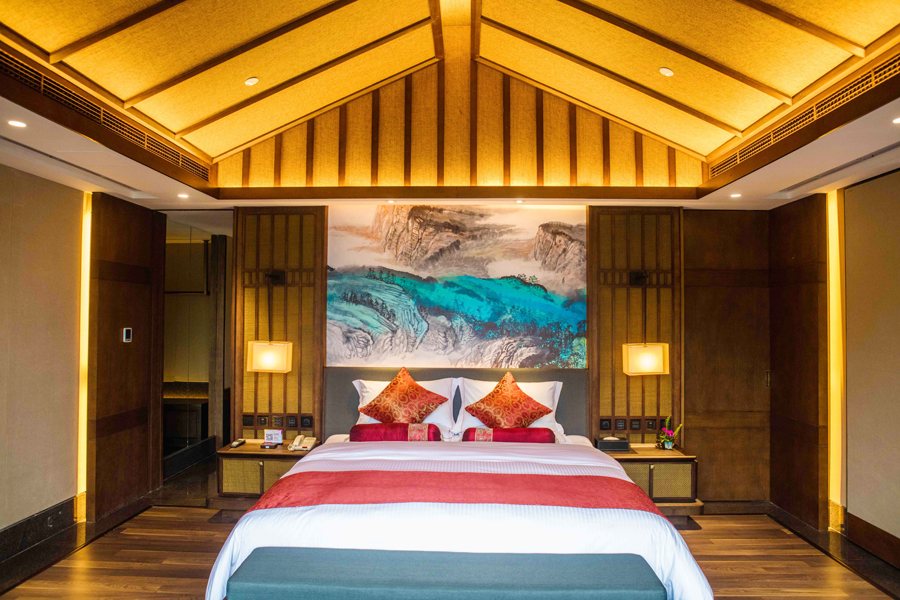
Hotel Address: Near Baoguo Scenic Area, Emei Mountain, Sichuan
Hotel Consultation Hotline: +86-400-885-6767
Official Hotel Website: www.emshotel.com.cn
3. Mount Emei View Hot Spring Soup House
The Mount Emei View Hot Spring Soup House is an ideal spot for travelers wanting to discover the city. The Mount Emei View Hot Spring Soup House is an ideal choice for travelers who want to take in the sights and sounds of Emeishan. From the hotel, Emeishan Railway Station is just 3km away. There is no shortage of things to see in the area, with the Lingxiu Hot Spring, Hongzhushan Forest Hot Spring and Emeishan Yoga Zen Spa all nearby. At the end of a busy day, travelers can unwind and relax in the hotel or go out and enjoy the city. This Emeishan hotel features parking on site.
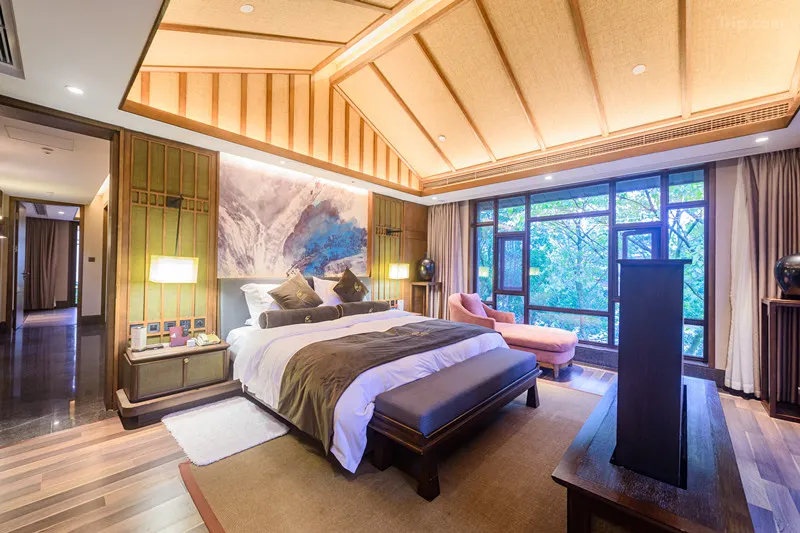
Hotel Address: No. 233 Jingqu Road Section 2, Huangwan Township, Emeishan, Sichuan, China
Hotel Consultation Hotline: +86-833-5595166
Local Cuisine
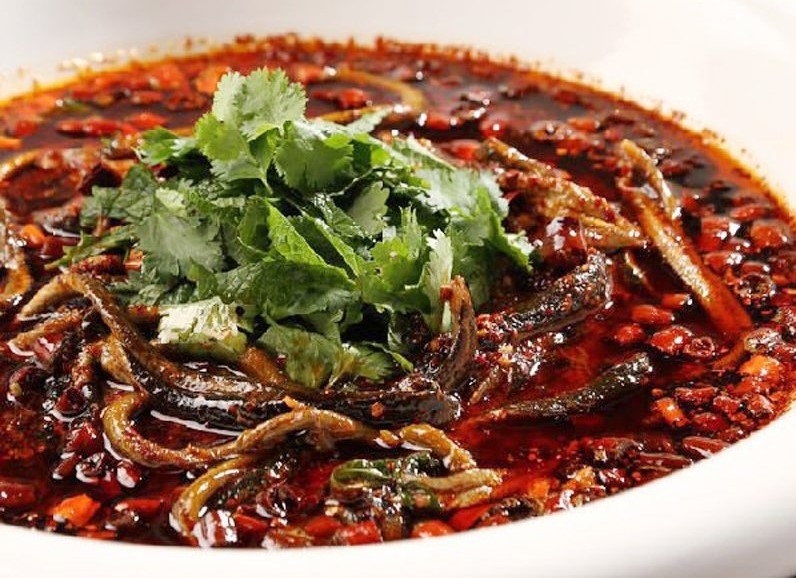
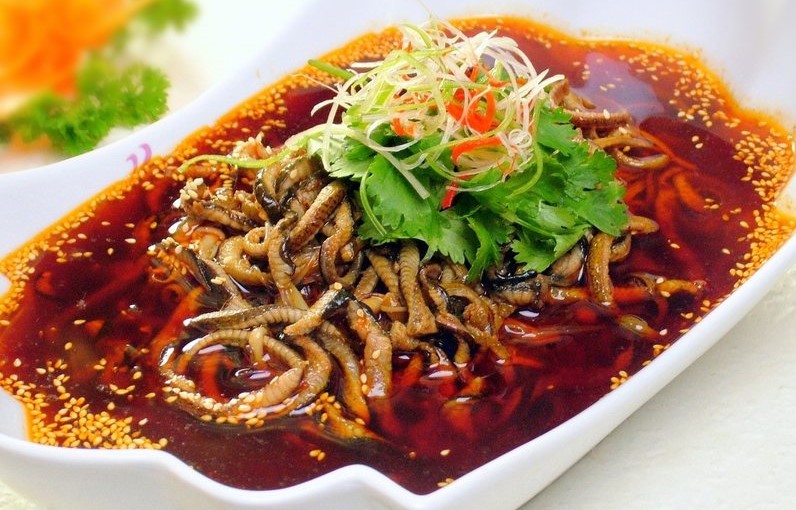
1. Emei Shansi
Emei Mountain's Emei Shansi is a must-try specialty dish for any traveler to Emei, and it is quickly becoming a rising star in Sichuan cuisine. The eel, known for its tender meat and fresh flavor, has long been prized as a high-quality ingredient in cooking due to its rich nutritional value. It is renowned for its medicinal benefits, including tonifying the body, nourishing the blood, warming the spleen, strengthening the kidneys, dispelling wind, and promoting circulation. As a food supplement, it is an excellent choice for modern health and wellness.
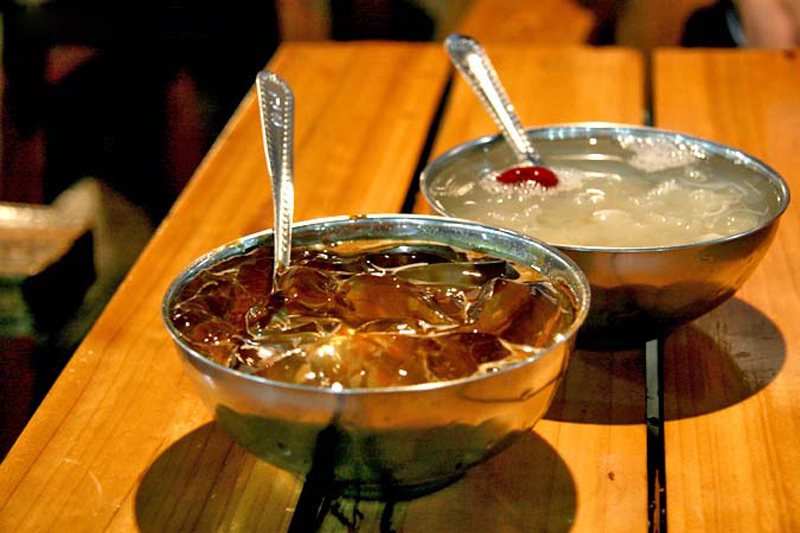
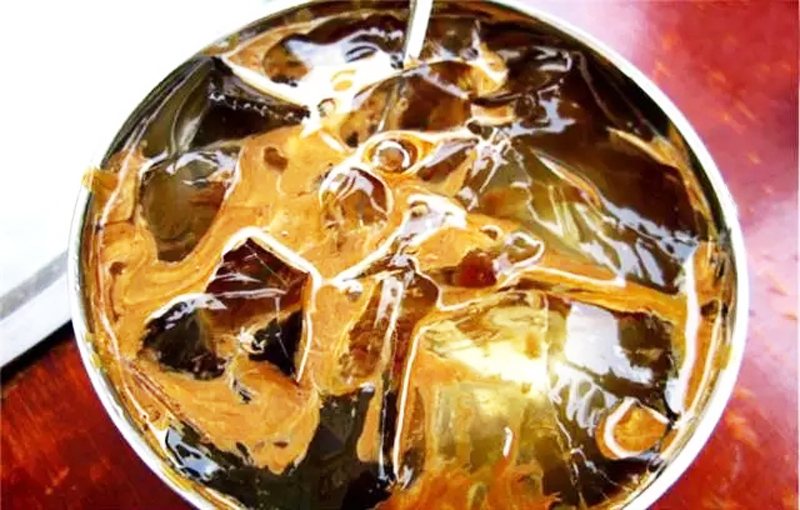
2. Bingfen
Bingfen is a translucent, crystal-clear dessert that pairs beautifully with specially crafted brown sugar, offering a delicious treat. In early spring, it's typically served in its original flavor, but as summer arrives, various fruit flavors like orange, lychee, and lemon emerge, each competing for attention with their unique taste. The orange-flavored Bingfen, for example, even contains bits of orange pulp, allowing you to experience the juicy texture of the fruit itself. Even without the addition of brown sugar, the Bingfen naturally carries a fragrant, sweet fruity flavor, making it a refreshing and delightful treat.
3. Qiaojiao Beef
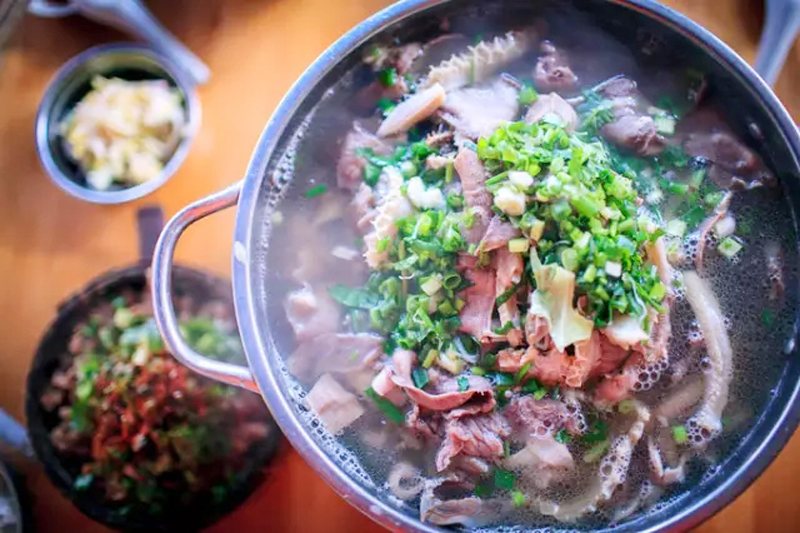
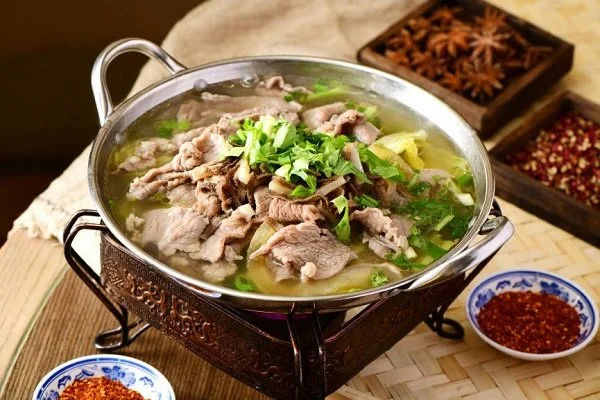
With a century of history and three generations of evolution, Qiaojiao Beef Hot Pot has become a time-honored local delicacy in Leshan. Its medicinal food functions of preventing and treating diseases, along with the Traditional Chinese Medicine (TCM) principle of "replenishing the organs with corresponding organs," have greatly enhanced the taste and grade of this local specialty. Especially after the Yang family's repeated comparisons and formula adjustments, the soup flavor has become more refined. Based on the traditional taste, not only are medicinal jujubes, wolfberries, and Chinese angelica added, but also a "concentrated soup" brewed with more than 20 additional Chinese medicinal herbs—making it more scientifically nutritious and well-balanced.
Recommended Day to Visit Emei Mountain
Emei Mountain is one of famous tourist destination in Sichuan Province, you should plan 1~3 days to visit there based on your travel time. The most convenient way to visit Emei Mountain is from Chengdu, the closest airport is Chengdu Shuangliu International Aiprot, it takes around 2 hours from downtown of Chengdu.
We highly recommend you visit the Leshan Giant Buddha & Emei Mountain for 2 days trip from Chengdu. On the first day, you will go to visit Leshan Buddha on the way to Emei Mountain, head to your hotel in Emeishan city when you finished the Leshan sightseeing, only a short distance. Spend full day to enjoy the charming scenery of the Emei Mountain, to experience the hiking there as well as to feel the rich Buddhist atmosphere. Return back to Chengdu city after the tour.
If you only have a limited time for Emei Mountain, one day tour from Chengdu downtown hotel is also available. Depart from your hotel in the early morning (around 7am), enjoy 2 hours' driving to reach the Emei Mountain Scenic Area. Then, take the Eco-bus and cable car to reach the top of the mountain for sightseeing directly. Spend around 5-6 hours there, go back to Chengdu city.
FAQs
Q1: How many days are needed for Mount Emei?
A1: The number of days for Mount Emei depends on your travel pace:
· 1 day (compact core tour): For time-limited travelers, focus on the Golden Summit (take sightseeing bus + cable car to Leidongping ? Golden Summit, enjoy the sea of clouds/Buddha’s light then return).
· 2-3 days (leisure in-depth tour): Recommended itinerary—Day 1: Visit Baoguo Temple + Wannian Temple, stay at a mountain homestay; Day 2: Climb Golden Summit for sunrise, then explore Qingyin Pavilion + Ecological Monkey Area in the afternoon; Day 3: Add nearby spots (e.g., Leshan Giant Buddha) to experience both nature and culture.
· 3-4 days (full hiking tour): For hiking enthusiasts, take the full trail from Baoguo Temple — Qingyin Pavilion — Hongchunping — Xixiangchi — Golden Summit, to immerse in mountain forest and ancient temple scenery.
Q2: Is the hiking difficulty high?
A2: Hiking difficulty varies by route:
· Full hiking trail (Baoguo Temple ? Golden Summit, ~60km): Moderate to high difficulty, taking 3-4 days to complete. The route includes stone steps and steep slopes (e.g., Jiulao Cave ? Xixiangchi section), suitable for experienced, physically fit hikers.
· Leisure trails (e.g., Wannian Temple ? Qingyin Pavilion, 3-5km): Very low difficulty, with flat paths, streams and rest stops along the way, suitable for all ages to enjoy the fresh mountain air easily.
· Short Golden Summit hike (Leidongping ? Golden Summit, ~1.5km): Low difficulty, with stone steps but a short distance, manageable for most travelers.
Q3: What is the best time to view the sea of clouds on Golden Summit?
A3:
· Best season: September-November (autumn), when the weather is clear and stable, air humidity is moderate, and the probability of sea of clouds is highest.
· Best time: 5:30-7:00 AM, around sunrise— the sea of clouds has the richest layers and soft light, making it the golden hour for photography.
· Weather conditions: Sunny days after rain (e.g., clearing up after light rain) bring thicker, more magnificent clouds; check the scenic area’s weather forecast 1 day in advance.
Mount Emei Travel Tips
1.Ticket Prices:
· Peak season (January 16 – December 14): Full price ¥160/person; Half price ¥80/person.
· Off-season (December 15 – January 15 of the following year): Full price ¥110/person; Half price ¥55/person.(Note: Temple tickets are not included in the above prices.)
2. Opening Hours: Scenic area gates (Baoguo Temple/Huangwan): 06:00-18:00; Golden Summit core area: 20 minutes before sunrise - 18:00.
3. Ticketing Channels: Purchase via the official WeChat account/miniprogram "Mount Emei Scenic Area" for ID-based entry (no on-site queues). Students and seniors (65+) can buy half-price/free tickets with valid documents (on-site verification required).
4. Sightseeing Bus: Unlimited ride pass ¥90/person (covers main routes like Baoguo Temple?Leidongping, Wannian Temple), with rolling departures. Reserve time slots via the official platform in peak season to avoid waiting over 1 hour.
5. Cable Car: Golden Summit/Wannian Temple cable car tickets can be bought online (official miniprogram). Book 1-2 hours in advance in peak season (especially holidays) — peak queuing times are 8:00-10:00 and 15:00-17:00.
6. Gear Suggestions: Wear non-slip, durable hiking shoes (avoid white sneakers/sandals); carry a trekking pole (rentable at Baoguo Temple entrance for ¥5/piece); bring knee pads for long hikes to reduce knee strain.
7. Supply Tips: There are canteens along hiking sections (e.g., Hongchunping, Xixiangchi) but prices are high — prepare dry food (bread, energy bars) and 1-2L of water per person in advance at the foot of the mountain.
8. Altitude Sickness Prevention: Golden Summit is 3077m above sea level — some may have mild headaches/fatigue. Walk slowly (avoid running), carry a portable oxygen can (buy at foot pharmacies for ¥20-30/can); do not hike on an empty stomach, stay hydrated.
9. Weather Precautions: Vertical temperature difference is 10-15? (Golden Summit is colder than the foot) — bring a light down jacket/windbreaker even in summer; mountain weather changes quickly — carry a foldable raincoat (avoid umbrellas, strong winds may flip them), check real-time forecasts on the "Mount Emei Scenic Area" platform.
10. Temple Etiquette: Do not step on temple thresholds (symbolizes "not crossing boundaries"); wash hands before offering incense, light incense with your left hand (considered "pure"), do not blow out incense with your mouth; do not touch Buddha statues/relics — check signs before taking photos (some statues are photo-prohibited).
11. Religious Activities: Keep quiet and avoid moving around during Dharma assemblies/chanting; do not ask taboo religious questions (e.g., "How much is this Buddha statue worth"), respect worshippers’ practices.
12. Local Customs: There are Yi ethnic communities near Mount Emei — avoid words like "pig" or "kill" in front of Yi people; accept Yi toasts with both hands as a sign of respect.
13. Fire Prevention & Prohibitions
Mount Emei Scenic Area is a Class-I forest fire prevention zone. Visitors must present the "Fire Prevention Code" to enter. The following items/activities are prohibited:
· Carrying fire sources, lighters, chemicals, and flammable/explosive materials;
· Smoking, setting off fireworks/crackers, or flying sky lanterns;
· Open-air fire use;
· Bringing pets into the scenic area.
14. Scenic Area Hotlines
If you encounter confusion or emergencies during your visit, please call the following hotlines for staff assistance:
· Tourism Complaints: 0833-5533355
· Online Ticketing: 0833-5593168
· Wannian Temple Cable Car: 0833-5090128
· Golden Summit Cable Car: 0833-5098019
· Sightseeing Bus Tickets: 0833-5592464
· Scenic Area Tickets: 0833-5523646
· Emergency Rescue: 18080664119
· Injury Assistance: 0833-5544544
Mount Emei is a destination that offers something for everyone—whether you’re seeking spiritual enlightenment, a challenging hike, or simply a peaceful retreat surrounded by nature. With its rich Buddhist history, stunning landscapes, and cultural significance, it remains one of China’s most revered and visited mountains.
Your Way Holiday’s Ultimate Guide to Mount Emei and the Best Seasons for an Unforgettable Emei Mountain Adventure
We design private and tailor-made Chengdu tours customized to your travel style at affordable local prices. You’ll enjoy the comfort of a private, spacious car and the company of a professional local guide with over 5 years of experience, dedicated exclusively to you or your group. From transportation and tickets to authentic dining experiences (we always recommend the dishes most loved by locals), everything will be arranged according to your preferences. Please take a look at some of our most popular Chengdu tours below:
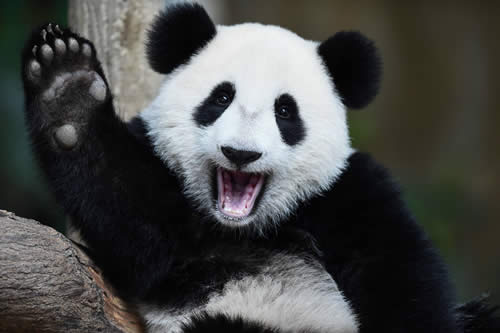 One-Day Chengdu City Tour: Chengdu Panda Research Base, Jinli Ancient Street, and Kuanzhai Alley Exploration
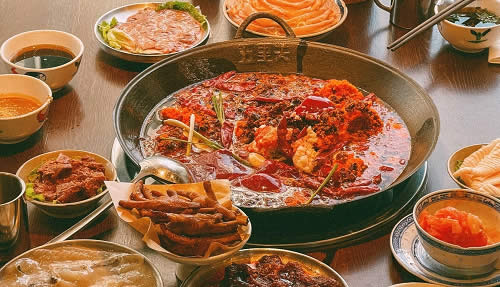 Sichuan Food Tour: Uncover Flavors at Sichuan Cuisine Museum, Kuanzhai Alley, and Jinli Street
Not exactly what you’re looking for? Don’t worry — all of our Chengdu tours can be fully customized based on your interests, schedule, and budget. We specialize in creating unique Chengdu experiences that go beyond the guidebook, giving you the chance to truly connect with the local culture and people. Our enthusiastic tour experts are always ready to provide detailed suggestions and will respond to your inquiry within 24 hours. Ready to explore Chengdu your way? Contact us today and let us design a Chengdu shopping experience that fits your style. Your Way Holiday looks forward to your message! We're ready to design an unforgettable Chengdu trip for you anytime.
















Hello, I would like to enquire a 2 days tour. Do you provide tour from Leshan train station and ends at the closest train station from Emei the next day to go back to Chengdu? Is it faster and easier to travel through high speed train? How much does it cost for 2 pax? Thanks